Egypt travel
10 Best Things to Do in Aswan: A Local Guide's Plan
Explore the best things to do in Aswan with a local's guide. Our 2026 list covers Philae, Abu Simbel, feluccas, prices, and insider booking tips.

By Mohamed Hassan · Senior Local Guide · 12 years
Most guides tell you to “do Aswan” in half a day, tick Philae, maybe squeeze in the High Dam, then move on. That's the wrong way to experience this city. Aswan works best when you stop treating it like a transfer point and start treating it like a place with its own rhythm, its own river logic, and its own culture.
The best things to do in Aswan aren't all heavy monuments. Some of the best hours here happen on the water, in a Nubian home over tea, or wandering the souq without a bus group pushing you along. The city also spreads its sights out. That means good planning matters more here than in places where everything sits on one road. Guides that just list attractions miss the essential question travelers ask me every day: what fits comfortably in one day, what deserves a slow half day, and what isn't worth the fatigue unless you already know why you're going.
I run these routes with travelers regularly, and the pattern is always the same. People enjoy Aswan most when they combine one major site, one river segment, and one culture or market stop. That's the balance. Not six rushed stops and a late lunch.
Below is the practical version. No fluff. Just the things to do in Aswan that are worth your time, plus the trade-offs, timing, and booking reality that matter on the ground.
Table of Contents
- 1. Felucca Sailing on the Nile
- 2. Philae Temple and Island Visit
- 3. Nubian Village Day Trip and Cultural Experience
- 4. Aswan High Dam Visit and Lake Nasser View
- 5. Nubian Museum and Aswan Museum Visit
- 6. Unfinished Obelisk
- 7. Botanical Garden Visit
- 8. Elephant Island Archaeological Walk
- 9. Abu Simbel Day Trip by Air or Road
- 10. Aswan Practical Travel Tips
- Top 10 Things to Do in Aswan, Quick Comparison
- Let a Local Plan Your Aswan Adventure
1. Felucca Sailing on the Nile
If you only do one “Aswan feeling” activity, make it a felucca. Not a rushed motorboat shuttle. A real sail, allowing the city to make sense. You see the granite edges, the soft riverbanks, the islands, the changing light, and why people slow down here without trying.
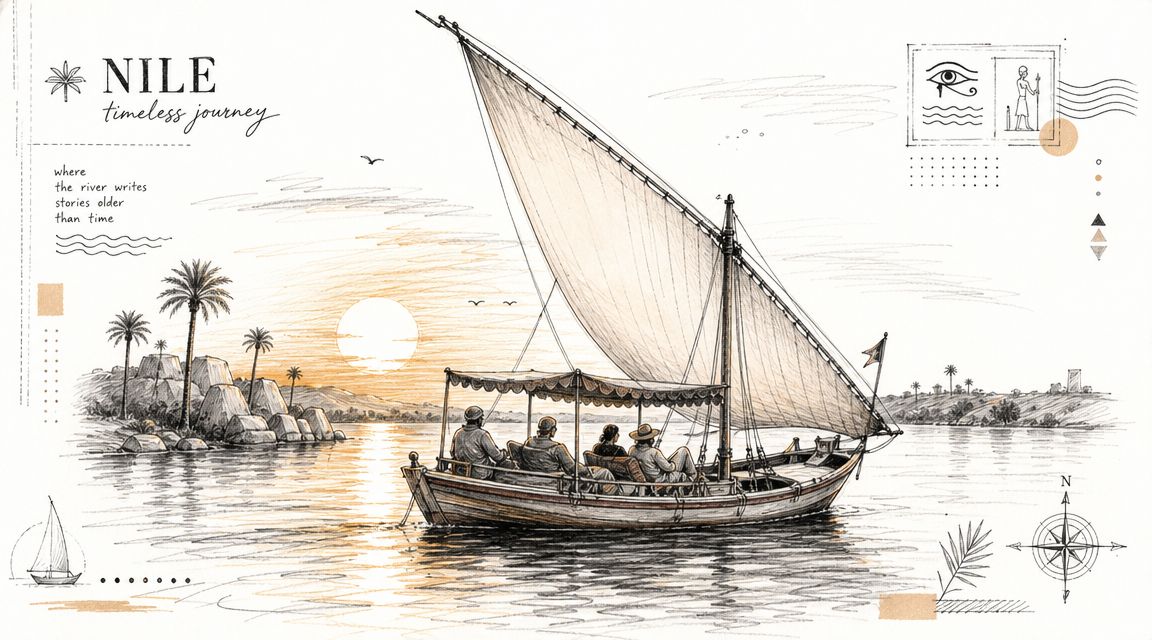
Independent travel coverage consistently treats felucca and Nile sunset cruising as part of Aswan's core experience, alongside the main temple and museum visits, because the city works through river transport as much as through roads and walking (Exoticca's Aswan travel guide). That's exactly right. In Aswan, the boat isn't extra. It's part of the destination.
Why it works
A good felucca ride is simple. You board light, sit back, and let the route breathe. Couples usually like late afternoon for the light. Families often do better in the morning when everyone still has energy. Photographers should choose the last daylight hour and accept that the pace will be slow.
Practical rule: Book the sail for the part of the day you want to remember most, not the slot left over after temples.
If you book independently, agree on the full route and total price before stepping on board. If you're booking through a guide, ask whether the trip is pure sailing or partly motor-assisted when the wind drops. Both can work, but they're different experiences.
A few basics help:
- Dress lightly: Loose clothes, sunglasses, and a hat matter more than dressing for photos.
- Ask about shade: Some boats have better canopy cover than others.
- Keep it realistic: Felucca plus Botanical Garden works well. Felucca plus a long list of inland stops doesn't.
For broader trip ideas around Egypt, Oh Yes Tours also lists things to do across Egypt destinations.
2. Philae Temple and Island Visit
Philae is one of the easiest major temples to enjoy, provided you visit it at the right hour. Go late, and it turns into queues, glare, and too many boats arriving together. Go early, and it feels calm, elegant, and worth every step.
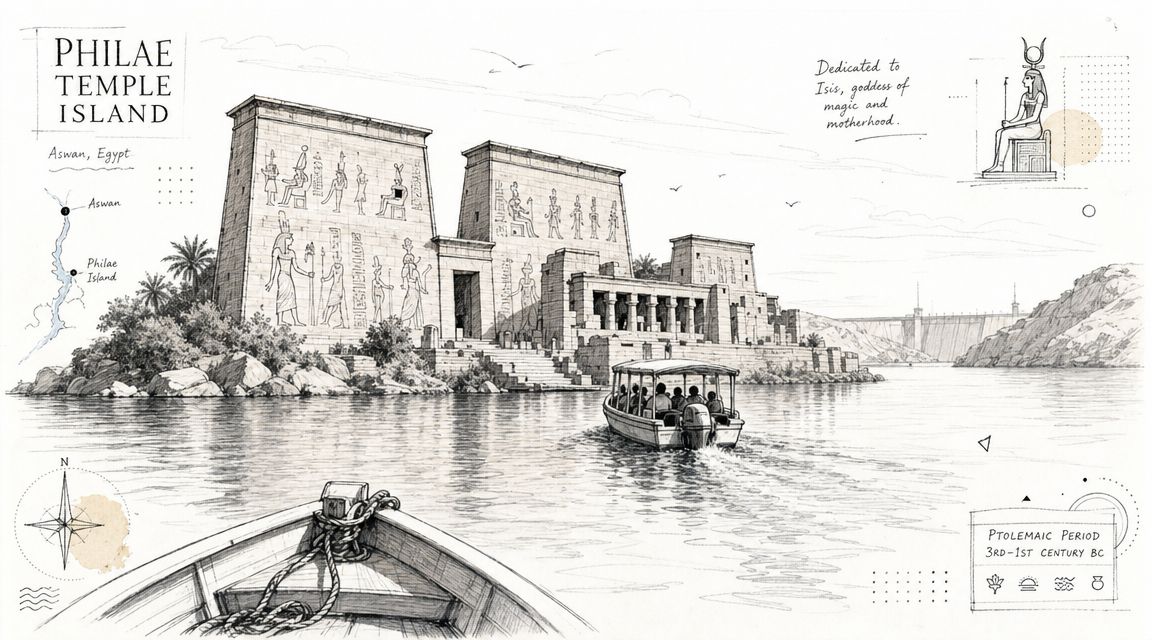
You reach Philae by boat, which already tells you something important about Aswan. The best itineraries here depend on handling transfers cleanly, not just collecting monuments. That's why private routing works so much better than fragmented group scheduling in this city.
How to time it properly
I like Philae first thing in the morning. The boat ride is smoother, the light is kinder, and you still have energy to look at the reliefs instead of hunting shade. If your priority is photography, morning beats evening for most travelers.
The common mistake is pairing Philae with too much. Philae and the High Dam make sense. Philae and the Nubian Museum can also work well. Philae, the High Dam, the Unfinished Obelisk, a village, and a sunset sail all in one day usually leaves people tired and not especially happy.
A solid approach looks like this:
- Early start: Aim for the first practical departure of your morning.
- Wear proper shoes: Boat steps can be awkward.
- Choose your evening carefully: Light-and-sound may appeal if you want atmosphere, but it's not the best option if your priority is daylight viewing and photos.
If you're comparing temple-heavy routes in Upper Egypt, Oh Yes Tours also has a page on Luxor attractions and major archaeological sites, which helps some travelers decide how much temple time they really want before adding more in Aswan.
3. Nubian Village Day Trip and Cultural Experience
A Nubian village visit is worth doing only if it stays human. If it turns into a conveyor belt of “tea, photo, shop, next,” skip it. The value here is conversation, hospitality, and seeing that Aswan isn't just ancient stone.
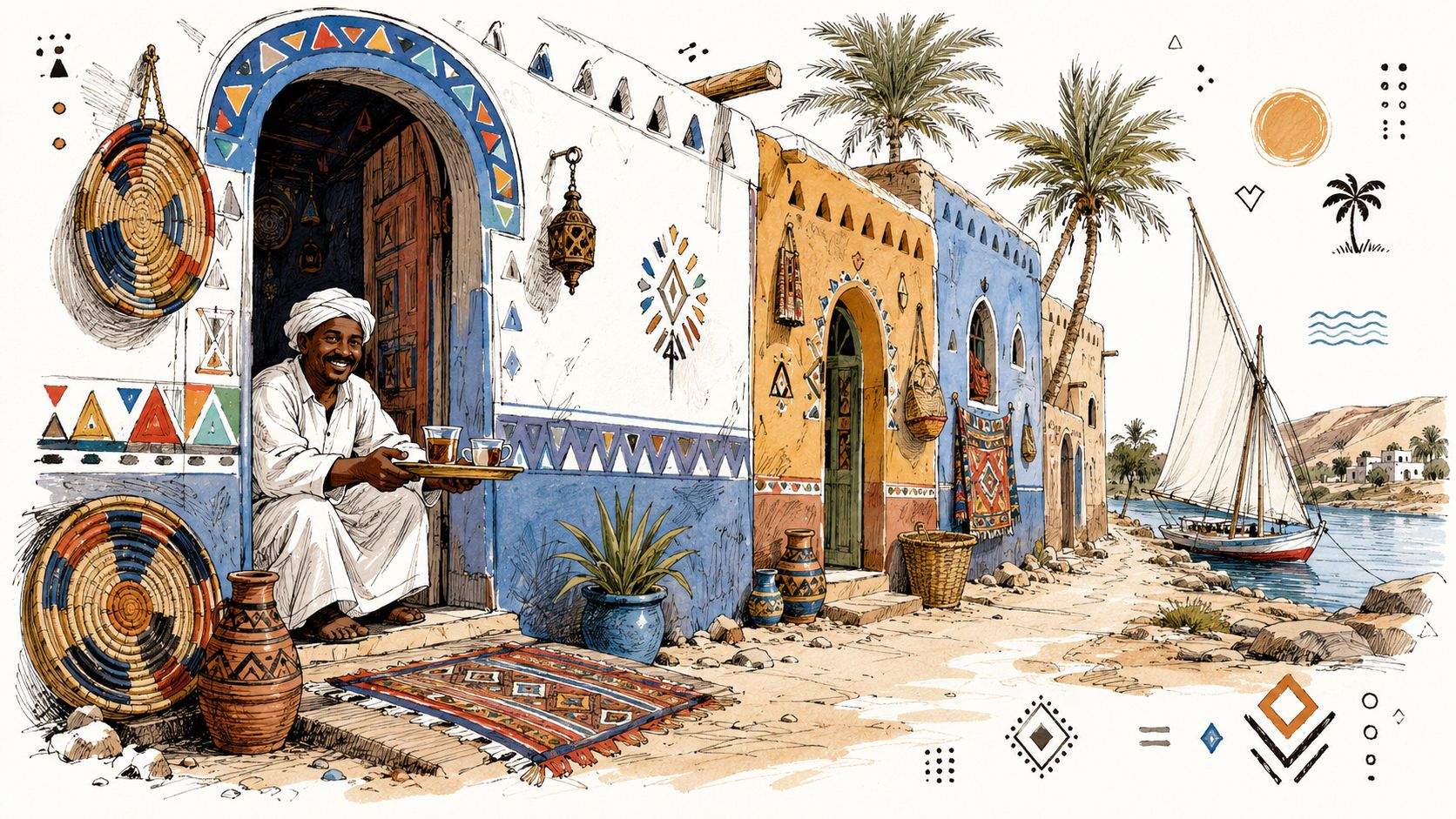
Modern Aswan's identity is closely tied to Nubian heritage, and the city's cultural core makes more sense when you understand that background rather than treating village visits as decoration for a river day. That's one reason the Nubian Museum matters so much, but the living side of the story is in the villages and homes.
What a good visit looks like
The strongest culture-led add-ons in Aswan are village visits and sunset river experiences, and that pairing works because travelers usually want something slower and more personal after the temples, not another stone site and another ticket line (Nawy's guide to Aswan activities). I agree with that. The best village trips happen in late afternoon, with no rush.
Go with someone who actually knows the households, not someone who just knows the dock.
That changes everything. You get context before you enter a home. You understand what's appropriate. You avoid awkward selling pressure and staged stops that waste everyone's time.
A better village visit usually includes:
- A proper arrival: By felucca or boat, not with a rushed, noisy transfer chain.
- Time to sit: Tea, conversation, and maybe a simple meal are often more memorable than browsing souvenirs.
- Respectful pacing: Dress modestly and ask before photographing people or homes.
For couples, this is one of the best things to do in Aswan. For families, it works well when the guide keeps it relaxed and interactive. For travelers with limited energy, it's often a better use of an afternoon than another exposed archaeological stop.
4. Aswan High Dam Visit and Lake Nasser View
I'll be blunt. The High Dam is not one of the most beautiful stops in Aswan. It is one of the most important. Those are different things.
This is a short visit with a modern-history payoff. It works best for travelers who like engineering, political history, or the wider story of how southern Egypt changed in the modern era. If you want romance, atmosphere, or the city's best scenery, pick the Nile instead.
Who should do it and who can skip it
The High Dam matters because the First Cataract made this area a natural boundary point in earlier river travel, and modern dam-building then reshaped the region in a completely different way. That larger geographic story helps explain why Aswan feels distinct from other Nile stops, not just what sits on a sightseeing list.
If you're planning one compact sightseeing morning, the High Dam combines well with Philae because the logistics line up. If you're trying to build a slow Aswan day, it can also be the first thing you cut. That's especially true for travelers who don't enjoy modern infrastructure visits.
Here's when I recommend it:
- Do it if: You care about engineering, river control, or the modern side of Egypt's story.
- Skip it if: You're choosing between this and extra time on the Nile, in the souq, or in the museum.
- Keep it short: This is not where an extended stay is typically warranted.
For many travelers, the High Dam is worthwhile in context and underwhelming on its own.
That's the honest version. Pair it. Don't build your whole day around it.
5. Nubian Museum and Aswan Museum Visit
Skip this stop if you only want postcard views. Go if you want Aswan to make sense.
The Nubian Museum is one of the few places in town that changes how travelers see everything else afterward. A village visit lands differently once you understand displacement, identity, and the long history of Nubia in southern Egypt. Temple stops also become clearer, because you stop seeing them as isolated monuments and start reading the region as one connected story.
I usually tell guests to put the Nubian Museum first and treat Aswan Museum as optional. That is the practical order. The Nubian Museum gives you the wider frame, while Aswan Museum works better as a smaller add-on if you still have energy and attention left.
This is also one of the smartest midday choices in Aswan. In strong heat, I would rather put travelers in a good museum for an hour or two than drag them through exposed stone sites when they are already tired.
A few real planning notes matter here:
- Start with the Nubian Museum: It rewards a proper visit more than a rushed walk-through.
- Allow around 60 to 90 minutes: Less than that and you will skim labels without connecting the story.
- Use a guide if you care about context: Otherwise many travelers remember objects, but miss why they matter in Aswan.
- Treat Aswan Museum as secondary: Good for history-focused travelers, easy to skip for families, short-stay visitors, or anyone already museum-heavy from Cairo and Luxor.
I also like this stop because it balances a busy itinerary. If your morning was Philae, the dam, or a village trip, the museum gives the day a calmer rhythm. You are still learning something meaningful, but without transport delays, boat timings, or heat management becoming the whole story.
For logistics, this is the kind of stop we often use at Oh Yes Tours to keep a day efficient without making it feel rushed. A museum visit can fit cleanly into a half-day route, or it can anchor the hottest part of a full sightseeing day. That matters more in Aswan than many travelers expect.
One honest warning. If you are the kind of traveler who races through display cases, this may feel slower than the Nile, the souq, or a temple visit. If you give it proper attention, it is one of the most rewarding cultural stops in the city.
6. Unfinished Obelisk
Some travelers underestimate this stop because they think it's “just a quarry.” Then they get there and realize it's one of the clearest lessons in ancient stonework you can see in Egypt. It's not about polished grandeur. It's about process, ambition, and failure left visible in the rock.
Why guides matter here
This site is much stronger with explanation than without it. If you walk through alone, you may just see cut stone and rough surfaces. With a good guide, you start noticing extraction logic, the crack that stopped the project, and the sheer labor hidden behind the finished monuments people admire in other cities.
The best use of the Unfinished Obelisk is as a short, sharp visit inside a half-day route. It pairs well with Philae and the High Dam if you're doing a practical sightseeing circuit. It does not need a whole morning to itself.
Keep your expectations realistic:
- Go early or late: The stone reflects heat fast.
- Wear solid shoes: Ground can be uneven.
- Treat it as a context stop: It deepens everything you see later in Luxor, Cairo, or museums.
I often recommend it most strongly to travelers who like how things were built, not just what they looked like when complete. Those visitors usually leave impressed.
7. Botanical Garden Visit
After temples, boats, docks, and traffic, the Botanical Garden is a reset button. That's its value. Not grandeur. Relief.
Kitchener's Island works best when you stop expecting a major historical site and let it be what it is: green shade, slower walking, and a quiet break in the middle of a trip that can otherwise become stone-heavy. Families often enjoy it more than they expect, and older travelers appreciate the softer pace.
Best use of your time
I wouldn't send someone there as a standalone priority unless they love gardens or birds. I would absolutely fold it into a felucca outing. That combination makes practical sense because the transfer is part of the pleasure, and the island gives shape to the sail instead of turning it into aimless drifting.
The garden is especially useful if:
- You need a lower-effort afternoon: Less heat stress, less standing, less mental load.
- You've already done your major temple visit: It balances the day nicely.
- You're traveling with mixed interests: One person gets the boat, another gets the greenery, everyone gets a breather.
This is one of those things to do in Aswan that doesn't always look impressive on paper but often lands very well in a real itinerary. That matters more than list ranking.
8. Elephant Island Archaeological Walk
Elephantine is the stop I suggest when someone says, “I want history, but I don't want another site that feels detached from real life.” That is the strength here. The ruins sit inside a lived-in island setting, so the visit feels grounded instead of staged.
You also understand Aswan better on Elephantine than at many bigger-name stops. The island sits at the southern end of the old city zone, close to the First Cataract, so it makes sense as a historic frontier and trading point. You can feel that logic on the ground once you arrive by boat and start walking, especially if someone is explaining what you are looking at instead of leaving you to sort out scattered remains on your own.
How to visit without wasting time
This works best as a half-day visit, not as a rushed add-on squeezed between two major sites. Plan for a short local boat or ferry crossing, then enough walking time to let the place make sense. If you go too fast, Elephantine can feel fragmentary. If you give it proper time, it becomes one of the more rewarding things to do in Aswan.
A guide matters more here than at polished temple sites. At Philae, the monument carries a lot of the visit by itself. On Elephantine, context does the heavy lifting. That is why we often pair it with a slower river schedule and handle the crossing times carefully at Oh Yes Tours, especially for travelers who want history without the usual busier circuit.
I recommend Elephantine to three kinds of travelers in particular:
- Travelers who already saw the headline monuments: This adds texture instead of repeating the same experience.
- Visitors interested in local life as well as archaeology: The island is not frozen for tourism.
- People who like slower historical sites: You can walk, stop, ask questions, and take it in at your own pace.
Choose Philae for monument drama and cleaner presentation. Choose Elephantine for layered history, a more local feel, and a visit that rewards curiosity.
9. Abu Simbel Day Trip by Air or Road
Abu Simbel rewards planning more than spontaneity. Travelers often see it on a list of things to do in Aswan and assume it works like any other excursion. It does not. This is a long-distance day built around one monument pair, and it pays off most for visitors who want a major ancient site badly enough to give it the whole day.
The draw is clear once you arrive. You are looking at one of Egypt's most commanding temple complexes, created under Ramses II and later relocated in the twentieth century during the international rescue campaign linked to the High Dam. The famous sun alignment, seen around late February and late October, adds another layer of interest, but even outside those dates the scale alone justifies the trip for travelers with a strong interest in ancient Egypt.
A quick look before the practical advice:
The Practical Trade-off
The useful question is simple. Does Abu Simbel fit your stamina, your budget, and your available time?
By road, expect a very early departure and a long day. It is usually the better value, and many travelers are fine with it if they sleep early the night before and keep the rest of the day clear after returning. By air, you cut down fatigue and gain comfort, but the price jumps and flight timing can still make the day feel structured rather than relaxed.
I tell guests to decide based on travel style, not ego. If long drives wear you down, flying is often money well spent. If you are comfortable with an early start and want to keep costs under control, road works perfectly well.
What usually works best:
- Choose road if budget matters most: It takes longer, but many visitors are happy with the trade if Abu Simbel is a priority.
- Choose air if energy matters most: Better for shorter Egypt itineraries or travelers already doing several early starts.
- Keep the rest of the day light: A hotel break, an easy dinner, or a calm evening on the corniche is enough.
- Skip it if your interest is moderate: Philae, Elephantine, and a good Nile schedule often make more sense for travelers who do not need a blockbuster temple experience.
Season matters too. Heat, wake-up times, and road comfort change the equation more than many people expect, so it helps to check a practical guide on the best time to visit Egypt for comfort and sightseeing before you lock in the day.
At Oh Yes Tours, we usually treat Abu Simbel as a stand-alone commitment and build the rest of the Aswan stay around it, not on top of it. That is the difference between a satisfying highlight and a day that feels like pure logistics.
10. Aswan Practical Travel Tips
The biggest Aswan mistake is poor combination planning. The city rewards smart pairings and punishes overstuffed schedules. If you build your day around one anchor, one complementary stop, and one easy late-afternoon activity, Aswan feels smooth. If you stack distant sites with no thought for boats, heat, and pauses, it feels harder than it should.
How to build a day that feels easy
A strong visitor pattern in Aswan is temple plus river logistics. That's why private guides add value here when they can connect boat access, market time, museums, and transfers without dead time between them. This city isn't about dense block-by-block sightseeing. It's about sequencing.
Use these rules on the ground:
- Start early: Outdoor sites are more pleasant in the first part of the day.
- Pair nearby logic: Philae plus High Dam works. Elephantine plus Nubian culture works. Souq plus sunset sail works.
- Carry cash: Small purchases, ferry moments, and market shopping go more smoothly.
- Respect pace: Not every stop belongs in every itinerary.
The market can be a very good late-day stop because it stays manageable. Aswan Souq is often described as a strong place for spices, textiles, handicrafts, perfumes, jewelry, and local goods, and many travelers find it more useful for actual shopping than giant, overwhelming bazaars elsewhere.
If you're choosing your season and want to think through comfort first, Oh Yes Tours has a practical guide on the best time to visit Egypt.
Book the fatigue, not just the attraction. In Aswan, that's the difference between a good plan and a bad one.
Top 10 Things to Do in Aswan, Quick Comparison
| Experience | 🔄 Implementation complexity | ⚡ Resource requirements & logistics | 📊 Expected outcomes / impact | 💡 Ideal use cases | ⭐ Key advantages |
|---|---|---|---|---|---|
| Felucca Sailing on the Nile | Low, simple booking; wind-dependent | Low, modest fee, boat crew; light gear | Relaxing scenic ride; strong photo moments | Couples, small groups, low-activity travelers | Authentic, peaceful, budget-friendly |
| Philae Temple & Island Visit | Medium, timed motorboat transfer required | Moderate, entry fee, boat; guide recommended | High cultural value; well-preserved reliefs | History lovers, families, guided visits | UNESCO site; compact, photogenic complex |
| Nubian Village Day Trip & Cultural Experience | Medium, coordination with guides/villages | Moderate, boat/guide/meal costs; cash for crafts | Deep cultural immersion; memorable interactions | Families, culture seekers, photographers | Genuine local contact; craft demonstrations |
| Aswan High Dam Visit & Lake Nasser View | Low, short, straightforward visit | Low, minimal fees; optional driver/guide | Educational modern-engineering perspective; panoramic views | Engineering buffs, short-stay visitors | Dramatic views; quick, low-effort stop |
| Nubian Museum & Aswan Museum Visit | Low–Medium, straightforward museum logistics | Moderate, entry fees; optional Egyptologist guide | Rich contextual learning; comfortable (AC) visits | Academics, history enthusiasts, heat-averse travelers | World-class Nubian collections; informative |
| Unfinished Obelisk | Low, brief stop, easy to combine with tours | Low, small entry fee; sturdy shoes recommended | Clear demonstration of ancient quarrying techniques | Archaeology/engineering enthusiasts, tight schedules | Tangible, single-artifact insight; affordable |
| Botanical Garden (Kitchener's Island) Visit | Low, short boat ride and easy walking paths | Low, small entry + boat transfer cost | Peaceful, shaded nature break; photo opportunities | Nature lovers, families, birdwatchers | Cool, less crowded, botanical interest |
| Elephant Island (Elephantine) Archaeological Walk | Medium, ferry access; limited signage | Low–Moderate, ferry, small museum fees; guide helpful | Layered archaeological + living-culture experience | Serious Egyptology fans, independent explorers | Authentic, affordable, multi-period remains |
| Abu Simbel Day Trip (by Air or Road) | High, long travel; precise timing needed | High, costly transport (flight/road), long day | Monumental, iconic experience; highly memorable | Bucket-list travelers, photographers, Egyptology fans | World-class temples; dramatic scale and history |
| Aswan Practical Travel Tips | Low, informational planning resource | Minimal, time to read and prepare | Better-planned, safer and more comfortable trip | All travelers to Aswan | Consolidated, actionable guidance and timing tips |
Let a Local Plan Your Aswan Adventure
Aswan looks easy on a map. In real life, it works best when someone handles the sequence properly. Boats don't leave from the same place as museums. Temple visits are better at certain hours. Village visits only feel authentic when the relationships behind them are real. Abu Simbel can dominate a day if you don't plan around it. None of that is difficult, but all of it matters.
That's why I push travelers away from generic top-10 advice and toward rhythm. In most cases, the best Aswan itinerary is not the one with the most stops. It's the one where the day still feels spacious. A morning temple, an afternoon culture stop, a sunset sail, a relaxed market walk. That's a day people remember. Not a race between ticket windows.
This also matters for different travel styles. Couples usually want privacy, softer pacing, and the best light. Families need less waiting around and fewer dead transfers. Retirees often want depth but not exhaustion. Solo travelers may be happy moving fast, but they still benefit from clean routing and someone local who can tell them what to skip. Aswan can serve all of those travelers well, but not with the same template.
A local guide also helps with the small things that never show up in generic roundups. Which boat captain is reliable. Which order saves backtracking. When a village visit will feel warm and natural, and when it will feel staged. Whether the High Dam is worth the detour for your interests. Whether Abu Simbel should be a separate commitment or left for another trip. Those are the decisions that shape the whole experience.
Oh Yes Tours is one relevant option if you want that kind of planning. The company connects travelers directly with local guides and organizes private tours in Egypt, which suits Aswan especially well because this city rewards flexible, personal logistics more than fixed group timing. If you'd rather not juggle drivers, boats, and separate bookings, having one person coordinate the day can make Aswan feel much calmer.
If you want the real Aswan, slow down. Let the river set the pace. Choose fewer stops. Give the important places room. The city gives more when you stop trying to conquer it.
If you want help building a private Aswan plan that fits your pace, message Oh Yes Tours. We can help you combine temples, river time, Nubian culture, and realistic transfer planning without turning your trip into a rushed checklist. Egypt? Oh Yes!