Egypt travel
Red Sea Snorkeling: A 2026 Planning Guide
Your complete guide to Red Sea snorkeling in 2026. Discover the best sites, when to go, marine life, and costs. Plan your perfect trip with a local expert.

By Mohamed Hassan · Senior Local Guide · 12 years

You’re likely starting in the same position as most Red Sea travelers. You want that simple holiday daydream: warm water, vibrant fish, a boat excursion, perhaps a beach visit, and photos that don’t require a filter. Then you open ten tabs, every location claims to be “the best,” and suddenly you’re trying to compare Hurghada, Sharm, Marsa Alam, reef quality, crowd levels, and whether your kids or partner will enjoy the day.
That’s where local context matters.
Red Sea snorkeling is not one single experience. A calm family boat day out of Hurghada is different from a wildlife-focused trip in Marsa Alam. A spring trip is different from an August one. A small guided boat feels different from a packed day boat, even when both stop at beautiful reefs. If you plan around your travel style instead of chasing the most famous name, the trip usually turns out far better.
Table of Contents
- Why the Red Sea is a World-Class Snorkeling Destination
- Choosing Your Base Hurghada vs Sharm vs Marsa Alam
- Iconic Snorkeling Sites and Their Marine Life
- The Best Time of Year for Red Sea Snorkeling
- Your Snorkeling Day Trip A Practical Guide
- Choosing Your Tour Private Guide vs Group Boat
- Snorkeling Safety and Conservation FAQs
Why the Red Sea is a World-Class Snorkeling Destination
Travelers do not come here for “good enough” water. They come because they want to look down from the surface and see the reef clearly, not just a blue blur with a few fish flashing past. That’s the first thing many visitors notice when they enter the water here. The reef feels close, the colors stay sharp, and even beginners relax faster when they can see what’s under them.
The Red Sea has real natural advantages for snorkeling. It offers visibility up to 30 meters (100 feet) and summer water temperatures reaching 30°C (86°F), which is why it stands out globally. The same source notes that places like Key West often have less than 20 feet of visibility, so the Red Sea gives a very different surface experience for snorkelers who want clarity, comfort, and easy reef viewing through much of the year (Red Sea visibility and water temperature overview).
What that means in the water
Good snorkeling isn’t only about fish count. It’s about how easy the sea feels once you’re in it. In the Red Sea, many travelers can float above shallow reef areas without needing diving training, and that changes the whole day. You spend less time fighting conditions and more time watching coral heads, reef fish, and the small details people miss in rougher water.
For beginners, that matters more than any brochure language. If the water is clear and warm, you breathe slower, your mask stays your focus, and you stop panicking about what’s below you. Families notice it too. Children and nervous swimmers usually do better in places where the reef is visible from the surface and the sea feels friendly, not intimidating.
Practical rule: The best snorkeling day is not the one with the most famous reef name. It’s the one where you can enter calmly, float comfortably, and spend time looking instead of adjusting.
Why travelers keep coming back
The Red Sea also works because it gives different styles of trip without losing that core appeal. Hurghada is often the easiest first base. Sharm attracts people who want famous reef areas and national park names. Marsa Alam suits travelers who prefer quieter nature and don’t mind a more remote feel.
That variety is important. Some people want a soft beach-and-reef day. Others want a trip built around marine life sightings. Red Sea snorkeling works so well because both types of traveler can find a version that fits.
Choosing Your Base Hurghada vs Sharm vs Marsa Alam
You land in Egypt with one free snorkeling day and a clear picture in your head. Bright reef, calm water, maybe turtles, maybe a relaxed boat with enough space to breathe. The base you choose decides how close that picture is to the day you get.
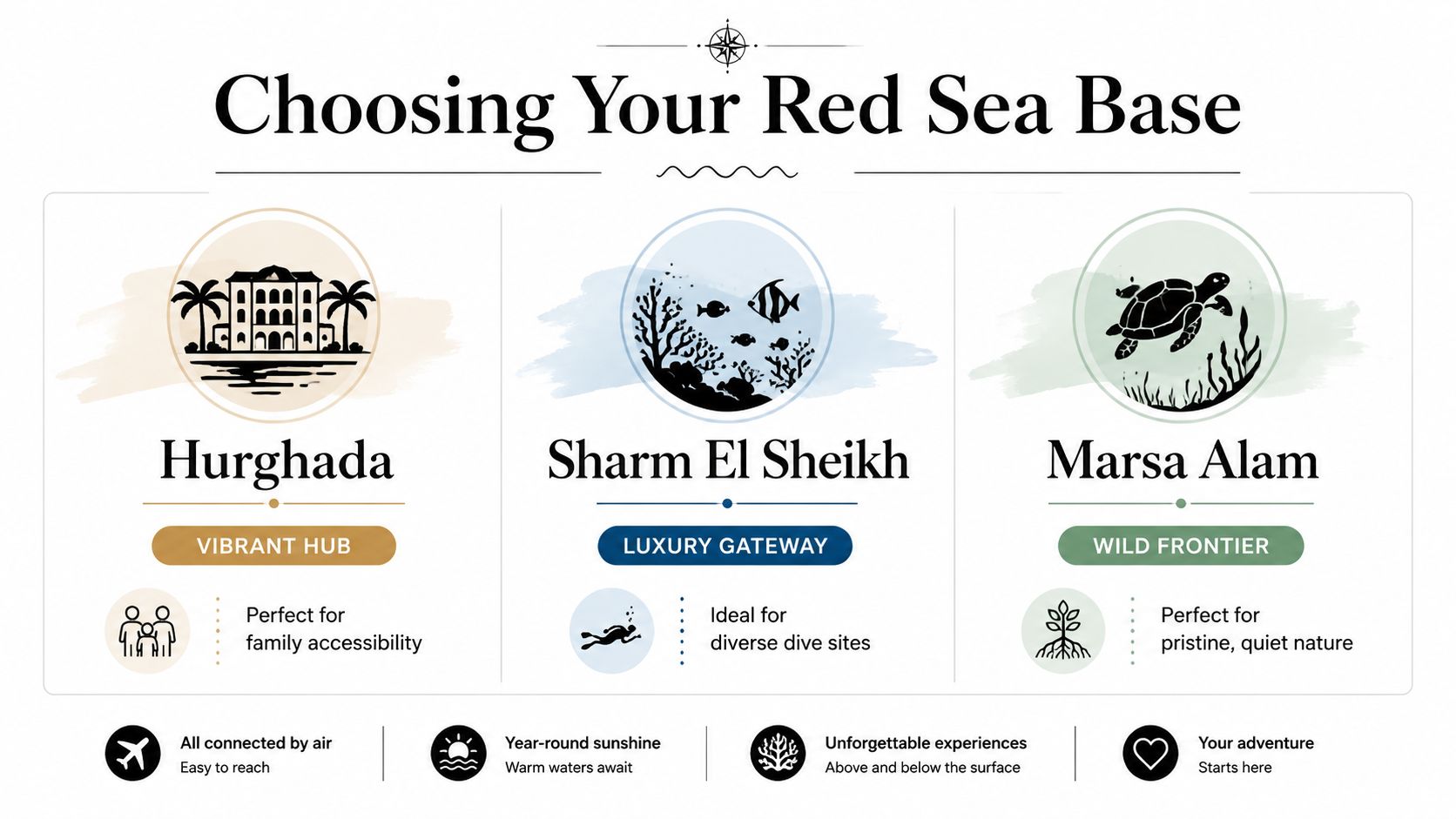
After guiding hundreds of trips from Hurghada, I can say this plainly. There is no single best base for everyone. Hurghada, Sharm, and Marsa Alam all deliver good snorkeling, but they solve different traveler problems. Choose by logistics, crowd tolerance, and the kind of marine life day you want, not by reef fame alone.
Hurghada for easy planning and flexible trip options
Hurghada is the easiest base for the broadest range of travelers. Families do well here. Couples who want comfort and choice do well here. First-time visitors who want a simple setup usually start here for good reason. If you are still comparing neighborhoods, resorts, and marina access, this Hurghada travel overview is a practical place to start.
From a guide’s point of view, Hurghada works because it gives you options. You can book a soft introductory day with beach time, a standard shared boat to well-known reefs, or a more focused private outing if your group wants less waiting around. The sea life can be very satisfying for snorkelers, especially around Giftun routes and nearby reef systems, but the primary strength is balance. Getting out on the water is easy, transfer times are manageable, and the day usually feels straightforward.
There is a trade-off. Hurghada is active and popular. On busy weeks, marinas and boats reflect that. We tell guests this in advance because expectations matter. If you want convenience, mixed-price options, and a trip that suits different ages in one group, Hurghada is often the safest choice.
Sharm for famous reef names and stronger reef reputation
Sharm El Sheikh suits travelers who already know what draws them to the Red Sea. They want the classic names. They want access to famous reef areas. They usually care less about town atmosphere and more about getting to sites they have heard divers and snorkelers talk about for years.
The upside is clear. Sharm has a strong reef reputation, polished tourism infrastructure, and easy access to trips that feel iconic on paper and often very good in the water too. For confident snorkelers and couples who do not mind a more excursion-focused rhythm, it can be a very satisfying base.
The trade-off is crowd pressure. Popular names attract boats. Some guests arrive expecting a remote untouched feeling on every outing, then feel disappointed when they meet other groups at the same stop. That is why we advise travelers to judge Sharm by reef quality and access, not by the hope of having every site to themselves.
Choose your base by the day you want to have. A famous reef does not fix a long transfer, a crowded boat, or a tired child.
Marsa Alam for quieter stays and better wildlife odds
Marsa Alam is the base for travelers who are happy to give up convenience for a more nature-led trip. You feel the difference quickly. The pace is slower, the resort zones are less busy, and the appeal is not nightlife or variety. The appeal is marine life and space.
This is the place I mention to repeat Red Sea visitors, wildlife-focused couples, and strong swimmers who will appreciate a quieter setting. It is also the base many people choose when turtles and dugong sightings sit high on the wish list. No honest guide should promise those encounters on a specific day, but Marsa Alam gives you a better reason to hope for them.
It is not the automatic answer for every family. If you have small children, want lots of restaurant and excursion choices, or prefer an easy holiday with minimal travel decisions, Marsa Alam can feel too narrow. If you want a calmer hotel area and you are happy building the trip around nature first, it can be the best fit of the three.
Quick comparison
| Base | Best for | General feel | Main trade-off |
|---|---|---|---|
| Hurghada | Families, first-timers, mixed groups | Lively and convenient | Popular trips can feel busy |
| Sharm | Travelers chasing famous reef areas | Established and reef-focused | Well-known sites often draw more boats |
| Marsa Alam | Couples, repeat visitors, wildlife seekers | Quiet and nature-led | More remote, with fewer casual options |
Iconic Snorkeling Sites and Their Marine Life
A good site isn’t only about what lives there. It’s also about entry style, current, boat traffic, and how confident you feel once your face goes in the water. Four places come up again and again for a reason, but they don’t all suit the same traveler.
Giftun Island
If you’re based in Hurghada and want the most reliable all-round day, Giftun is the easy recommendation. The experience is balanced. You get the boat trip, clear reef views, beach time on many itineraries, and enough fish life to keep first-timers engaged without feeling overwhelmed.
Many families experience their best Red Sea snorkeling day at these locations. The lagoons tend to feel gentler, and the reef scenes are colorful and easy to enjoy from the surface. You watch the classics: bright reef fish moving around coral heads, shifting schools over sandy patches, and the kind of shallow-water life that works even if your mask skills are still improving.
Ras Mohammed
Ras Mohammed has the kind of name that pulls people in before they even land in Egypt. It deserves respect. The reef life is rich, and the area is famous for good reason. But it’s better to go there with realistic expectations than romantic ones.
You’re going for strong reef scenery and a sense of being in one of the Red Sea’s landmark marine areas. You are not going there because it will always feel empty or secret. In peak periods, the popularity is part of the experience, for better and worse.
Abu Dabbab
Abu Dabbab is one of the easiest names to remember because people connect it quickly with turtle hopes. It appeals to travelers who want a shore-oriented or bay-style experience with a stronger chance of memorable wildlife than a standard reef stop.
It also suits people who don’t love jumping from a boat into open water. Bays often feel psychologically easier for cautious snorkelers. You still need patience, because marine life works on its own schedule, but that patient style of snorkeling often rewards calmer people more than fast movers.
Slow snorkelers usually see more. If you kick hard, splash, and rush from one coral patch to the next, the reef closes itself to you.
Marsa Alam reef zones
The broader Marsa Alam area suits travelers who want a less commercial feel and are happy to build the day around the possibility of seeing something rarer. The reefs can feel less hurried than the busier northern circuits. That doesn’t guarantee a magical encounter, but it changes the mood of the day.
For stronger swimmers and more patient couples, this often becomes the trip they remember best. Not because every minute is dramatic, but because the sea feels less crowded and more alive in a natural way.
How to match site to traveler
- For families with kids: Giftun Island is usually the safe bet because the day tends to be easy to enjoy even without advanced confidence in the water.
- For travelers chasing a famous reef name: Ras Mohammed gives that landmark feel, but go expecting popularity as well as beauty.
- For wildlife-minded couples: Abu Dabbab and Marsa Alam routes usually make more sense than a standard party-style boat day.
- For nervous first-timers: Choose the calmest conditions and the simplest entry, not the most hyped reef.
The Best Time of Year for Red Sea Snorkeling
The short answer is spring and autumn. The useful answer is more specific.
Spring (March to May) and autumn (September to November) are widely regarded as the strongest seasons for Red Sea snorkeling, with water temperatures from 24°C to 28°C and fewer crowds. The same seasonal guidance also notes that summer brings warmer water but can also bring increased plankton, which sometimes reduces visibility (best seasons for Red Sea snorkeling).
If you’re planning dates and want a broader local view on timing for Egypt travel, this guide on when to visit Egypt helps with the bigger picture.
Spring and autumn for balance
These are the months I’d suggest first for most travelers. The sea is comfortable, the weather is easier to handle on the boat, and the day doesn’t feel like a test of heat tolerance. Couples enjoy it because the whole excursion feels smoother. Families enjoy it because children fade less quickly in the sun.
April, May, September, and October are often the easiest months to sell because they don’t require a lot of qualification. You usually get a good balance. That matters more than chasing extremes.
Summer for warm water and honest trade-offs
Summer has one major selling point. Long, warm sessions in the water feel great. If you hate any hint of chill, summer can be very comfortable once you’re snorkeling.
The trade-offs happen around the snorkeling, not only in it. The heat on deck can feel intense, popular boats get busier, and some days lose a bit of clarity because of plankton. That doesn’t mean summer is bad. It means it’s not automatically “best” just because the water is warm.
If you travel in summer, choose operators who talk plainly about visibility, boat crowding, and heat. The day goes better when expectations are set correctly before pickup.
Winter for quiet reefs and cooler comfort
Winter is the season many travelers underestimate. You can get uncrowded reefs and strong visibility, and some people love the calmer overall atmosphere. But comfort becomes the deciding factor.
Cooler water changes the day, especially for children, older travelers, and people who get cold quickly. If you don’t plan for that, your snorkeling session ends early even when the reef itself is beautiful. Winter works best for travelers who care more about space and conditions than about long lazy floating in very warm water.
Best season by traveler type
- Families and mixed-age groups: Spring or autumn
- Heat lovers and school holiday travelers: Summer, with realistic expectations
- Quiet-seeking couples and repeat visitors: Winter can work well if you handle comfort properly
Your Snorkeling Day Trip A Practical Guide
A well-run snorkeling day should feel simple from your side. Pickup, boat, equipment, safety briefing, snorkel stops, lunch, a bit of rest, then back to the hotel tired in a good way. When the basics are messy, even a nice reef won’t save the day.
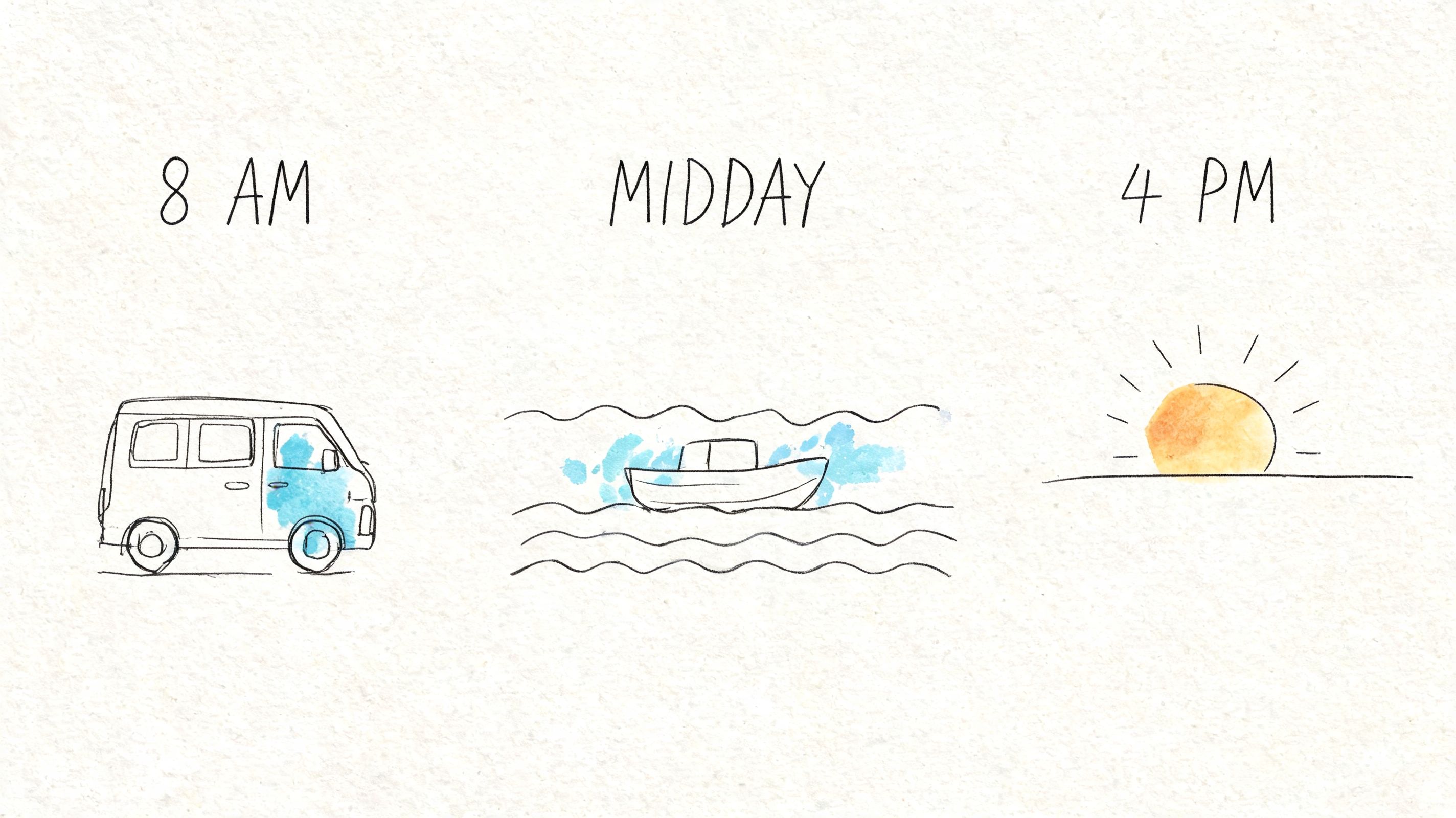
What the day usually feels like
Most day trips start with morning hotel pickup, followed by transfer to the marina and boat boarding. Once on board, the crew sorts equipment, the guide gives a safety talk, and the first stop is usually the easiest one to get everyone comfortable. Good operators know the first water entry sets the tone for the whole day.
Lunch and drinks are common on full-day boat trips, and basic snorkel gear is usually part of the package. What varies is quality. One mask that seals well can change the whole experience for a beginner. One that leaks every minute can ruin it.
What to bring and what people forget
The smartest packers don’t bring more. They bring the right things.
- Towel and dry clothes: You’ll want both for the ride back, especially if there’s wind after your last stop.
- Sun protection: Hat, sunscreen, and a light cover-up matter more on the boat than many first-timers expect.
- Cash for small extras: Keep it simple and separate from the rest of your things.
- Your own mask if you have one: Rental gear can be perfectly fine, but your own mask often fits better.
For first-timers, the most important equipment advice is not fancy. Test the mask strap before the boat reaches the first stop. Make sure the snorkel sits comfortably. Ask for a flotation aid if you’re even slightly unsure. Strong swimmers often skip them out of pride. Nervous swimmers avoid panic because of them.
What works best for beginners and families
The best beginner technique is boring, and that’s why it works. Get in slowly, put your face in, breathe without moving much, and float for a moment before you start kicking. The people who rush are usually the people who tire first.
For children, keep sessions shorter and happier. Don’t force long stays in the water just because the boat schedule allows it. A child who gets out smiling after one good snorkel stop will usually want a second round later.
A short visual helps if you’ve never done a boat-based reef day before:
How to judge a trip before you book
Before booking, ask practical questions, not marketing questions.
- How many stops are planned? Too many can mean a rushed day.
- Is the trip aimed at snorkelers or mixed with divers? Mixed boats can split the guide’s attention.
- What support is available for beginners? This matters more than boat size.
- Is there time to rest between entries? The best sea day has rhythm.
A good snorkeling trip leaves you pleasantly tired. A bad one leaves you sunburned, rushed, and wondering why everyone online made it sound effortless.
Choosing Your Tour Private Guide vs Group Boat
This choice changes the mood more than the reef does.
A standard group boat can be perfectly fine if your priority is price, social energy, and a simple day at sea. For confident travelers who don’t need much support, that setup can work. You join, you follow the schedule, you snorkel where the boat stops, and you accept that the day belongs to the group.
Private guiding or a smaller setup suits a different traveler. If you’re traveling with children, a nervous partner, older parents, or you dislike being herded, the value is obvious very quickly. The pace becomes human again.
Where group boats work
Group trips are good for people who are easygoing about logistics and don’t need much individual attention. If you’re happy with a shared timetable and you see the boat itself as part of the fun, a group outing can be enjoyable.
They work less well when someone in your party needs extra reassurance. One anxious swimmer can turn a “cheap and cheerful” boat day into a stressful one if the guide is watching too many people at once.
Where private or small-group trips earn their price
A private guide gives you room to breathe. You can spend longer at the stop you love, shorten the one that isn’t working, and adapt the day to the people on the boat. That flexibility is the whole point.
For families, it often means more patience with masks, entries, and rest breaks. For couples, it means less noise and less waiting around for other guests. For travelers who want to understand the reef instead of just splashing above it, it means proper attention.
If you’re weighing whether that upgrade is worth it, this article on why travelers choose private tours in Egypt explains the wider logic well.
My honest rule of thumb
Choose the group boat if you mainly want a fun sea day.
Select the private or small-group option if the quality of the experience matters more than getting onto a boat. That’s especially true for honeymoons, anniversaries, family trips with young children, and anyone who knows they dislike crowds.
Snorkeling Safety and Conservation FAQs
A lot of snorkeling problems start before anyone gets in the water. The guest is sunburned from yesterday, drank too little water at breakfast, borrowed a leaking mask from a friend, then feels disappointed when the first stop does not go well. We see that often in Hurghada, and it is usually easy to prevent.
Do I need to be a strong swimmer to snorkel
No. You need to stay calm, breathe steadily through the snorkel, and follow the guide’s instructions on where to enter and where to come back to the boat.
Average swimmers do well every day. Nervous guests usually do better on a short private trip or a small group, where the guide has time to help with mask fit, floating position, and that first minute in the water. On a busy boat, the same guest may feel rushed.
Are there dangerous sharks
Sharks get attention, but they are not the main concern on a normal snorkeling day. Primary trouble comes from sun, dehydration, fatigue, poor fin control, and drifting farther than planned because someone is focused on fish and forgets the boat.
Listen carefully to the site briefing. Conditions change by reef. One bay can be calm and easy for children, while an exposed reef outside the islands can have current that tires out an adult quickly.
What are the most important reef rules
Keep your hands, fins, and knees off the coral. Do not stand on the reef. Do not grab coral to steady yourself. Do not chase turtles, rays, or dolphins for a closer photo.
Coral in the Red Sea looks tough, but a careless kick can break living structure that took years to grow. The same rule applies to feeding fish. It changes their behavior and makes crowded sites worse. If you want the healthiest reef and the quietest water, choose operators who keep groups smaller and avoid dropping guests on top of each other.
What should I bring for payment and small extras
Bring a practical amount of cash in small notes. Keep it in a dry pouch, separate from your phone and wet towels.
Even on prepaid trips, cash helps with small extras, tips, drinks on some boats, or marine park fees if they are not included in the rate. Ask that question before departure, not on the pier.
What should I do if I feel nervous in the water
Tell the guide before the first stop. That matters.
We can slow the entry, give you a flotation aid, help you adjust the mask properly, and start you in the calmest patch of water. The worst approach is pretending you are fine, jumping in fast, swallowing water, then losing confidence for the rest of the day. A quiet start works better. Float on the surface, look down, take a few slow breaths, and let your body settle before you begin moving.
Refined using the Outrank tool