Egypt travel
Red Sea Diving Trips: A 2026 Planning Guide
Your complete guide to planning Red Sea diving trips. Compare Hurghada, Sharm & Marsa Alam, liveaboards vs. day-trips, and find sample itineraries for 2026.

By Mohamed Hassan · Senior Local Guide · 12 years

You're probably in the same spot as many divers when they first look at red sea diving trips. One browser tab says Sharm. Another says Hurghada. A third pushes a liveaboard into the deep south. Every operator claims their route is the best, and very few explain who that route is actually for.
That's where most planning goes wrong. The Red Sea has world-class diving, but it isn't one simple destination with one simple answer. It's a spread of very different bases, boat styles, reef systems, and travel rhythms. The right trip for a newly certified couple is often the wrong trip for a diver chasing pelagics, and both can be wrong for a family that wants half the holiday in the water and half at the hotel.
From the local side, the pattern is easy to see. The Red Sea isn't a niche diving corner. It's a major training and travel market, and one industry guide estimates that, after Southeast Asia, more people complete scuba certification in the Red Sea than anywhere else in the world, which helps explain the constant demand for day diving, shore diving, and liveaboards across the region (industry guide on Red Sea diver training demand). Add warm, clear water and a reef system known for more than 800 fish species, with at least 10% endemic to the sea in that same guide, and you get a destination that works for both first trips and repeat trips.
Table of Contents
- Your Guide to an Unforgettable Red Sea Dive Trip
- Hurghada vs Sharm vs Marsa Alam Explained
- Liveaboard or Land-Based Diving What to Choose
- Exploring the Famous Red Sea Dive Sites
- When to Plan Your Red Sea Diving Trip
- Your Dive Certification Equipment and Safety Guide
- Sample Itineraries and Realistic Costs for 2026
- Your Essential Red Sea Packing Checklist
Your Guide to an Unforgettable Red Sea Dive Trip
A good Red Sea trip starts with an honest question. What kind of holiday are you trying to have? Often, the initial query is about where the best diving is. In practice, the better question is where the best diving is for your level, your pace, and the way you like to travel.
That matters more here than in many dive destinations. In one week, you can build a trip around easy resort logistics, guided day boats, house reefs, wreck-focused northern routes, or current-heavy southern itineraries that make no sense for a tired beginner. The brochures flatten those differences. A guide who works the coast shouldn't.
The mistake most visitors make
The common mistake is booking the headline dive area first and sorting the rest later. That sounds logical, but it often leads to a poor fit.
A diver who wants comfort, flexible days, and restaurant options often books a liveaboard because the route looks impressive. A diver who wants repeated access to stronger offshore sites sometimes books a land package because the hotel rate looks better. Both choices can disappoint even when the diving itself is excellent.
Practical rule: Choose your base first, then your trip style, then your specific sites.
That order works because your base shapes everything else. It affects transfer time, sea conditions you're likely to face, whether non-divers can enjoy the holiday, how tiring the week becomes, and whether your daily diving matches your experience rather than your ambition.
What makes the Red Sea easy to return to
The Red Sea rewards repeat visitors because it doesn't run on a single postcard image. One trip can be a relaxed week of local reefs and short boat rides. The next can focus on drifts, walls, wrecks, or southern pelagic routes. That flexibility is why experienced divers keep coming back instead of treating it as a one-off destination.
A useful way to think about it is this:
- Hurghada suits variety. Good for mixed groups, easier logistics, and divers who want a normal holiday around their diving.
- Sharm suits iconic names. Better for people who want famous northern reefs and a more resort-polished atmosphere.
- Marsa Alam suits commitment. Better for divers who care more about route quality and marine encounters than nightlife or convenience.
If you choose with that framework, the rest of the planning becomes much simpler.
Hurghada vs Sharm vs Marsa Alam Explained
The biggest decision in most red sea diving trips isn't the boat. It's the base. Stay in the wrong one and the trip feels awkward from day two onward, even if the reefs are good.
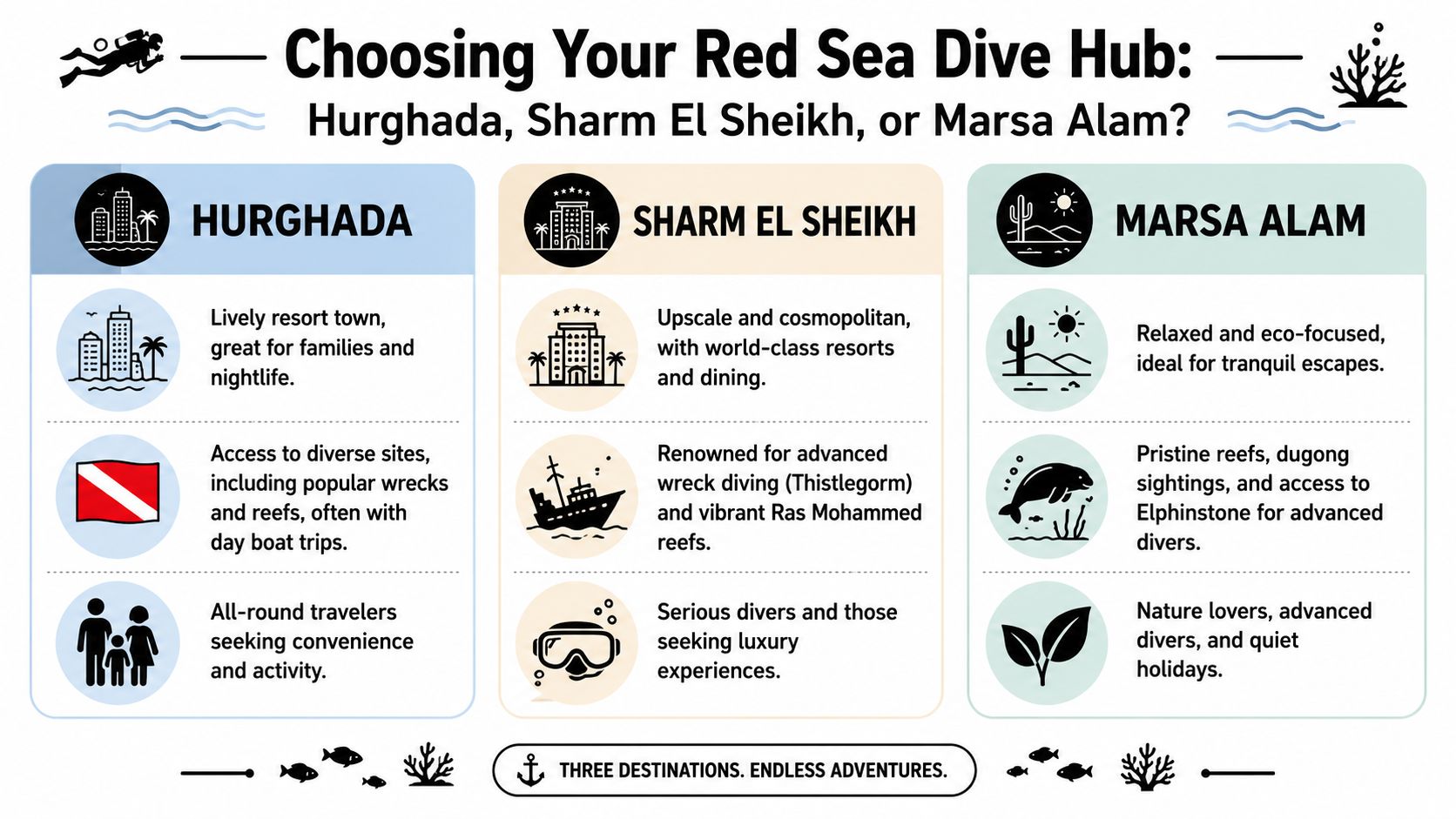
The coast is split in practical terms, not just on a map. Most mainstream tourism still runs through Sharm el Sheikh and Hurghada, while the more remote southern routes tied to sharks and large pelagics are commonly accessed by liveaboard from Marsa Alam, and those southern routes usually demand more comfort with current and a higher level of diving confidence (DAN overview of the southern Red Sea split).
Hurghada for flexible holidays
Hurghada is the most forgiving choice for mixed-ability groups. If one person wants diving, another wants snorkeling, and someone else just wants a resort, Hurghada handles that combination better than the other two.
It also works well for divers who don't want every day to revolve around a rigid dive schedule. You can mix boat days with rest days, city time, beach time, or lighter activities. That matters more than many people admit. Plenty of divers like the water but don't want an entire week built around briefing, gearing up, eating, sleeping, and repeating.
For first-time Egypt visitors, Hurghada is often the safest recommendation because it has enough infrastructure to make the trip easy without feeling overly locked into one style. If you want to look at the area itself, Hurghada travel ideas from a local Egypt team give a useful feel for how broad the destination is beyond diving alone.
Sharm for classic names and a more polished resort feel
Sharm suits divers who want famous northern diving names and a more established resort setup. It's a better fit for travelers who care about hotels, dining, and a polished holiday rhythm almost as much as the diving.
The big strength here is focus. If your wish list includes northern reef classics and you want a base with plenty of resort comfort, Sharm makes sense. It's also a better choice for divers who enjoy the idea of serious diving by day and a more cosmopolitan atmosphere in the evening.
Where people misread Sharm is assuming it suits everyone because the name is famous. It doesn't. If you're on a tight budget, dislike resort density, or want a quieter holiday, Sharm can feel less relaxed than expected.
Marsa Alam for divers who care more about the route than the town
Marsa Alam is the least forgiving choice if you book it for the wrong reasons, and often the best choice if you book it for the right ones. It fits divers who want quieter surroundings, more nature-led days, and access to stronger southern diving.
This is not the place to pick just because someone said the diving is “better.” Better for whom? If you're excited by offshore exposure, longer logistics, and a more dive-centered mood, Marsa Alam can be exactly right. If you want nightlife, easy non-diving entertainment, or very casual mixed-ability planning, it often isn't.
Book Marsa Alam for the reefs and route access, not for the town itself.
A quick way to choose
Use this filter:
- Choose Hurghada if your group has different interests and dive levels.
- Choose Sharm if you want famous northern diving with stronger resort polish.
- Choose Marsa Alam if the trip is mainly about diving quality in the south and you're comfortable sacrificing some convenience.
That simple filter solves most indecision faster than reading another generic list of dive sites.
Liveaboard or Land-Based Diving What to Choose
Once the base is clear, the next choice is the one people usually over-romanticize. Liveaboard or hotel with day diving? Neither is automatically better. They do different jobs.
A liveaboard is efficient, immersive, and dive-heavy. A land-based trip is more flexible, easier to pace, and usually better for anyone who wants the holiday to include something besides diving.
Liveaboard vs Day Trips A Quick Comparison
| Factor | Liveaboard | Land-Based Day Trips |
|---|---|---|
| Daily rhythm | Built around diving, meals, and sleep | More flexible, easier to add rest or sightseeing |
| Site access | Better for remote routes and offshore itineraries | Best for local reefs, nearshore wrecks, and comfortable day ranges |
| Physical demand | Higher, especially over several days | Easier to control fatigue |
| Vacation style | Dive safari feel, social boat environment | Hotel stay with diving added in |
| Non-diver friendliness | Weak | Much better |
| Weather tolerance | Harder to “opt out” once onboard | Easier to skip a day if needed |
| Sticker price clarity | Often looks all-in, but extras still matter | Can seem cheaper or pricier depending on what's included |
| Best for | Committed divers with specific site goals | Couples, families, newer divers, mixed groups |
What liveaboard pricing doesn't tell you
The brochure price for a liveaboard often looks simple. That's the appeal. You sleep on the boat, eat on the boat, and dive from the boat. But sticker prices rarely tell you how intense the week feels by the middle of it.
On a liveaboard, you don't just buy dives. You buy a schedule. Once you're in it, your days are set by briefings, timing, sea state, and the route. If you wake up tired, slightly chilled, or just not in the mood for another demanding dive, the trip doesn't really pause for you.
That's why liveaboards work best for divers who want a dive safari, not a beach holiday with some dives added.
Where land-based trips win
Land-based diving wins on control. You can pick your days, choose a better room, sleep properly, walk around in the evening, and build the week around your energy rather than the boat schedule.
That's especially important for:
- Newly certified divers who still need space between dives to settle in
- Couples with one diver and one non-diver
- Families who need flexibility
- Older travelers who enjoy diving but don't want a compressed routine
- Anyone prone to motion discomfort
A land-based trip also makes it easier to recover if the weather shifts or if one day's diving is more demanding than expected.
A lot of divers think they want maximum dives. Many actually want maximum enjoyment.
What works and what doesn't
What works is matching the format to the traveler.
Liveaboards work when the group is aligned. Everyone dives, everyone is comfortable with the rhythm, and the route includes sites that are hard to reach well from shore. They're also strong value when your main goal is underwater time, not resort time.
Land-based trips work when flexibility matters. They also tend to produce fewer avoidable mismatches, because it's easier to adjust once you arrive.
What doesn't work is trying to force one format to behave like the other. A liveaboard won't feel like a relaxed hotel holiday. A hotel-based trip won't give the same offshore reach as a strong safari route. Accept that difference early and you'll book much more intelligently.
Exploring the Famous Red Sea Dive Sites
The famous names matter, but access matters just as much. A site can be spectacular and still be the wrong choice for your trip if reaching it means long travel, rushed timing, or conditions beyond your comfort level.
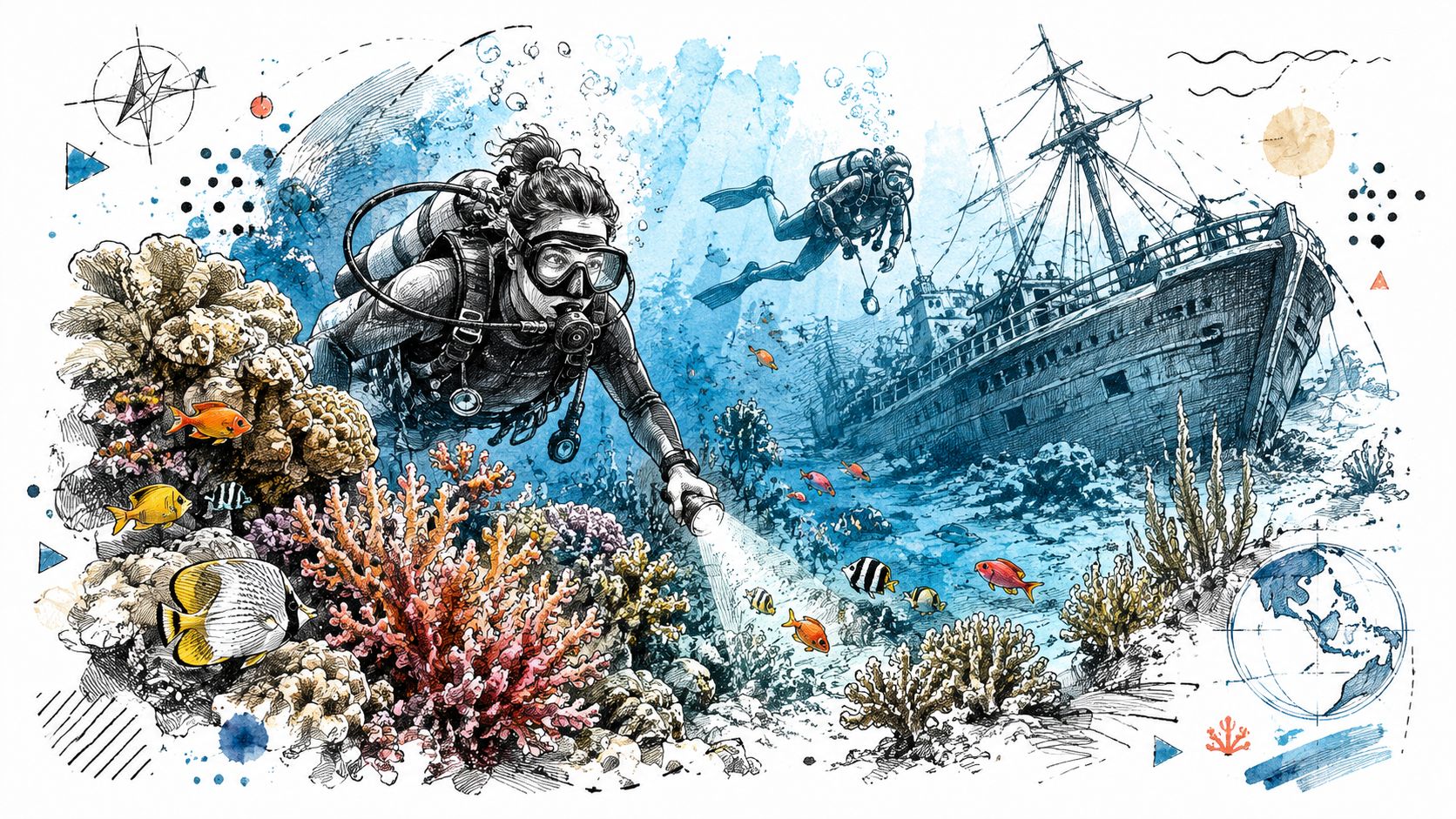
North classics
The northern Red Sea is where many divers meet the destination's most recognized names. This part of the coast appeals because it combines easier tourism logistics with sites that still feel dramatic underwater.
If you stay around Sharm, the obvious draw is access to reef systems associated with Ras Mohammed and the Straits of Tiran. These are the sort of places that made many divers want to come here in the first place. They suit people who like walls, reef structure, and strong scenic diving without having to commit to a southern expedition-style route.
From Hurghada, the pattern is broader and often easier going. You get a mix of reefs and wreck-oriented options, usually with simpler day-boat planning and less pressure to build the whole week around only the biggest names.
Straits and walls
The Red Sea is at its best when topography shapes the dive. Walls, pinnacles, drop-offs, current lines, and reef corners create the dives people remember.
That's why places like Tiran and marine park routes hold their reputation. It isn't just fish life. It's the geometry of the dive itself. You descend and the reef starts doing the work for you, creating movement, scale, and that feeling that the blue water beside you might produce something larger at any moment.
For a sense of the atmosphere underwater, this short clip gives a useful visual break before more route detail.
The deep south
The southern names carry more mystique for a reason. Elphinstone, Daedalus, the Brothers, and St. John's are where divers usually start talking less about convenience and more about exposure, current, blue-water anticipation, and pelagic potential.
These are not sites to choose just because they look good in photos. They reward divers who are stable in the water, relaxed in current, and happy with longer boat logistics. They also tend to make the most sense as part of a route rather than as isolated checklist dives.
For travelers interested in technical rather than recreational profiles, the Red Sea has a separate layer entirely. SSI's technical guide describes Blue Hole and Deep Canyon style environments with depths beginning around 35 meters, moving to 42 meters at the shallowest point, with arches at 42, 50, and 52 meters, a tunnel exit at roughly 66 to 69 meters, and a northern end ranging from 50 meters shallow to 90 meters deep under an overhang. The same guide notes Yolanda Reef area features including a plateau around 98 meters and a wreck resting past 160 meters, which is why trimix, staged decompression, and exact gas planning define those dives rather than ordinary recreational technique (SSI technical Red Sea site guide).
Some Red Sea names belong on recreational wish lists. Others belong in a technical planning folder. Mixing the two is where divers get into trouble.
The practical takeaway is simple. Pick sites by access method, conditions, and your real comfort level, not by fame alone.
When to Plan Your Red Sea Diving Trip
A lot of travel pages flatten the answer to “when should I go?” into one line: anytime. That's not wrong, but it's not useful either. The better answer depends on where you're diving and what you want to see.
One reputable operator notes that Red Sea water is consistently clear, with the best window for northern sites running roughly December to April, while Port Ghalib is a preferred base for the southern Red Sea in May to July. The same source gives typical water temperatures of 72 to 82°F (22 to 28°C) and air temperatures of 70 to 93°F (21 to 34°C) (seasonal Red Sea diving conditions guide).
What conditions really mean underwater
Those temperature ranges look comfortable on paper, and often they are. But divers regularly underestimate what repeated exposure feels like over several days, especially on deeper walls or dive-heavy boat schedules.
A 5 mm wetsuit is often fine in warmer periods for standard recreational diving. That said, repetitive days, deeper profiles, and longer stops can make people colder than expected. On northern shoulder-season trips, many divers are happier with a bit more thermal margin than they first planned.
That's one of the quiet planning errors in red sea diving trips. People pack for a holiday temperature, not for a repetitive dive week.
Plan around animals, not just temperature
If you're going south to chase larger animals, timing matters more than many mainstream guides admit. The better question is not “when is it warm?” It's “when does this itinerary match what I want to see?”
For divers chasing pelagics, one liveaboard guide highlights October and November as prime months for oceanic whitetip sharks, while May and June offer a special chance to see schooling hammerheads in the deep south, especially on routes tied to areas such as Daedalus and St. John's (Red Sea liveaboard shark season notes).
That changes how you should book. A summer trip can be warm and enjoyable but still be the wrong answer if your real goal is a specific animal encounter in a different season.
For general Egypt timing around weather and travel style, this local guide on the best time to visit Egypt is useful as a broader planning reference.
If you want sharks, book for sharks. If you want easy comfort, book for comfort. Don't pretend those are the same trip.
Your Dive Certification Equipment and Safety Guide
The cleanest way to avoid a bad Red Sea trip is to be honest about your current diving. Not your ideal diving. Your current diving.
A lot of problems start with perfectly decent divers booking a route that belongs one level above their comfort. They can descend, clear, hover, and finish the dive. But they don't enjoy current, don't like negative entries, get stressed in blue water, or get cold by the second dive of the day. On paper they qualify. In reality they're overloaded.
Match the itinerary to the diver
A simple filter works well.
- Newer certified divers usually do better on land-based plans, easier day boats, house reefs, and routes where skipping a site doesn't wreck the whole week.
- Experienced recreational divers can enjoy stronger walls, drift profiles, and more ambitious offshore days if they're comfortable in current and good with boat routines.
- Mixed groups should always book to the least experienced regular diver, not the most enthusiastic one.
- Technical divers should treat technical Red Sea routes as their own category, with separate planning from ordinary holiday diving.
This isn't about ego. It's about matching stress load to enjoyment.
What to bring and what to rent
Bring the gear that affects comfort and familiarity most. Mask, computer, and anything you know fits your body well usually earn their luggage space. Exposure protection is another one. If you already know how cold you run, your own wetsuit is often worth bringing.
Rental gear can work perfectly well for many travelers, especially if you don't want to fly with heavy equipment. But don't save money by renting the items you're most fussy about. A mediocre rental mask can spoil an otherwise very good week.
A few basics matter more than people think:
- Dive computer if you own one
- Certification card and log details
- Surface marker buoy if that's part of your normal setup
- Reef-safe sun protection
- A light layer for windy boat rides
Technical diving is its own category
Technical divers know this already, but it still needs saying clearly. The famous technical names in the Red Sea are not “advanced fun dives.” They are proper technical undertakings.
SSI's Red Sea technical material notes Blue Hole features including arches between 42 and 52 meters, a tunnel exit around 66 to 69 meters, and depths extending past 90 meters. Those are trimix and staged decompression profiles that demand meticulous gas planning, strict ascent discipline, and appropriate bailout thinking, not casual holiday bravado.
The most dangerous diver on a Red Sea trip is often the one who is certified enough to say yes, but not current enough to know when to say no.
Safety also starts before the first splash. Carry proper dive insurance, ask about oxygen and emergency procedures, understand your route, and protect the reef by keeping your trim, fins, and hands under control. Good diving and good reef behavior are the same habit in different forms.
Sample Itineraries and Realistic Costs for 2026
Brochure logic often breaks down. Travelers compare package prices without comparing what the week will feel like. A cheaper trip can become poor value if it forces the wrong base, the wrong rhythm, or the wrong type of diving.
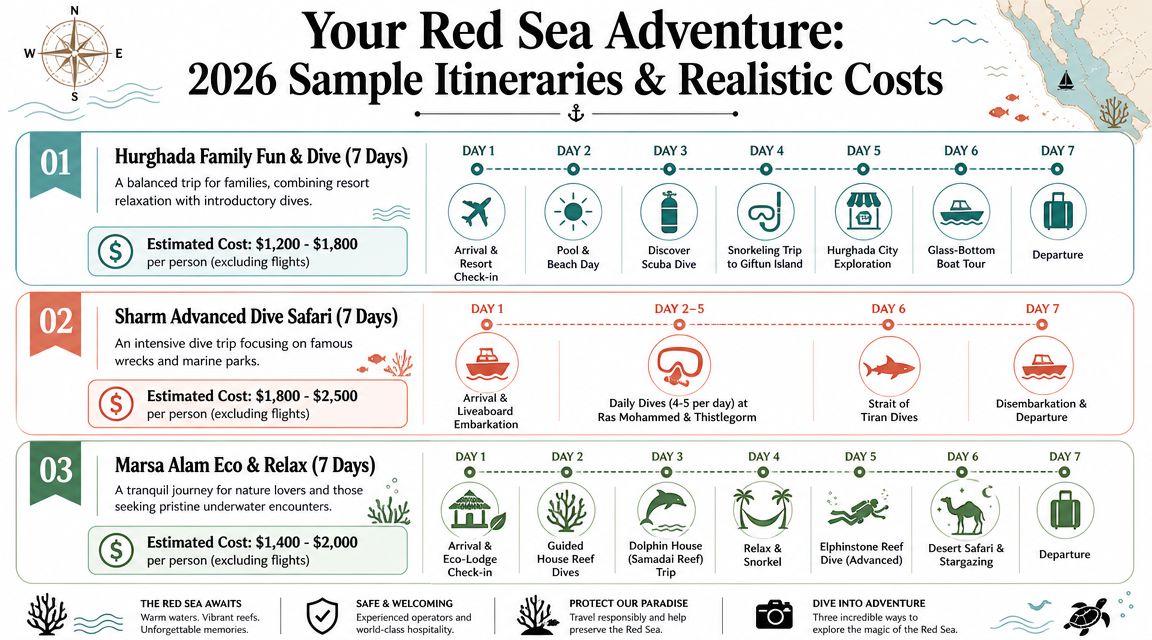
The figures below are planning ranges for 2026, not fixed market promises. They're useful because they accurately reflect style differences. A low sticker price often excludes the things that shape the week most, such as transfers, equipment, marine park fees, nitrox, room category, private guiding, or the cost of adding non-diving comfort around the diving itself.
Trip one for easy diving and a normal holiday
From €600 to €1,000 per person, excluding flights, is a realistic planning range for a comfortable land-based Hurghada week if the aim is balance rather than maximum diving.
A typical rhythm looks like this:
- Day 1 arrival and check-in
- Day 2 easy start, hotel or beach
- Day 3 guided day diving or an introductory dive day
- Day 4 snorkeling or a reef day without pressure
- Day 5 city wandering or a non-diving excursion
- Day 6 second dive day if energy and conditions line up
- Day 7 departure
This kind of trip suits couples, newer divers, and families because nobody is trapped inside a dive schedule they didn't really want.
Trip two for classic northern names
From €900 to €1,400 per person, excluding flights, is a more realistic planning range for a northern dive-focused week built around a Sharm stay or a northern route with more serious diving intent.
This is the trip for someone who wants recognized reef names and doesn't mind a more dive-centered holiday rhythm. You might spend most of the week on boat days, with less interest in general sightseeing and more interest in getting the right sites on the right weather days.
What often catches people out here is that northern “classics” still need smart pacing. If every day is loaded from the start, fatigue creeps in fast. A strong itinerary leaves room for one lighter day or at least one easier afternoon.
Trip three for strong divers who want the south
From €1,200 to €2,000 per person, excluding flights, is a sensible planning range for a southern itinerary out of Marsa Alam or a liveaboard-focused week for divers who care most about route quality.
Sticker prices are particularly misleading. The base fare can look attractive, but the total trip only makes sense if you want the things you're paying for: the route, the marine exposure, the boat routine, and the dive intensity.
A typical week here might involve:
- Arrival and short recovery window
- Embarkation or transfer into dive-focused accommodation
- Several consecutive diving days
- One weather-shaped adjustment day, if needed
- Final diving day with conservative pacing
- No-fly interval
- Departure
This isn't the smartest first Red Sea trip for many. But for the right diver, it's the one they remember longest.
Cheap on paper and expensive in effort is still expensive.
Your Essential Red Sea Packing Checklist
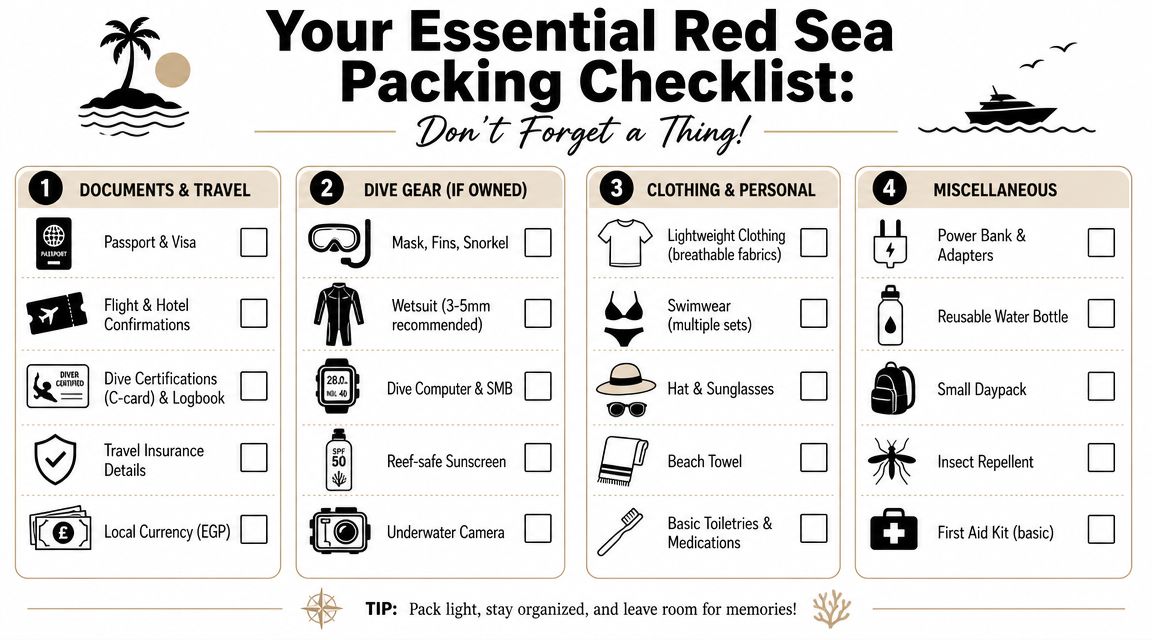
Packing for red sea diving trips is less about bringing everything and more about bringing the things that prevent friction. Missing one document or one familiar piece of kit causes more problems than forgetting three non-essential gadgets.
Documents and dive admin
Start with the items that can stop the trip before it starts.
- Passport and visa paperwork if required for your nationality
- Flight and hotel confirmations
- Dive certification card
- Logbook or digital dive history
- Insurance details, especially dive cover
- Local payment backup, since small operational expenses don't always line up neatly with how travelers expect to pay
If you want a general travel prep list beyond diving, this Egypt packing guide is a practical companion.
Clothing and boat-day basics
Red Sea packing is about managing heat, sun, wind, and salt.
Bring:
- Lightweight clothing that dries quickly
- Swimwear, ideally more than one set
- Hat and sunglasses
- Reef-safe sunscreen
- Small dry bag or waterproof pouch
- Flip-flops or easy boat shoes
- A warmer layer for early starts, wind, or post-dive chill
If you dive multiple days in a row, that extra layer earns its space fast.
Nice-to-have items that earn their place
Some things aren't essential until the moment they suddenly are.
- Own mask and dive computer
- Spare save-a-dive basics if you're used to carrying them
- Power bank and plug adapter
- Reusable water bottle
- Basic medications you trust
- Small daypack
- Underwater camera, if you'll use it and not just carry it
The best checklist is the one that leaves room for comfort, not just compliance. Pack for the diving you're doing, the boat days you're booking, and the amount of rest you know you'll need.
If you want help planning a Red Sea trip that matches your real dive level and holiday style, Oh Yes Tours can help you build it with local guidance from people based here in Egypt. We keep it straightforward, private, and flexible. No middleman layer, no rushed cookie-cutter program, and no pressure to book the flashiest route when a smarter one will suit you better. Egypt? Oh Yes!