Egypt travel
Red Sea Diving Tours: A Local's Guide for 2026
Planning Red Sea diving tours? Get a local guide's honest advice on Hurghada, Sharm, liveaboards, key sites, prices, and booking for your 2026 trip.

By Mohamed Hassan · Senior Local Guide · 12 years
Most advice about Red Sea diving starts with the same mistake. It tells you to choose a famous site first.
That sounds logical until you try to book. Then you hit reseller pages, recycled “top 10” lists, and packages that make every diver sound the same. A newly certified holiday diver is shown the same trip names as someone chasing offshore reefs and deep wrecks. That's how people end up on the wrong boat, in the wrong town, with the wrong expectations.
I work from Hurghada, and the better way to choose Red Sea diving tours is to start with your base, dive style, and certification reality, then match that to sites. The Red Sea is one of the few places where the same trip can combine reefs, wrecks, and blue-water action, but that doesn't mean every route fits every diver.
If you're planning your first Red Sea trip, or your fifth, the useful questions are practical. Where should you stay? Do you want a liveaboard or daily boat diving? Which famous sites are accessible from your base? And are you certified for the dives being advertised?
Table of Contents
- Your Essential Guide to Red Sea Diving
- Choose Your Dive Base Hurghada vs Sharm vs Marsa Alam
- Liveaboards vs Day Trips Find Your Dive Style
- Red Sea Crown Jewels A Guide to Legendary Dive Sites
- Your Dive Certification and What It Unlocks
- Planning Your Trip Seasons, Sample Costs, and Itineraries
- Booking Your Dive Tour A Local's Final Checklist
Your Essential Guide to Red Sea Diving
The mistake I see all the time is simple. Travelers book a Red Sea dive tour by chasing famous site names, then realize too late that the trip style, base, or pace does not suit them.
Red Sea diving is strong because it offers real range. A single holiday can include easy coral dives, current-led drifts, and serious wrecks, or it can stay relaxed with short boat days and plenty of time back on land. That variety keeps bringing back both first-time visitors and divers who have already logged several Egypt trips.
From a working guide's perspective in Hurghada, the smart way to choose is to ignore the reseller sales language for a minute and start with fit. A good tour is not the one with the longest site list. It is the one that matches your experience level, who you are travelling with, how much boat time you enjoy, and whether you want diving to be the whole holiday or just part of it.
Practical rule: Book for the route and rhythm, not the marketing headline.
The Red Sea also works well for travelers because operators can build very different holidays around the same coast. Some guests want two easy boat dives, lunch on deck, and a hotel pool by late afternoon. Others want early starts, repeated deep profiles, and a full week sleeping on a liveaboard. Both can be good choices. Problems start when people book one style while expecting the other. If you are starting in Hurghada, it helps to look at Hurghada tours and trip options alongside the diving, because transfers, hotel location, and non-diving plans often shape the better decision more than the site names do.
The framework I use with guests comes down to four choices:
- Choose the right base: Hurghada, Sharm El Sheikh, and Marsa Alam each suit a different kind of trip.
- Choose the right format: Day boats and liveaboards feel completely different in practice.
- Choose sites that fit the route: Some famous reefs and wrecks are easy from shore-based programs. Others make sense only on longer itineraries.
- Choose according to your certification and comfort: Depth, current, and boat routine matter as much as the headline site.
Get those four right and the Red Sea usually delivers exactly what people came for. Get them wrong and even a famous itinerary can feel like hard work.
Choose Your Dive Base Hurghada vs Sharm vs Marsa Alam
Your base shapes the whole holiday. Not only the diving, but also the atmosphere before and after the boat, who else tends to book there, and how easy it is to mix diving with normal holiday life.
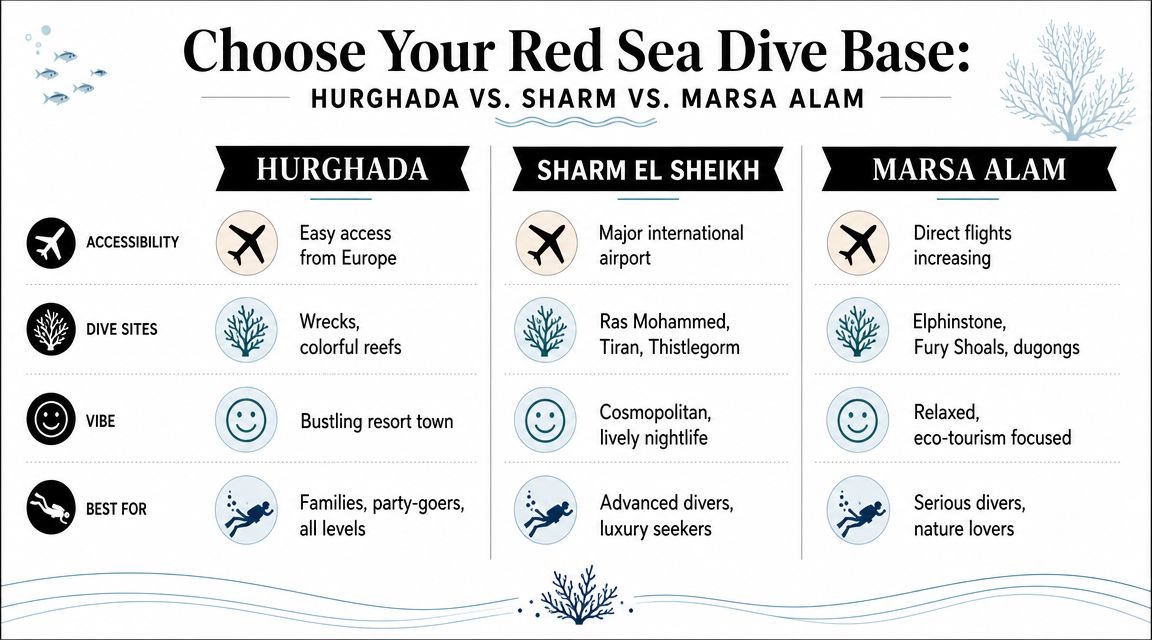
Red Sea Dive Hubs at a Glance
| Feature | Hurghada | Sharm El Sheikh | Marsa Alam |
|---|---|---|---|
| General feel | Busy resort city with broad choices | Established classic Red Sea resort | Quieter southern base with a more remote feel |
| Best fit | Mixed holidays, flexible diving, varied traveler types | Travelers focused on iconic Sinai routes | Divers who want a more dive-led trip |
| Typical strength | Versatility | Easy access to famous northern sites | Southern reef atmosphere and serious dive focus |
| Good for non-divers | Yes, easily | Yes, if they like resort life | Less so, unless they want a quiet beach stay |
| Trip style that suits it | Day boats and liveaboards | Day boats and selected liveaboards | Dive packages and southern routes |
How I'd choose each base
Hurghada is the easiest all-rounder. If someone asks me for a Red Sea trip with the fewest compromises, this is usually where I start. You can build a relaxed holiday around day diving, add snorkeling or non-dive excursions, and still have access to proper dive infrastructure. It also works well for mixed groups where not everyone wants to spend the entire week underwater.
That flexibility is the advantage. A diver can spend two or three days on local boat diving, while a partner books beach time, a desert trip, or a city outing. If you want to browse what that wider destination mix looks like, Hurghada tours and day experiences give a good sense of how easy it is to combine diving with the rest of a holiday.
Sharm El Sheikh is the classic answer for people who already know the names Ras Mohammed and Tiran and want to be close to that northern Sinai identity. It feels more purpose-built as an international resort. For some travelers, that's perfect. For others, it can feel a little more packaged.
Sharm suits divers who want iconic names with a polished resort setting. It's also a strong choice if your idea of a holiday includes lively evenings after the dives.
Marsa Alam is where I send people who tell me, “I'm coming for the diving first.” It has a different energy. Less city, less noise, more focus. You give up some convenience and nightlife, but you gain a stronger sense that the sea is the main event.
If your partner doesn't dive, Hurghada is usually the safest compromise. If everyone in the booking is dive-focused, Marsa Alam often makes more sense.
A quick word on Dahab. I wouldn't put it in the same broad category for most first-time trip planners, but it has a strong identity and attracts divers who like a more stripped-back, specialist atmosphere. It's a smart choice for some travelers, just not the most universal one.
What doesn't work is choosing a base purely from Instagram clips of one site. Choose the town for the holiday you want to live in between dives. The underwater part matters most, but the above-water rhythm decides whether the trip feels easy or tiring.
Liveaboards vs Day Trips Find Your Dive Style
The wrong Red Sea dive trip usually starts with the right site list.
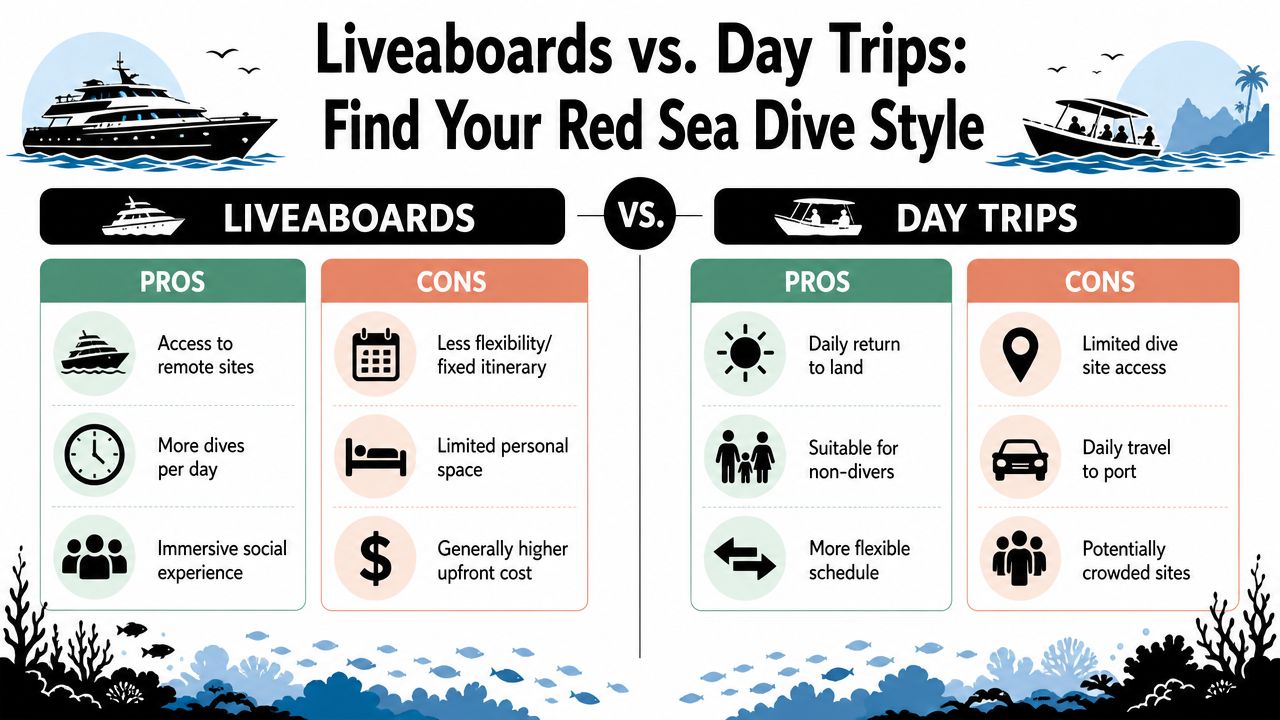
I see this all the time in Hurghada. A diver tells me they want Brothers or Daedalus, so they assume liveaboard. Another says they only have four days, so they assume day boats. Sometimes that logic works. Often it doesn't. The better filter is simpler: what kind of diving rhythm will you still enjoy on day three, when you are a bit tired, a bit salty, and making honest decisions instead of fantasy-booking decisions?
When a liveaboard is the right answer
A liveaboard suits divers who want the whole week built around diving. You wake up at the site, brief, dive, eat, rest, and do it again. That pace is efficient, and for offshore routes it is often the only sensible way to do the trip properly.
This matters most for itineraries built around sites such as Brothers, Daedalus, and Elphinstone. From land, those names can look close enough on a map. In practice, the travel time and scheduling make a big difference. On a decent liveaboard, you spend more time in the water and less time commuting.
A liveaboard usually fits if these points sound familiar:
- You want access, not convenience. Offshore reefs and multi-stop routes are the priority.
- You are comfortable with a fixed routine. Briefings, meal times, and dive windows run on the boat's schedule.
- Everyone in your group is there to dive. A non-diver on a liveaboard can get bored quickly.
- You already know your sea legs. If you get motion sick, a week onboard can feel long.
The trade-offs are real. Cabins vary a lot. Budget boats can be good on guiding and weak on comfort. Premium boats improve food, space, and service, but the price rises fast. In the Red Sea, a standard 6 to 7 night liveaboard often starts around €900 to €1,400 per person before marine park fees, nitrox, equipment rental, and crew tips. Better boats and peak dates go higher.
I tell divers to ask one blunt question before booking: do you want a dive holiday, or do you want a boat-based dive week? They are close, but not the same product.
When day trips work better
Day trips suit more travelers than liveaboard marketing would have you believe.
They are usually the better call for newer divers, mixed groups, and anyone who wants strong diving without giving up evenings on land. You dive during the day, return to your hotel, have dinner where you like, and skip a day if your ears, back, or energy level need a break. That flexibility matters more than people expect.
Day boats also make price control easier. In Hurghada, a standard two-dive day boat commonly lands around €45 to €80 per person, depending on the boat, site, season, and whether gear, lunch, and transfers are included. Add-ons such as a third dive, private guide, or equipment rental change the final number, but the cost is still easier to manage than a full liveaboard commitment.
Day trips are usually the better fit if:
- You are traveling with a partner or family member who does not dive.
- You want proper hotel sleep and normal evenings.
- You are newly certified and still getting used to current, entries, and boat routines.
- You want to mix diving with beach time, desert trips, or a few easier holiday days.
For southern land-based holidays, it helps to look at the wider mix of Marsa Alam tours and activities before you book your dives. That gives you a more realistic view of whether the trip works for divers only, or for the whole group.
My rule of thumb is simple. Choose day trips if you want balance. Choose a liveaboard if you are happy to commit to the boat rhythm, close quarters, and a schedule that revolves around diving from wake-up to lights out. The best choice is the one that still feels right after the excitement wears off.
Red Sea Crown Jewels A Guide to Legendary Dive Sites
The mistake I see all the time is divers choosing Red Sea trips by famous site names alone. That is how people book the wrong week, from the wrong base, on the wrong type of boat.
A better way is to sort the Red Sea into route families. Once you do that, the booking pages become easier to read. You stop asking, “What is the most famous site?” and start asking, “What kind of diving do I want for these days, in these conditions, with my level of experience?”
Northern wrecks and classic reef routes
The northern circuit is the easiest place to start because it gives you variety without forcing full expedition-style diving. SS Thistlegorm is still the headline wreck, and it earns that status. Even after years of guiding, I still brief it carefully because it can be spectacular or stressful depending on current, crowding, and how comfortable a diver is around lines, depth, and penetration rules. Divers who expect a relaxed sightseeing swim sometimes come up surprised.
Abu Nuhas suits divers who want more than one wreck story on the same trip. You are not betting everything on a single site. If one wreck is busy or conditions shift, the area still gives the guide options. That matters more than people realize on a short itinerary.
Then there are the reef systems. Ras Mohammed and Tiran give the north its range. These are not “backup dives” for people who could not get on a wreck schedule. They are often the dives that show guests why the Red Sea built its reputation in the first place. Strong reef shape, clean visibility on a good day, schooling fish, and enough current to keep things lively without turning every dive into a technical exercise.
For practical trip matching, northern wreck and reef routes usually suit divers who want a broad sample of the Red Sea rather than one high-commitment pelagic itinerary.
Offshore marine parks and pelagic routes
Then come the exposed sites. Brothers, Daedalus, and Elphinstone are the names people chase when they want walls, blue water, stronger current, and the chance of bigger animals. These sites can be excellent. They can also be disappointing if you book them for the wrong reason.
I tell guests to book offshore routes for the style of diving, not for a promise of sharks. Pelagics are never guaranteed. Current, surface chop, negative entries, and strict pickup procedures are much more predictable parts of the experience. If that sounds exciting, these routes may fit you perfectly. If it sounds tiring, there is no shame in choosing reefs and wrecks instead.
That trade-off is the whole point. Offshore marine park dives often give you the strongest sense of being far from shore and fully committed to the day's conditions. They also demand better buoyancy, better gas awareness, and calmer reactions when the sea is less cooperative.
A short look underwater helps if you're trying to picture the atmosphere of these routes:
Here is the simple framework I use when helping travelers choose:
- Choose northern wreck routes if you enjoy history, structure, and a fuller site list in one trip. Thistlegorm and Abu Nuhas are strong picks for divers who like orientation, wreck details, and a mix of wreck and reef days.
- Choose classic reef routes if you want the Red Sea at its most balanced. Ras Mohammed and Tiran often work well for photographers, mixed-experience buddy teams, and divers who want fish life without committing to harsher offshore conditions.
- Choose marine parks if blue-water exposure is the goal. Brothers, Daedalus, and Elphinstone are better for divers who already know they are comfortable with current, boat procedures, and less forgiving briefings.
- Do not cram every famous name into a short holiday. A rushed plan usually means more transfers, less margin for weather, and too many dives where you are thinking about logistics instead of the reef.
Some travelers ask about specialty days such as Sataya Reef for dolphin encounters. Those trips can be memorable, but I would not mix them into the same category as Thistlegorm, Brothers, or Daedalus. Start with the route family that fits your actual diving style. Add specialty days after that if you still have time and energy.
Your Dive Certification and What It Unlocks
Certification decides which boats will suit you, which briefings will make sense, and which sites you can dive without spending the day stressed. In the Red Sea, that matters more than glossy sales pages suggest. A trip can look perfect on paper and still be the wrong fit if your training level does not match the depth, current, or entry style.
For new divers, Open Water is enough to start well. The Red Sea is a good place to learn because clear water and simple reef topography make buoyancy practice easier than in cold, dark training environments. A commonly sold option is a Red Sea learn-to-dive trip that bundles training, equipment, transfers, and certification into one holiday.
What I usually tell friends is simple. Do not rush from your course straight onto the most famous itinerary in Egypt.
A fresh Open Water diver can have an excellent week around Hurghada or sheltered parts of Sharm. Shaab El Erg, Abu Ramada, Fanous, and similar reef days give you time to settle your weighting, air consumption, and trim before adding depth and stronger current. You will enjoy those dives more, and your buddy will too.
Advanced Open Water is where your options widen. Not because the card is magical, but because many flagship Red Sea dives are deeper, busier, and less forgiving. Thistlegorm often means depth, multiple deck levels, and heavy diver traffic. Brothers and Daedalus can mean current, blue water descents, and stricter boat procedures. On many liveaboards, that combination makes Advanced the practical baseline even when an operator phrases it as a recommendation rather than a hard rule.
The gap that causes trouble is not beginner versus expert. It is booked versus suitable.
I see this all the time with travelers who say, “I've done 20 dives on holiday, so I should be fine for everything.” Maybe. Maybe not. Twenty easy reef dives do not prepare you automatically for a negative entry off a zodiac, a downline in current, or a wreck dive where depth management matters from the first minute.
Use this rule of thumb:
- Open Water: Best for local day boats, easier reef sites, refreshers, and building confidence.
- Advanced Open Water: Better for deeper wrecks, more exposed offshore sites, and many liveaboard routes.
- Low experience for the route: Even with the right card, you may be restricted by the dive guide or asked to skip a dive if conditions are beyond your comfort.
That last point surprises people. Certification is one filter. Recent experience is the other.
If you have the card but have not dived in a year, book a check dive or an easy first day. If you are planning the trip around season as well as skill level, this guide to the best time to visit Egypt for diving and travel comfort helps you match conditions to your experience instead of chasing the cheapest departure.
The best booking decision is usually the less ambitious one. Get the training first, add a refresh if needed, and choose a route you can enjoy fully rather than a famous one you only half-use.
Planning Your Trip Seasons, Sample Costs, and Itineraries
The mistake I see all the time is travelers chasing the “best season” before they decide what kind of diving they want. In the Red Sea, the better question is simpler. Do you want warm, easy conditions for relaxed reef diving, or are you happy to trade some comfort for quieter boats and a different feel underwater?
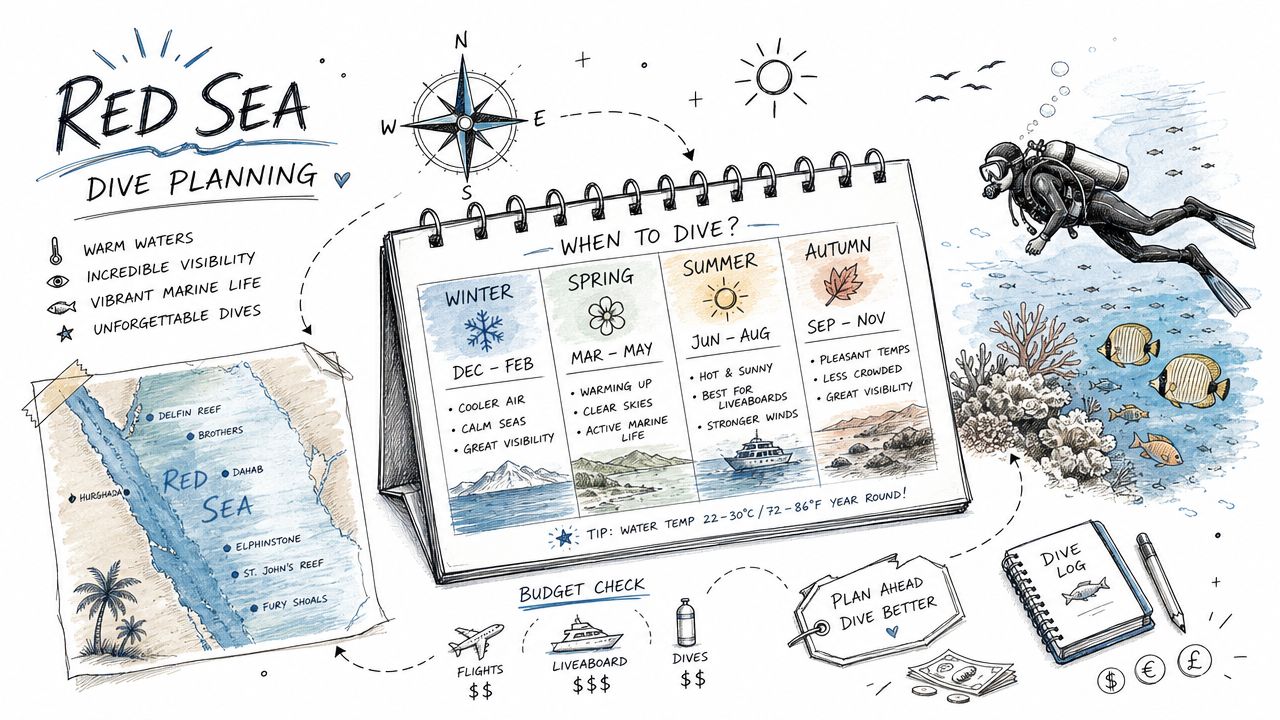
How the seasons really feel underwater
You can dive the Red Sea year-round. What changes is how the day feels on the boat, what exposure protection you want, and how much heat you can handle between dives.
Winter suits divers who do not mind cooler water and want a calmer overall trip on land. The sea can still be very good, but that first giant stride at 8 a.m. feels different in January than it does in August. A full wetsuit becomes more important, and long surface intervals feel chilly if the wind picks up.
Summer gives you warmer water and easier thermal comfort underwater, especially for newer divers or anyone who gets cold fast. The trade-off is the heat on deck, during transfers, and back at the hotel. Some guests love it. Others are tired before the second dive because they underestimated the sun, not the sea.
Spring and autumn are usually the easiest recommendations for mixed groups. Divers stay comfortable, non-divers enjoy the weather, and the whole holiday works better. If you are balancing diving with beaches, family time, or inland travel, this guide to the best time to visit Egypt for diving and overall trip comfort helps match the season to the rest of your plans.
Sample costs you can actually plan around
Prices vary by base, boat standard, and what is included, but rough planning numbers help filter out weak offers fast.
In Hurghada, a standard day boat with two dives usually lands around €50 to €90 per diver before marine fees, equipment rental, and hotel transfers if they are not included. Cheaper deals exist, but they often cut corners somewhere. Sometimes it is lunch quality. Sometimes it is old rental gear. Sometimes it is a crowded boat with six levels of divers following one rushed briefing.
Liveaboards are a different calculation. A budget week can start around €700 to €1,000 per person, while stronger mid-range boats often sit higher once you add park fees, nitrox, cabin type, and transfers. The headline price rarely tells the full story. Ask for the final number, not the ad number.
I tell friends to budget for three separate buckets:
- boat package
- rental kit and fees
- hotel nights before and after diving
That last part gets missed a lot, especially by travelers who book a cheap liveaboard and then realize they still need an arrival night, a departure night, and airport transfers.
Realistic itinerary shapes
A good Red Sea plan usually fits one of three patterns.
1. Two or three dive days based on shore or day boats
This works well for rusty certified divers, families, and couples where only one person dives. Base yourself in Hurghada or Sharm, keep the schedule loose, and leave room for weather, fatigue, or a simple beach day. It is the least stressful format.
2. Four to six dive days from a land base
This is the sweet spot for many travelers. You get enough time to settle in, do a check dive if needed, and mix easier reefs with one or two more ambitious days. In Hurghada, that might mean local reefs first, then a longer day toward Abu Ramada or a trip with stronger drift potential once you are dialed in.
3. A full liveaboard week
This suits divers who want diving to be the whole holiday. Wake, dive, eat, brief, repeat. It is excellent value for serious divers, but it is not a floating hotel break. Space is tighter, schedules are fixed, and if you discover on day one that the route or pace is wrong for you, you cannot adjust much.
A practical way to choose the right plan
Use this framework before you book anything:
- If you have not dived recently: book a short land-based block first
- If your partner or family does not dive: stay flexible and keep the boat days limited
- If your priority is famous offshore sites: allow enough days, or book a route built around them
- If price is your main filter: compare the total cost, not the advertised package only
- If you are flying long-haul: do not cram diving into every available day
One more point matters. Conservative itineraries usually make better holidays.
Three good dive days beat six tired ones. An extra hotel night before flying home is often money well spent. And if you are torn between a cheaper trip that looks busy and a simpler one you know you can enjoy, pick the simpler one. That is usually the booking you do not regret.
Booking Your Dive Tour A Local's Final Checklist
Before you pay for any Red Sea diving tour, check the basics that resellers often blur.
Ask who is operating the trip. Not the website brand, but the direct operator. Ask about dive certification requirements for the exact route, equipment quality, group handling, and whether the advertised sites are realistic for your season and your experience. If it's a liveaboard, ask about boat safety procedures and how briefings are handled. If it's a day-boat package, ask where departures happen and how much of your day is spent transferring versus diving.
Then check the non-glamorous details:
- Insurance: Make sure it covers diving, not just general travel.
- Medical support: Ask about emergency procedures and nearest chamber logistics.
- Rental kit: Confirm what's included and what quality level to expect.
- Cancellation terms: Read them before paying, not after.
- Communication: If the operator answers vaguely before the booking, expect the same after it.
The safest bookings usually come from direct, clear conversations with people on the ground. That doesn't guarantee a perfect trip, but it does remove a lot of reseller fog.
If you want to book Egypt with people who live here, Oh Yes Tours is built around direct contact with local guides in Hurghada, straightforward planning, pay-on-the-day flexibility, and free cancellation up to 48 hours before. For travelers who'd rather avoid reseller markup and talk to the people running the experience, it's a smart way to keep your trip simple. Egypt? Oh Yes!