Egypt travel
5 Unmissable Places in Egypt: A 2026 Local's Guide
Discover the best places in Egypt. A local's guide to Cairo, Luxor, Nile cruises, and the Red Sea with real 2026 prices, tips, and logistics.

By Mohamed Hassan · Senior Local Guide · 12 years
Forget the group tours. Most advice about places in Egypt still pushes the same rushed checklist: Cairo in a day, Luxor in a day, maybe the Red Sea if you still have energy left. That sounds efficient on paper and feels exhausting in real life.
The better way is simpler. Pick the right base, accept that Egypt is big, and build your trip around transfer time, not just famous names. Neutral travel guidance already makes this clear. Cairo, Luxor, Aswan, Hurghada, Sharm El Sheikh, and Marsa Alam are far enough apart that many combinations work best with domestic flights or overnight stays, not heroic day-hopping by road (Osiris Tours travel guidance).
From Hurghada, I see the same mistake again and again. People try to “do Egypt” instead of doing the version of Egypt that suits them. Families usually need shorter activity windows and less heat. Couples often want one iconic cultural stop, one scenic stop, and downtime. Retirees almost always enjoy Egypt more when they slow the pace and avoid back-to-back transit days.
So this isn't another glossy top-10 list. It's a practical guide to the places in Egypt that most travelers from Red Sea resorts can build a real trip around. You'll get the honest trade-offs, typical trip shapes, what works for different traveler types, and what I'd avoid if you don't want to spend your holiday stuck in vehicles, queues, or overhyped stops.
Table of Contents
- 1. Pyramids of Giza & Cairo
- 2. Nile Cruise from Luxor to Aswan
- 3. Red Sea Snorkeling & Glass-Bottom Submarine
- 4. Desert Safari & Quad Biking
- 5. Valley of the Kings & West Bank Luxor
- Top 5 Egyptian Sites Comparison
- Ready to Plan Your Egypt Adventure? Oh Yes!
1. Pyramids of Giza & Cairo
If you're visiting Egypt for the first time, don't let anyone talk you out of Giza. The Pyramids of Giza are famous for a reason. They were built over 4,500 years ago during Egypt's Fourth Dynasty, the Great Pyramid of Khufu is the largest at Giza, and it's widely described as the last surviving wonder of the ancient world. Egypt also has more than 130 discovered pyramids overall, which tells you the pyramid tradition was much wider than one plateau near Cairo (ancient Egypt overview from On The Go Tours).
Why Giza still belongs on a first trip
What people get wrong is not the site itself. It's the timing. Giza is one of the easiest major ancient sites to reach on a short trip because it sits near Cairo, and that practical access is exactly why it anchors so many Egypt itineraries.
From Hurghada, a same-day Cairo run is possible, but it's usually better on paper than in your body. A flight-based day trip can work if your goal is “I must see the pyramids this trip.” If your goal is “I want to enjoy Cairo,” stay overnight.
Practical rule: For most travelers, Giza is worth it. Cairo as a rushed same-day add-on usually isn't.
A lot of visitors underestimate how much walking Giza takes. Even without going inside the Great Pyramid, you'll cover real ground on the plateau, then add the Sphinx area, security lines, toilets, shade breaks, and lunch. Families with young kids often do best with a short, early Giza window and then one calm Cairo stop, not a full city marathon.
For planning your sightseeing order and choosing the right stops, this Cairo attractions guide from Oh Yes Tours is a useful starting point.
What works and what doesn't from Hurghada
The best version from Hurghada is usually one of these:
- Early flight with one overnight in Cairo. Best for couples, retirees, and travelers who want the museum or old Cairo without rushing.
- Single long day focused on Giza first. Best for travelers short on time who accept a packed schedule.
- Two-day Cairo and pyramid circuit. Best if you want Giza plus Saqqara or a more historical pace.
What doesn't work well is trying to squeeze every classic Cairo stop into one day because you saw it on social media. Cairo traffic is real. Heat is real. Entry lines are real. The result is usually less memory, more fatigue.
Who should do it this way
Couples usually enjoy Cairo most with an overnight stay. You can do Giza early, rest later, and keep the evening for a Nile-view dinner or a slower bazaar walk. That feels like a holiday, not a transfer exercise.
Families should keep expectations tight. Children often love the scale of the pyramids and the camel photos more than the interior passages. If the kids are small, I'd skip the interior climb and spend your energy outside where the views are better anyway.
Retirees and history-focused travelers get more value from adding extra pyramid sites around Cairo rather than trying to “also fit” too much downtown sightseeing. The context matters, and Cairo rewards patience more than speed.
2. Nile Cruise from Luxor to Aswan
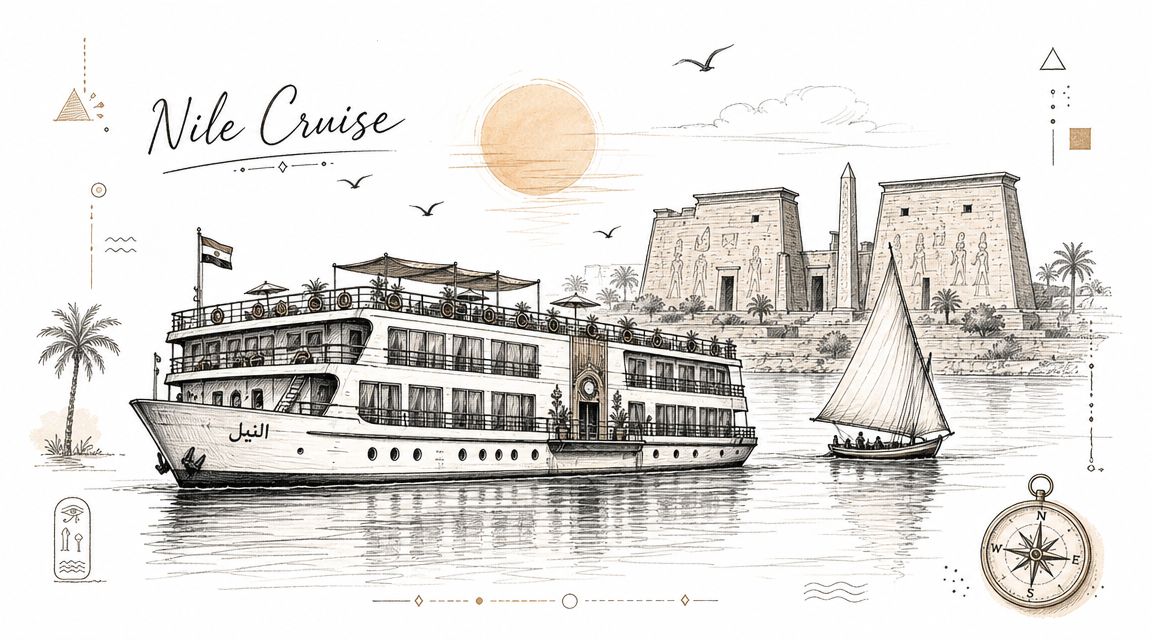
Some trips look expensive until you compare them to the effort of stitching everything together yourself. A Nile cruise is one of those. Instead of changing hotels, arranging repeated transfers, and starting every day from zero, you unpack once and let the route do the work.
Why this route feels easier than separate day trips
This is the smoothest culture-heavy option in Egypt for people who don't want constant packing and road time. Luxor gives you temples and tombs. Aswan changes the mood completely. The river itself slows the pace, which matters more than many travelers realize.
Egypt's tourism sector has broad practical depth for this kind of trip. A European Commission briefing notes tourism involves around 70 sub-sectors, contributed 11.3% of GDP in 2015/2016, accounted for 7.2% of total employment, and recorded 5.4 million international tourist arrivals in 2016 with travel receipts of USD 2.6 billion (European Commission tourism briefing on Egypt). On the ground, that translates into something useful for travelers: major hubs like Cairo, Luxor, and Hurghada usually have the strongest support systems for flights, guides, transfers, and day-trip handling.
That's why a Luxor to Aswan cruise works so well. You're using places with mature tourism logistics instead of forcing your holiday through scattered one-off moves.
For pre-cruise and post-cruise planning, this Luxor attractions guide from Oh Yes Tours helps you see what deserves extra time on land.
Best fit by traveler type
Retirees often love this route most because it gives them serious history without daily hotel changes. You can do your morning temple visits, come back for lunch, rest, and still enjoy the river in the late afternoon.
Anniversary and honeymoon couples also tend to rate this highly because the trip has rhythm. Temples in the morning, deck time later, a felucca ride in Aswan near sunset. It feels more personal than being pushed on and off a bus all week.
- Best for culture-first travelers. If ancient Egypt is the point of your trip, this is usually stronger than splitting your time between too many resorts.
- Best for slower pacing. You see a lot without feeling dragged around.
- Less ideal for restless children. Some families do very well, but younger kids can get temple fatigue fast.
The cruise is the trip for people who want Egypt to feel layered, not rushed.
What to book carefully
Cruise quality varies. A cheaper cabin can still be fine if your expectations are sensible, but I'd pay attention to guiding, excursion organization, and whether the itinerary feels compressed. Those details matter more than lobby photos.
Also, be careful with last-minute sellers around docks and tourist areas. Cheap on arrival can become messy very quickly. Missed pickups, unclear inclusions, and weak guiding are common reasons people come back disappointed from what should have been the easiest cultural segment of their holiday.
3. Red Sea Snorkeling & Glass-Bottom Submarine
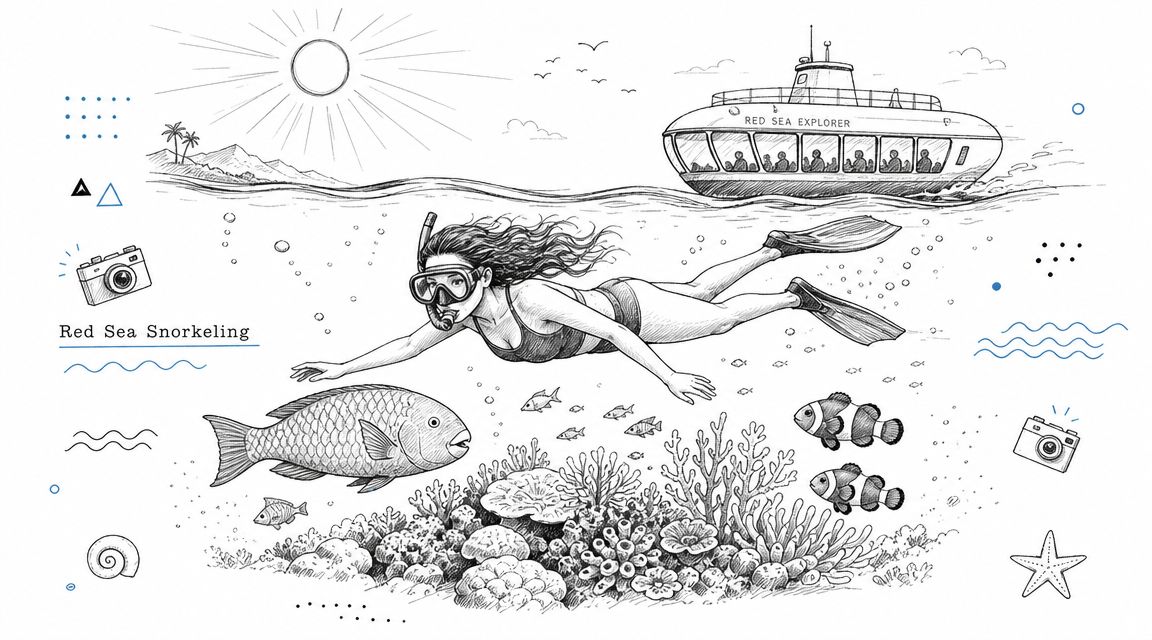
Not every Egypt highlight needs to involve tombs, heat, and early alarms. If you're based in Hurghada, the Red Sea is the easiest high-reward day out on the list.
The easiest win if you're based in Hurghada
This is where location matters. Hurghada works well because you can get a proper marine day without turning it into a travel day. That's a big reason I often tell people to base a first trip around the Red Sea and then add one or two major historical stops, not the other way around.
Recent market sizing says Egypt's travel and tourism market reached USD 2.7 billion in 2025 and is projected to grow to USD 8.2 billion by 2034 at a 12.4% CAGR. It also estimates Egypt's online travel agencies and tourism apps market at USD 1.2 billion, which matters because travelers now choose destinations that are easy to compare, understand, and book online (IMARC Egypt travel and tourism market outlook). In practice, Hurghada benefits from that because marine trips are simple to package, easy to browse, and easy to fit into a resort stay.
You can browse current Hurghada tours with Oh Yes Tours if you're comparing a submarine, snorkeling trip, or private boat option.
Snorkeling or submarine
A lot of people ask which is “better.” Wrong question. The right question is which one suits your group.
If you swim comfortably, a snorkeling boat trip gives you the full Red Sea feeling. If you don't swim, if you have mobility limits, or if you're traveling with nervous children, the glass-bottom submarine is often the smarter choice. You stay dry, avoid stress, and still get the reef experience.
- Families with mixed confidence levels. Pair a short snorkel stop with a dry-view option if possible.
- Couples wanting privacy. A private speedboat or quieter boat day is usually worth paying more for.
- Retirees and non-swimmers. The submarine is not a compromise. It's the right product.
A common mistake is booking the longest marine trip available because it sounds like better value. For many families, half a day is better than a full day once sun, salt, motion, and tired kids start stacking up.
To get a feel for the day on the water, watch this short look at a Red Sea outing before you book.
What usually goes wrong
People underprepare for the sun and overestimate their sea legs. That's the short version.
Bring proper sun protection, not just a small hotel sunscreen bottle. Check your mask fit before the boat leaves. Eat lightly if you're prone to seasickness. And if anyone in your group is hesitant in the water, tell the crew early. Good crews adapt much better when they know in advance.
If you're staying in Hurghada and only have one excursion day, this is usually the safest bet for enjoyment across different ages.
4. Desert Safari & Quad Biking
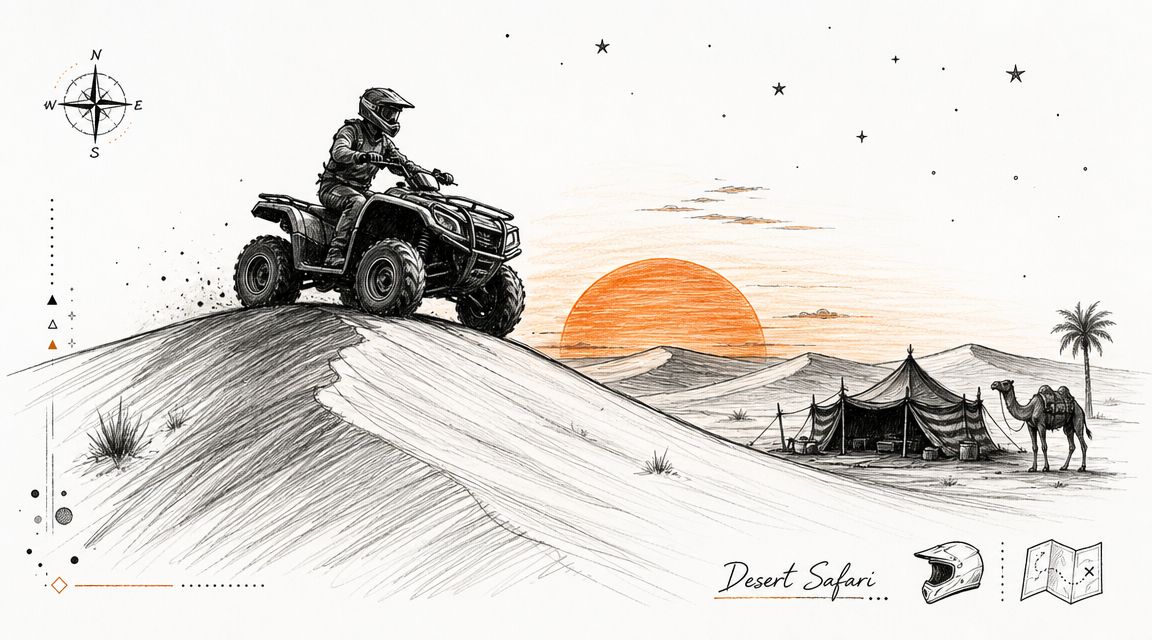
The desert gives you a completely different Egypt from the commonly imagined one. No museum halls. No temple queues. Just open land, dry air, low light at sunset, and a much stronger sense of space.
Why the desert works so well from the Red Sea
From Hurghada or Marsa Alam, this is one of the easiest non-beach add-ons because it fits cleanly into one afternoon and evening. That matters for travelers who want variety without losing a full day to transit.
It also solves a common holiday problem. After a couple of beach days, many people want something active, but not another giant sightseeing transfer. The desert is close enough to feel practical and different enough to reset the whole mood of the trip.
Quad or Jeep
These are not the same experience, and a lot of bad bookings happen because people choose based on price instead of comfort level.
Quad biking suits travelers who want movement, dust, and effort. You need to be comfortable following a convoy, handling rough terrain, and getting dirty. If you're nervous around vehicles or haven't done anything similar before, a Jeep safari is often the better call.
Jeep trips work especially well for families, older travelers, and anyone who wants sunset, Bedouin camp atmosphere, and dinner without the physical side of riding. You still get the desert. You just don't have to wrestle with the machine to earn it.
- Choose quad biking if you want the activity itself to be the highlight.
- Choose Jeep safari if you care more about scenery, comfort, and easier access.
- Avoid long camel segments unless you specifically want that experience. Typically, a short ride is enough.
Not every traveler needs adrenaline. Many people enjoy the desert more when someone else is driving.
How to avoid the bad safari version
The weak version of a desert safari is easy to spot afterward. Too many people in one convoy, rushed camp timing, poor safety gear, and a “Bedouin experience” that feels staged and crowded.
Book with an operator that explains the route, ride length, and return time clearly. Ask what gear is provided. Ask whether children are on quads or in support vehicles. Ask how large the group is. If the answers are vague, move on.
Also, wear more covering than you think you need. Long sleeves, closed shoes, and eye protection make a big difference once the wind picks up and the dust starts moving.
5. Valley of the Kings & West Bank Luxor
If Giza gives you scale, Luxor gives you detail. The Valley of the Kings is where travelers stop seeing ancient Egypt as one giant postcard and start understanding that these sites were built, painted, cut into rock, and used with astonishing precision.
Why Luxor's West Bank deserves proper time
This is not a place to rush through with one eye on the bus parking lot. The Valley of the Kings sits on Luxor's West Bank and forms the core of a much bigger historical zone that also includes the Temple of Hatshepsut, the Colossi of Memnon, and other tomb and temple sites.
For history-focused travelers, this can easily be the most rewarding place in Egypt. The problem is that many visitors arrive already tired, already hot, and already overloaded from too many early starts. Then they say Luxor felt overwhelming. Usually the site wasn't the problem. The pacing was.
How to visit without burning out
Start early. That is the single biggest practical win in Luxor. The light is better, the walk is easier, and you stay ahead of larger visitor flows.
A smart West Bank day is selective. Do the Valley of the Kings properly, add Hatshepsut, make a short stop at Memnon, and leave some margin for rest. Trying to add everything because it's “nearby” is exactly how people flatten one of the best historical areas in the country into a blur.
- Families with teens usually do better with a half-day West Bank focus than a full temple marathon.
- Retirees often enjoy an early private visit, hotel rest at midday, then an easier evening activity.
- History enthusiasts should strongly consider two days in Luxor instead of forcing East and West Bank into one overfilled day.
Who gets the most out of it
This site rewards curiosity. If you love ancient history, art, burial practices, royal politics, or seeing how much survives inside a tomb, Luxor's West Bank is hard to beat.
It's also one of the places in Egypt where a good guide matters most. Without context, many travelers just see decorated chambers. With context, you start reading the walls differently and understanding why one tomb feels spare and another feels almost overwhelming.
Safety and practicality also matter when people start looking beyond the famous circuit. Some parts of Egypt remain areas to avoid, especially North Sinai and border-adjacent zones, and infrastructure quality can vary sharply even within the same city according to reporting on Cairo's uneven urban services and broader safety guidance (Cities Alliance report touching on infrastructure contrasts and regional trade-offs). For most first-time visitors, that means something simple. Stick to established routes unless you have a clear reason not to, and don't confuse “less famous” with “better for me.”
Top 5 Egyptian Sites Comparison
| Experience | 🔄 Complexity | 📊 Resources (cost & logistics) | ⚡ Time / Pace | ⭐ Expected outcome | 💡 Ideal use cases & key advantages |
|---|---|---|---|---|---|
| Pyramids of Giza & Cairo | 🔄 High, permits, Cairo transport, guide recommended | 📊 €300–550/day (flight day-trip or 2-day stay); advance pyramid tickets required | ⚡ 4–6h on plateau; day-trip possible but rushed; 2 days optimal | ⭐⭐⭐⭐⭐ Iconic archaeology, unparalleled landmark value and museum context | 💡 Best for first-time Egypt visitors, history buffs, cruise shore-excursions; private guide reduces scams |
| Nile Cruise: Luxor → Aswan | 🔄 Medium, choose ship class, book multi-day itinerary | 📊 €699–2200+ (4–5 days); includes cabin, most meals, guided excursions | ⚡ Slow-paced; typical 4–7 days with leisurely daily schedules | ⭐⭐⭐⭐ Deep, bundled cultural immersion; consistent comfort and scholarly commentary | 💡 Ideal for retirees, couples, culture-focused travelers who prefer no daily logistics |
| Red Sea Snorkeling & Glass-Bottom Submarine (Hurghada) | 🔄 Low, book/day-trip or private charter; minimal permits | 📊 €39–79 snorkel; €39–49 submarine; half-day to full-day; gear rental extra | ⚡ Short, flexible (4–6h half-day; full-day options) | ⭐⭐⭐ Good biodiversity viewing; very family-friendly and accessible options | 💡 Great for families, non-swimmers, beginners; submarine suits mobility-limited visitors |
| Desert Safari & Quad Biking (Hurghada/Marsa Alam) | 🔄 Low–Medium, operator safety standards vary; protective gear needed | 📊 €49–180 (group to private); afternoon-to-evening 4–5h excursion; transport included | ⚡ Short but intense (sun/physical strain); sunset timing typical | ⭐⭐⭐⭐ Dramatic scenery and adventure; strong photo and cultural moments | 💡 Best for adventure-seekers and older kids; jeep option for families/retirees seeking comfort |
| Valley of the Kings & West Bank (Luxor) | 🔄 Medium, Egyptologist guide and special-ticket planning advised | 📊 Entry ≈€15 + guide €50–80; half-day or full-day; separate tickets for key tombs | ⚡ Half-day (highlights) to full day; early morning start recommended | ⭐⭐⭐⭐⭐ Exceptional archaeological depth; top experience for specialists | 💡 Essential for Egyptology enthusiasts and focused history travelers; private Egyptologist unlocks context |
Ready to Plan Your Egypt Adventure? Oh Yes!
The best places in Egypt aren't hard to find. The hard part is combining them in a way that still feels like a holiday when you're done. That's where most generic advice falls apart.
If you're staying on the Red Sea, don't automatically chase the longest possible route. Start with what fits your pace. For many first-time visitors, that means one major history stop, one sea day, and one lighter adventure day. For culture-heavy travelers, it often means Cairo plus Luxor, with either a Nile cruise or a resort stay to slow the pace. For families, fewer moves usually beat more famous names. For retirees, comfort and timing matter more than squeezing in one extra site.
I'd also be honest about trade-offs before you book anything. Giza is essential for most first trips, but it deserves either a focused day or an overnight. Luxor is extraordinary, but it needs an early start and some stamina. The Nile cruise is the smoothest way to cover a lot of history without constant unpacking. Hurghada marine trips are the easiest crowd-pleaser. Desert safaris work well when you want one active afternoon without giving up a full day.
This is also why I challenge the usual “must-see everything” advice. In Egypt, a bad itinerary isn't usually bad because the places are weak. It's bad because the transfers are too long, the days are stacked too tightly, and nobody leaves room for rest. Reducing transit often improves the trip more than adding another famous stop.
If you want help shaping the route around your arrival point, your hotel base, your budget, and who you're traveling with, local planning makes a real difference. Oh Yes Tours is one option for private Egypt trips and day tours in Hurghada, Cairo, Luxor, Sharm El Sheikh, and Marsa Alam, with direct booking with local guides and payment on the day. That setup suits travelers who prefer flexible planning instead of fixed package pacing.
Egypt? Yes, absolutely. Just don't travel it like a checklist.
If you want a practical route instead of a rushed one, talk to Oh Yes Tours. We can help you compare Cairo, Luxor, Hurghada, desert safaris, snorkeling days, and multi-day options based on where you're staying and how you like to travel.