Egypt travel
Manta Ray Diving 2026: Ultimate Trip Planning Guide
Plan your ultimate manta ray diving adventure! Our 2026 guide covers top destinations, certification, etiquette, and how to dive Egypt's Red Sea.

By Mohamed Hassan · Senior Local Guide · 12 years
You're probably doing what most divers do before their first manta trip. Comparing destinations. Wondering whether you need advanced certification. Debating liveaboard versus day boat. Looking at glossy tour photos and trying to work out what the dive is like when the current picks up, visibility shifts, and a wild animal decides whether to show or not.
That's the right way to approach manta ray diving.
A manta encounter can be one of the most elegant dives you'll ever do, but it rewards the diver who plans well and behaves well. In the Red Sea, I've seen the difference many times. The calm diver with tidy buoyancy and good awareness gets the longer, cleaner encounter. The diver who kicks too hard, drops too low on coral, or tries to “follow for a better shot” usually shortens the moment for everyone.
Egypt makes a strong case for this kind of trip. The Red Sea is accessible, the diving infrastructure is mature, and you can build a manta-focused holiday without locking yourself into a full expedition schedule unless you want that style of travel. That flexibility matters.
Table of Contents
- Understanding the Encounter More Than Just a Dive
- Choosing Your Manta Destination and Season
- Your Diver Toolkit Skills and Certifications
- Booking Your Trip Liveaboard vs Land-Based Day Trips
- The Dive Itself Responsible Etiquette and Photography
- Plan Your Egypt Manta Dive with Oh Yes Tours
Understanding the Encounter More Than Just a Dive
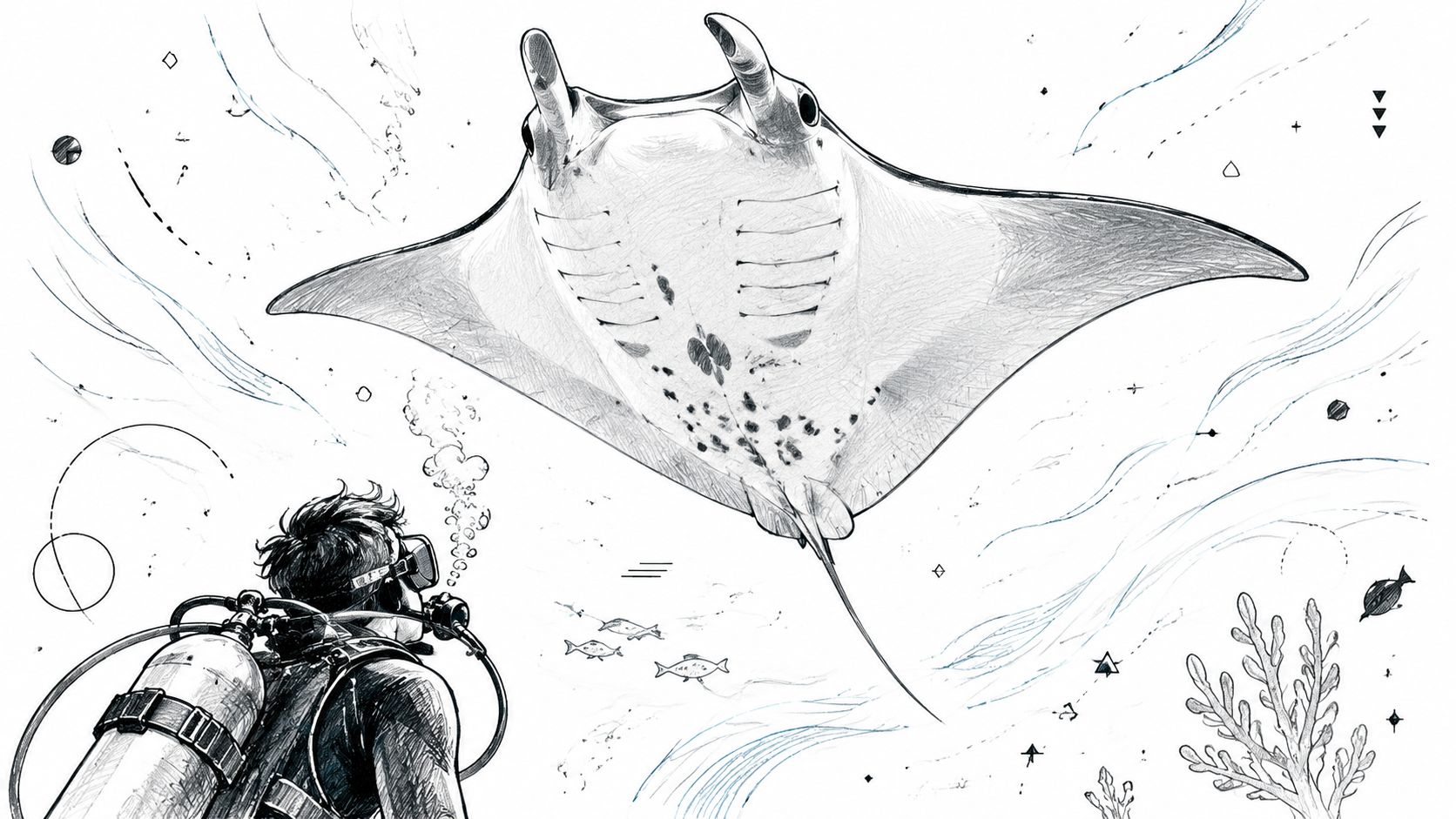
The first thing most divers remember isn't size. It's movement.
A manta doesn't move like a reef fish, a shark, or a turtle. It glides with a kind of deliberate economy that makes the whole scene go quiet in your head. Even on a busy dive boat, that moment resets people. Cameras stop fiddling. Fins stop fluttering. Everyone suddenly understands that this is not a chase dive. It's an observation dive.
Why mantas affect divers so strongly
Part of the magic is scale, of course. Part is proximity. But the bigger reason is that mantas often seem aware of space in a way divers notice immediately. They don't blunder through the water. They read the scene. When you hold position properly, you can feel that the encounter works because you let it work.
Practical rule: The best manta encounters happen when divers stop trying to improve them.
That's true in Egypt, and it's true anywhere else.
The two manta types most divers hear about
Most travelers will hear two names again and again. Reef mantas are the coastal species more often associated with shallower, site-faithful behavior around reefs and cleaning stations. Historical tagging data from NOAA Fisheries and the Manta Trust shows that coastal mantas usually spend much of their time between the surface and 80 feet (24 meters), though they can still make short deeper dives beyond 700 feet (214 meters).
The giant oceanic manta is the more pelagic animal. Historical tagging data summarized by NOAA Fisheries and the Manta Trust documents these mantas routinely diving between 200 and 450 meters (656 to 1,476 feet), with satellite tagging showing they can exceed 1,000 meters (3,280 feet), making them the deepest-diving fish species in their family.
For divers, the practical takeaway is simple. One species is more closely tied to coastal reef structure. The other is built for open water, distance, and big vertical movement.
What changed in our understanding of mantas
The old lazy description of a manta as “just a big filter-feeder” no longer holds up. A 2024 study in Frontiers in Marine Science found that oceanic manta rays dive beyond 1,200 meters (over 3,900 feet) and use environmental signals, including the Earth's magnetic field, oxygen levels, and temperature gradients, to build a mental map for open-ocean navigation. The study drew on 2,705 tag-days of data and recorded dives beyond 500 meters on 79 occasions, with 71 of those deep dives in waters around New Zealand.
That matters because it changes the way a diver sees the animal in front of them. You are not looking at a drifting plankton eater that happens to pass through. You're looking at a highly capable traveler using the full water column.
Once you understand that a manta may link surface feeding with deep navigational behavior, the encounter feels less like entertainment and more like a privilege.
Choosing Your Manta Destination and Season
Not all manta trips deliver the same kind of dive. Some are built around highly structured night encounters. Some revolve around cleaning stations. Some require a liveaboard mindset from day one. Others let you stay in a resort town, dive for the day, and have dinner on shore that evening.
That difference matters more than people think.
How the main destinations differ
Kona, Hawaii is famous for night encounters organized around lights, stable diver positioning, and predictable site procedures. It's one of the clearest examples of a manta experience shaped as much by operator discipline as by animal behavior.
The Maldives tends to appeal to divers who want cleaning stations, channels, and the possibility of combining mantas with a broad marine-life itinerary. The diving rhythm there often suits people happy to build a full week around boat movement and current-based diving.
Indonesia offers range. Some areas suit experienced divers who are comfortable with current, changing conditions, and longer travel chains. The reward is variety, but the logistics can be heavier.
Egypt's Red Sea sits in a very practical middle ground. It's close enough for many European travelers to reach without turning the trip into a major expedition, and it still works well for North American visitors who want strong diving value once they arrive. You also get a real choice between resort-based diving and longer boat itineraries.
Manta Ray Diving Hotspots at a Glance
| Destination | Best Season | Water Temp | Typical Encounter | Primary Access |
|---|---|---|---|---|
| Kona, Hawaii | Year-round | Warm | Night feeding encounters with fixed diver or snorkeler positions | Land-based boat trips |
| Maldives | Varies by atoll and monsoon pattern | Warm | Cleaning stations, channels, and reef-based encounters | Liveaboard or island resort |
| Indonesia | Varies by region | Warm | Cleaning stations and current-influenced reef encounters | Resort plus boat transfers or liveaboard |
| Egypt Red Sea | Seasonal patterns vary by area | Warm to hot in many periods | Reef and blue-water diving with flexible trip styles | Land-based day boats or liveaboard |
The table doesn't crown a universal winner because there isn't one. The best destination depends on what kind of holiday you want.
Why the Red Sea makes sense for many travelers
Egypt is especially strong for divers who want options without complication. You can base yourself in Hurghada, Sharm El Sheikh, or Marsa Alam and choose between easy resort logistics, serious diving days, or a longer boat plan. That flexibility is why many experienced divers keep coming back to the Red Sea even after diving bigger-name manta destinations.
If you're lining up dates, weather comfort, and travel style, it helps to compare seasons across Egypt before booking. A useful planning reference is this guide to the best time to visit Egypt, especially if your trip mixes diving with Cairo, Luxor, or a Nile segment.
The smartest destination isn't always the one with the loudest marketing. It's the one that fits your time, comfort level, and tolerance for travel friction.
For many divers, that's where the Red Sea excels.
Your Diver Toolkit Skills and Certifications
Most divers who ask if they're “qualified enough” for manta ray diving are asking the wrong question.
The better question is this. Can you hold a calm, neutral position without turning the encounter into a cloud of bubbles, fin wash, and course corrections?
What certification usually matters
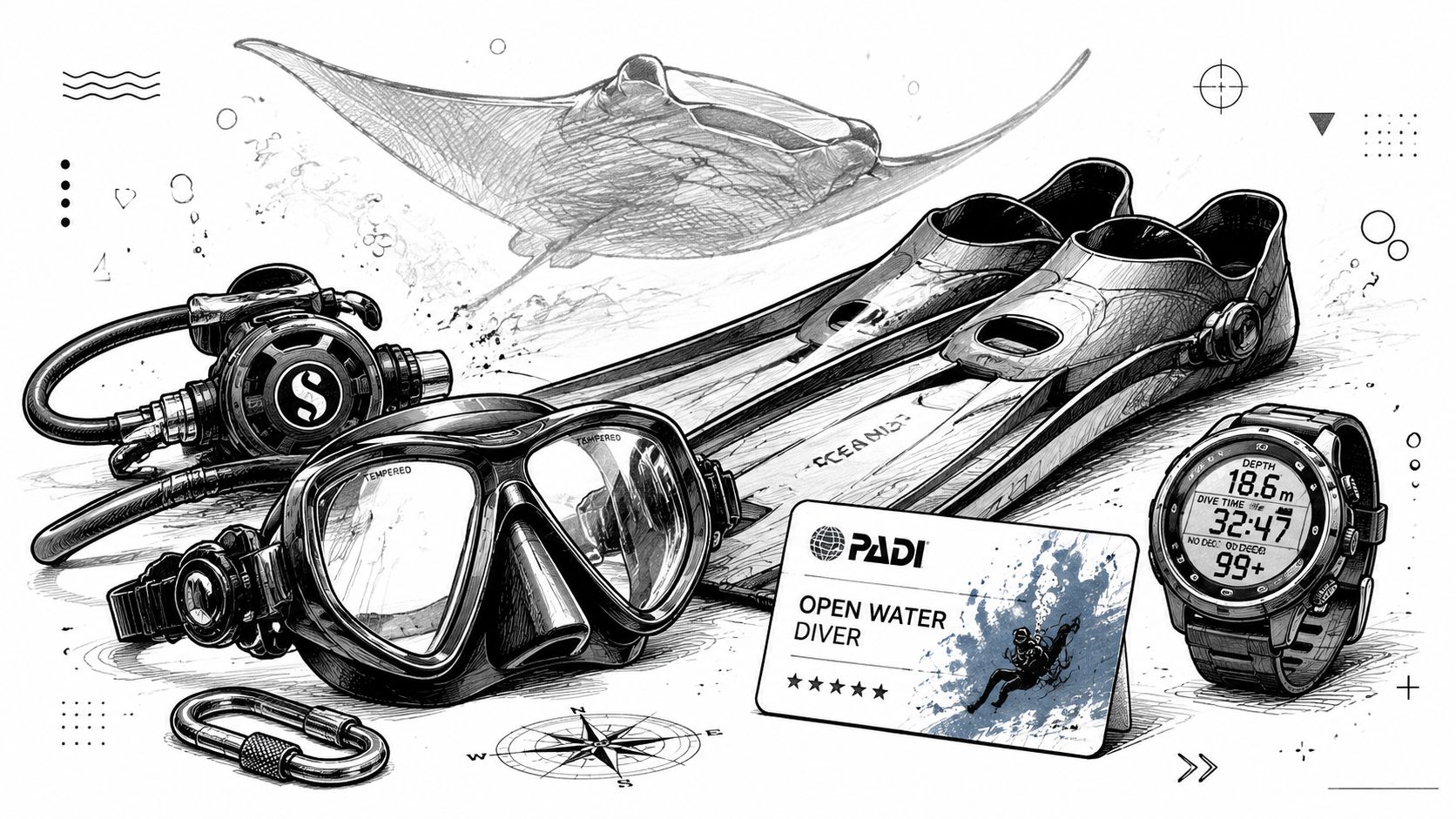
For many manta experiences worldwide, Open Water or equivalent is enough. You don't need to collect specialty cards just to be allowed near a manta. What dive centers really need to know is whether you can manage yourself in the conditions of that site.
That includes descent control, basic awareness around other divers, and enough comfort in the water that you won't turn anxious when the animal appears close.
The skill that changes the whole encounter
At premier manta sites in Kona, success has been reported at 85%+ when divers follow the structured protocol, and one overview cites 80–90% for snorkeling. Operational guidance there also notes an average of 12 manta sightings per dive under conditions such as 76°F water and 100-foot visibility. For training purposes, the encounter works because divers hold a fixed position and maintain controlled buoyancy, while poor trim, wandering, and chasing mantas break up the setup and reduce passes, as described in this practical overview of Hawaii diving with manta rays.
That lesson transfers perfectly to the Red Sea.
A diver with excellent buoyancy and simple equipment control is usually a better manta diver than someone with more certifications but messy trim.
Signs you're ready
- You can hover without sculling: If your hands start paddling every time you stop, work on that first.
- You don't yo-yo during a safety stop: Stable depth control tells me a lot about how you'll behave near large animals.
- You can look around without drifting into someone else's space: Awareness matters as much as buoyancy.
Here's a useful refresher before you travel.
Simple practice before your trip
You don't need a complicated training block. A single pool session or easy reef dive with intention can help.
- Trim check: Hover horizontally for one minute without hand movement.
- Breath control drill: Rise and fall slightly using breath only, then settle.
- Fin discipline: Practice frog kick or very small flutter kicks to avoid stirring bottom or clipping coral.
- Pause drill: Stop, look left, right, above, and behind you without changing position.
If you're packing specifically for a manta-focused dive holiday, this practical Egypt packing guide helps sort the basics from the stuff people bring and never use.
Booking Your Trip Liveaboard vs Land-Based Day Trips
This is the decision that shapes the whole holiday.
A liveaboard can turn your week into a dive expedition. A land-based trip keeps your diving serious but your schedule human. Neither is automatically better. One better suits your travel style than the other.
When a liveaboard is the better call
Choose a liveaboard if your main reason for coming to Egypt is diving, not general sightseeing. This format gives you access to more remote sites, longer time in the diving rhythm, and fewer compromises for non-divers in your group.
It also suits divers who don't mind a fixed schedule. You sleep, brief, dive, eat, and repeat. Some people love that focus. Others start feeling trapped by day three.
A liveaboard usually makes the most sense for:
- Dedicated dive travelers: You want the trip built around the water, not around hotel comfort.
- Photographers chasing conditions: More site access gives you more chances.
- Divers comfortable with boat living: Shared spaces, fixed meal times, and limited private downtime don't bother you.
When land-based diving wins
Land-based day trips work better for more travelers than the internet likes to admit. They offer comfort, flexibility, and easier recovery between dives. If you're traveling with a partner who doesn't dive every day, or with family, this style is often the sensible choice.
In the Red Sea, a well-planned land-based trip can still produce excellent diving days. You lose some reach. You gain freedom.
That trade is often worth it if you want:
- A mixed holiday: Diving one day, beach or cultural plans the next.
- Budget control: You can scale the trip more easily.
- A softer schedule: Better for newer divers, couples, and anyone who doesn't want boat life nonstop.
If you're trying to decide between “maximum dive volume” and “best overall holiday,” the answer is often land-based.
Snorkeler or diver in the same group
This is another real-world decision, especially for couples and families.
Guidance comparing snorkelers and divers at manta encounters notes that snorkelers usually stay at the surface holding a light board while mantas rise to feed a few feet below, while scuba divers are placed deeper for a different viewing angle. It also notes that these night dives are often only 25 to 45 feet deep, so the choice is less about technical depth and more about comfort, perspective, and group makeup. That matters because a Kona summary estimates about 80,000 people join these manta snorkeling and diving tours annually, as explained in this comparison of whether it's better to snorkel or dive with manta rays.
In plain terms:
- Divers get the more immersive, upward-looking view.
- Snorkelers often get the easier, lower-stress option.
- Mixed groups shouldn't force one format on everyone.
For Red Sea travel, that same logic applies. If half the group wants an easy marine day and the other half wants proper scuba, build the itinerary around both instead of pretending one style suits all.
The Dive Itself Responsible Etiquette and Photography
Once the manta arrives, your job gets simpler. Stay controlled. Stay predictable. Let the animal decide the distance.
That's not soft conservation language. It's the approach that produces better encounters.
Your in-water code
A conservation study on reef mantas found that scuba divers had minimal impact when they stayed more than 3 meters away and remained off the cleaning station area. Breaching that space, even slightly, could alter manta behavior, according to SSI's summary of manta ray conservation guidance for scuba divers.
That gives divers a very practical rule set.
- Stay outside the core area: Don't drop onto the cleaning station itself.
- Hold your line: Let the manta approach on its terms.
- Keep the path open: Never force the animal to change direction because you wanted a closer pass.
A manta that changes course because of you is not a successful encounter.
How to position without stressing the animal
On reef sites, I tell divers to think like good spectators, not participants. Pick your spot. Settle. Tidy your hoses and gauges. Check your fins aren't over coral or loose rubble. Then stop moving.
The biggest mistakes are small, not dramatic. A diver edges forward one meter for a better look. Another lifts a camera rig into the approach line. Someone turns too quickly and kicks upward. None of that feels major in the moment. Together, it changes the entire body language of the group.
A good guide should enforce this firmly. Not because they're strict for the sake of it, but because operator discipline protects the dive.
Photography that works without ruining the encounter
Manta photography rewards restraint.
What usually works
- Go wide: Wide-angle framing suits the animal and the environment.
- Shoot the approach, not the chase: Position early and wait for the pass.
- Control your light placement: Keep the scene readable without turning the water into glare and backscatter.
What usually fails
- Long pursuit: You'll stress the animal and get worse images.
- Crowding for a portrait: The closer you force it, the less natural the shot looks.
- Obsessing over gear changes underwater: By the time you fix settings, the pass is gone.
Plainly put, your best manta photo usually comes from patience, not aggression.
Plan Your Egypt Manta Dive with Oh Yes Tours
Egypt gives you several good ways to build a manta-oriented Red Sea holiday, and each base feels different once you're there.
Which Red Sea base fits your trip
Hurghada is the easiest starting point for many travelers who want broad holiday infrastructure, straightforward boat diving, and the option to mix sea days with desert or city excursions.
Sharm El Sheikh suits divers who want a famous dive hub with strong resort choices and access to classic Red Sea reef systems. It's often a good fit for travelers who want a polished holiday base.
Marsa Alam appeals to divers who put marine life higher on the list than nightlife or urban convenience. It feels more dive-focused. That's part of the appeal.
If you're comparing specific options in the south, this collection of Marsa Alam tours is a good place to understand how people combine diving days with the wider trip.
What a well-run private day looks like
For many travelers, the sweet spot in Egypt is a private day trip from around €99 per person. That price point keeps the day accessible without forcing you into a packed group-boat experience.
A good private arrangement is simple. You confirm the plan directly with a local guide. You know your pickup. You know whether the day is aimed at certified diving, snorkeling, or a mixed group. You know what happens if conditions shift. You pay on the day, not months in advance to a reseller who has never set foot on your boat.
That direct setup is one of the best parts of booking in Egypt when you work with people on the ground. Less friction. Fewer layers. Clearer communication.

What honest operators say about guarantees
Any serious guide should be careful with “manta guarantee” language.
Independent guidance notes there can still be a 30% chance of no sighting even in prime locations, which is why responsible operators focus on realistic expectations and animal welfare rather than promising spectacle. That's the standard worth looking for, as outlined in this advice on what you need to know before swimming with manta rays.
That honesty matters in the Red Sea too. Wildlife doesn't work on a sales script. Currents change. Visibility changes. Animal presence changes. A good operator can control briefing quality, safety standards, timing, and diver behavior. They cannot ethically promise a wild manta on demand.
Book the team that talks clearly about conditions, conduct, and backup plans. Be cautious with the one selling certainty.
Egypt is excellent for manta ray diving because it lets you build the trip around your real travel style. You can stay land-based and keep things easy. You can go more dive-heavy with a liveaboard. You can combine serious water time with the rest of the country instead of treating the holiday like a single-purpose expedition. That's a rare strength, and it's why the Red Sea remains such a smart choice.
If you want help planning a Red Sea diving trip with people who live here, Oh Yes Tours can connect you directly with local guides in Hurghada, Sharm El Sheikh, and Marsa Alam. You'll get honest advice on trip style, clear logistics, private options, and the kind of practical planning that makes an Egypt dive holiday smoother from the start. Egypt? Oh Yes!