Egypt travel
Citadel of Saladin: Your 2026 Cairo Visitor Guide
Your complete 2026 visitor guide to the Citadel of Saladin in Cairo. Plan your trip with tips on tickets, hours, what to see inside, and tour options.

By Mohamed Hassan · Senior Local Guide · 12 years

You're probably looking at the citadel of saladin the same way most visitors do at first. Through a taxi window, above the dense movement of Cairo, with the great mosque rising so clearly that it seems closer than it is. Then the practical questions start. How long does it take? Is it easy with kids? Is it too much walking for older parents? Can you do it without turning the day into a slow, hot slog?
That's where most guides stop being useful.
The Citadel is one of Cairo's landmarks, but it isn't a simple in-and-out monument. It's a hilltop fortified complex with gates, courtyards, mosques, museums, slopes, and long stretches between points of interest. If you plan it well, it's one of the most rewarding visits in the city. If you treat it like a flat museum stop, it can become tiring fast.
Table of Contents
- Your First Glimpse of the Cairo Citadel
- A Fortress Forged in History
- Exploring the Citadel's Key Monuments
- Practical Planning Your Citadel Visit
- Crafting the Perfect Citadel Itinerary
- Logistics From Hurghada and Cruise Ports
- Frequently Asked Questions About the Citadel
Your First Glimpse of the Cairo Citadel
Most first-time visitors notice the skyline before they understand the site. The mosque domes and minarets pull your eye immediately, but its full scale only makes sense when you arrive at the hill and see the outer walls, its commanding position, and the spread of the complex. From the road, it looks like one monument. On the ground, it behaves more like a self-contained historic district.
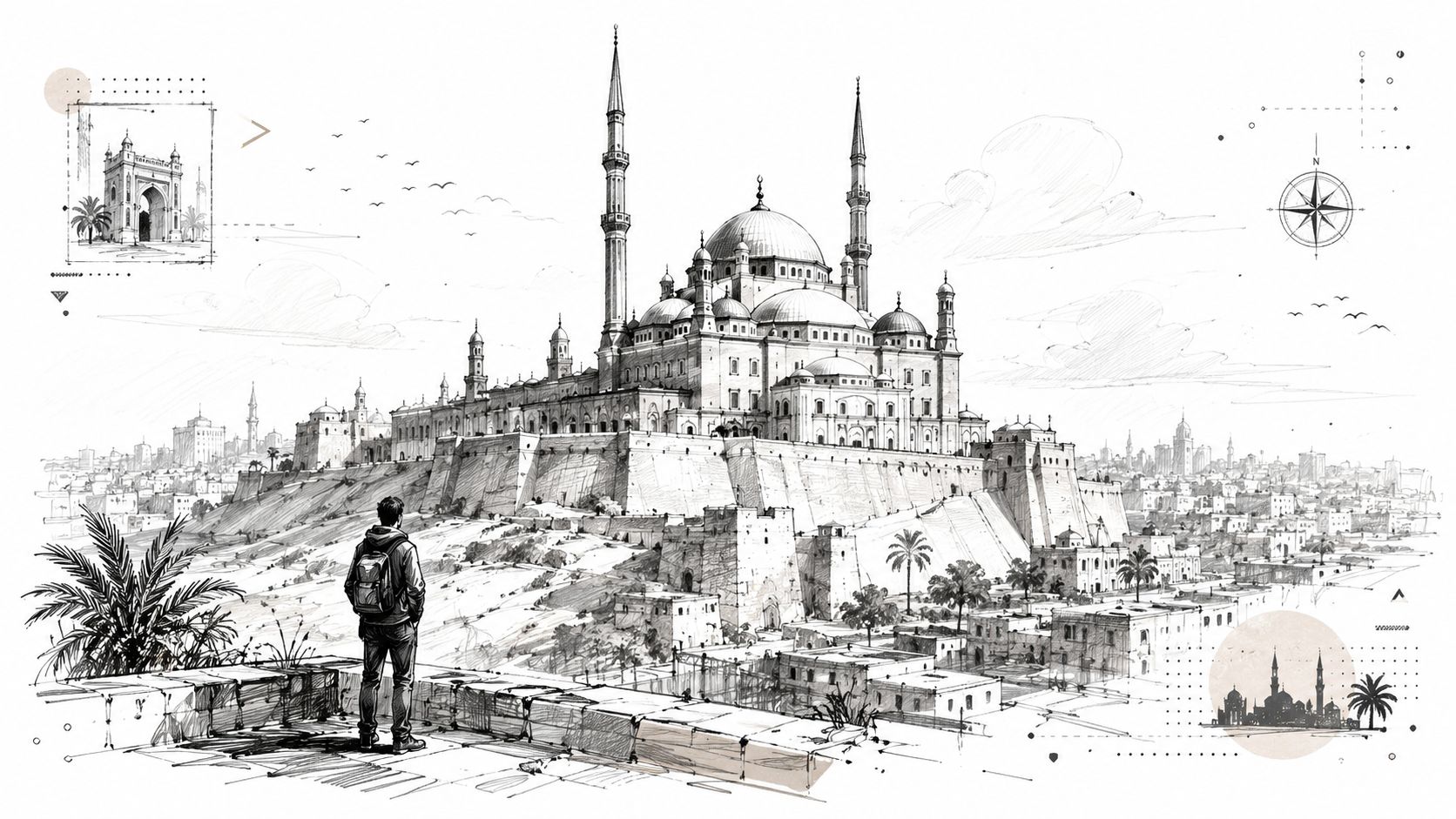
That difference matters. Visitors often arrive expecting a quick stop for the Mosque of Muhammad Ali, a few photos, and back to the car. Some do exactly that, and for a tight Cairo day, it can work. But if you want to understand why this place still anchors Cairo's identity, you need to treat it as more than a photo platform.
The citadel of saladin works best when you visit with a clear goal. Some people want views and architecture. Some care about medieval Cairo and military history. Some just need a manageable stop that can fit between other sights without exhausting the family. Each of those visitors should move through the site differently.
Practical rule: Don't plan the Citadel like a museum room. Plan it like an outdoor hilltop complex with several separate stops.
Local experience helps most with the details that aren't obvious online. Which areas justify your energy, which corners are skippable if the day is hot, where older travelers usually begin to feel the climb, and when children stop caring about history and start caring about shade. Those are the decisions that shape the visit more than any textbook summary ever will.
A Fortress Forged in History
The citadel of saladin matters because it solved a political and military problem at the same time. It wasn't built only to look imposing over Cairo. It was placed where power could be protected, seen, and sustained.
Why Saladin chose this hill
The Citadel of Saladin was initiated in 1176 CE under Salah al-Din to defend Cairo from Crusader attacks. It wasn't finished during his lifetime, then became the official residence of Egypt's rulers around 1207 CE and remained the center of government for nearly seven centuries until the 1870s, as outlined in this historical overview of the Citadel's development.
That long use explains why the place feels different from a ruined fortress. It kept working. Rulers continued to use it because the original logic was strong. The high Muqattam position gave command over the city, reduced exposure to attack routes, and created a secure administrative base.
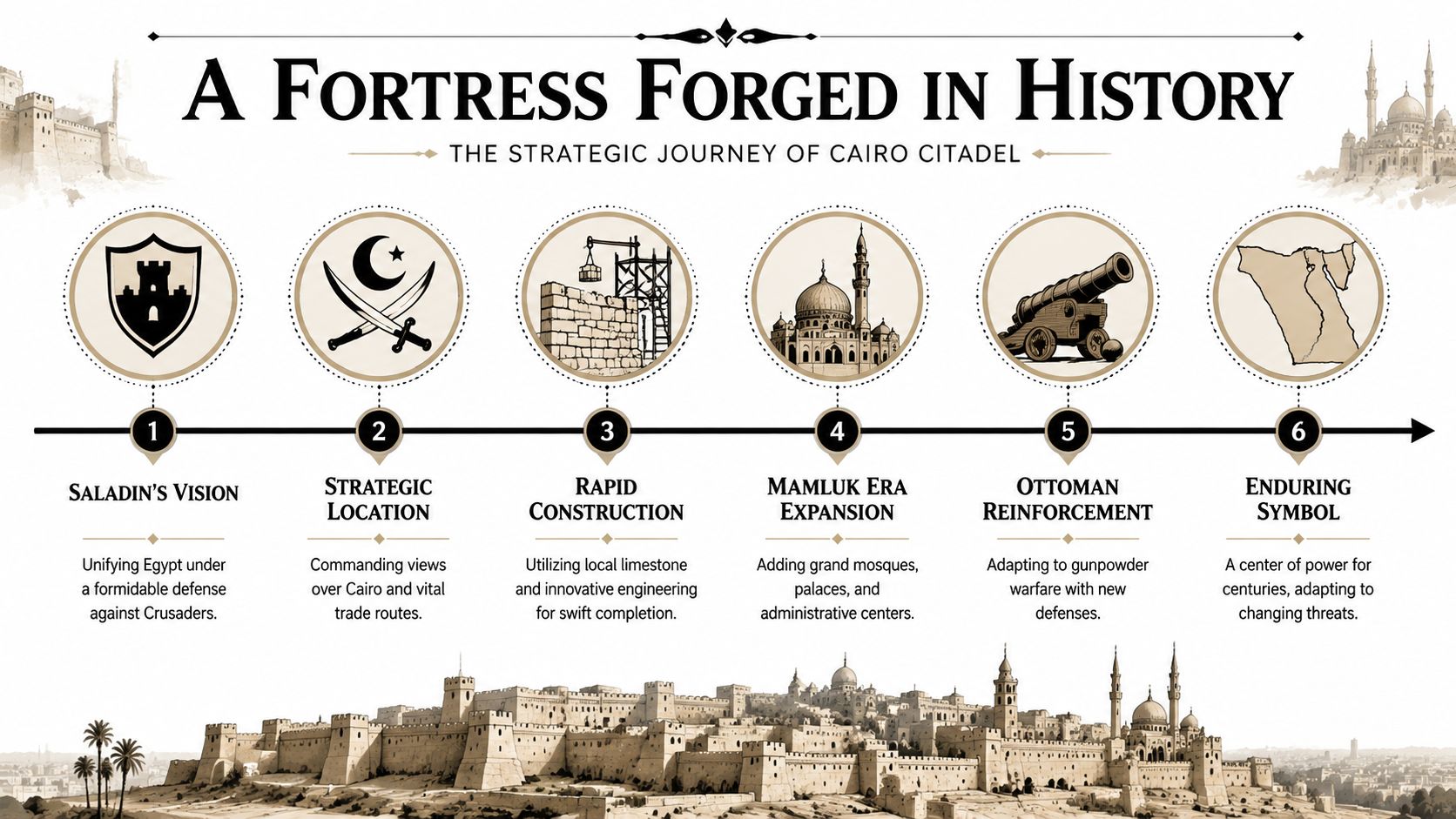
One of the most useful ways to understand the site is to stop calling it a castle. It was closer to an integrated fortress-administration complex, with military and residential sectors separated in a way that protected government continuity during unrest, as described by the Museum With No Frontiers entry on the Citadel.
A short visual overview helps before you walk the grounds:
Why the site still feels layered
You can feel the centuries inside the Citadel even if you don't know every dynasty by name. The spacing changes. The architectural mood changes. One courtyard feels ceremonial, another defensive, another almost administrative. That isn't accidental. Different rulers kept building over the original Ayyubid platform.
This is why many visitors leave with mixed impressions. They expected one period and got several. That's the correct reading of the site. Cairo's rulers didn't preserve it as a frozen monument. They adapted it.
The Citadel makes more sense when you read it as accumulated power, not a single building campaign.
For a visitor, the payoff is simple. Don't ask, “What is the one thing here?” Ask, “Which layer am I standing in now?” Once you start doing that, the mosques, walls, museums, and open spaces stop competing with each other and start telling the same story.
Exploring the Citadel's Key Monuments
Inside the walls, three stops matter most for most travelers. You can always add more if you have the energy, but these are the ones that shape the visit.
Mosque of Muhammad Ali
This is the visual anchor of the whole complex. Even people who know almost nothing about Cairo usually recognize it once they see it. For many visitors, it's the main reason to come.
What works here is slowing down for two different experiences. First, stand outside and take in the scale. Second, go inside and let your eyes adjust to the interior rhythm of domes, light, and open volume. Many people rush through, take a few shots, and miss the change in atmosphere between the courtyard and the prayer hall.
For photos, the terrace and outer areas usually do more for you than standing too close to the building. From the edges, you get both the mosque and the sweep of Cairo. On a clear day, that broad city view is half the experience.
If you're traveling with children or older relatives, start here while everyone still has energy. This is the stop least likely to disappoint and the one most likely to justify the uphill approach.
Al-Nasir Muhammad Mosque
This mosque is quieter in mood and far more understated. That's exactly why some travelers remember it more vividly than the larger, more famous building. It rewards attention.
Look closely at the courtyard details rather than expecting theatrical scale. This is the place for visitors who enjoy architectural texture, proportion, and the feeling of older sacred spaces that haven't been designed around modern expectations of spectacle. If your group includes one person who loves history and another who only wants “the highlights,” this is often where the history lover slows down and the other person starts drifting.
That's fine. Keep the stop focused. Give it a deliberate but shorter visit, and look for the contrast it provides with the Muhammad Ali Mosque. The difference between them teaches you more than either one alone.
Egyptian Military Museum
This is the most conditional stop in the complex. For military history enthusiasts, it adds context and rounds out the site's identity as more than a mosque visit. For travelers on a short schedule, it's usually the first thing to cut.
That isn't criticism. It's just a planning reality. If you only have limited energy, open spaces, architecture, and city views usually deliver more than interior displays. On the other hand, if the weather turns harsh or someone in your group needs a slower indoor stretch, the museum can become a useful part of the route.
The broader design of the Citadel reflects repeated modification across centuries. One of its earliest critical features was the Well of Joseph, cut 87 to 90 meters into the rock to secure water for siege resistance, and later Mamluk and Ottoman additions layered over the original Ayyubid structures, as noted in this summary of the Citadel's construction history. That layered history is also why the site works well alongside other Cairo attractions and historic stops if you're building a broader day around Islamic Cairo.
A simple way to prioritize your route:
- If views matter most: Go first to the Mosque of Muhammad Ali and its outer viewing areas.
- If architecture matters most: Pair Muhammad Ali with Al-Nasir and spend less time in museum interiors.
- If your group has mixed interests: Let one person take the museum while others rest or photograph the courtyards nearby.
Go deeper in one or two places. Don't try to squeeze meaning out of every corner.
Practical Planning Your Citadel Visit
The biggest mistake visitors make is assuming the Citadel is easy because it's famous. It isn't difficult in a technical sense, but it is physically more demanding than many expect. The site is large, high up, and spread out. The effort is part of the experience.
What catches visitors off guard
Most online guides spend far more time on dynasties than on walking conditions. That's backwards for real trip planning. The Citadel sits on a hilltop fortress setting, and practical guidance from existing travel coverage notes significant walking, uneven surfaces, and slopes, which can be harder for visitors with limited mobility, families with young children, or anyone not prepared for Cairo heat, as explained in this practical visit note about the Citadel terrain.
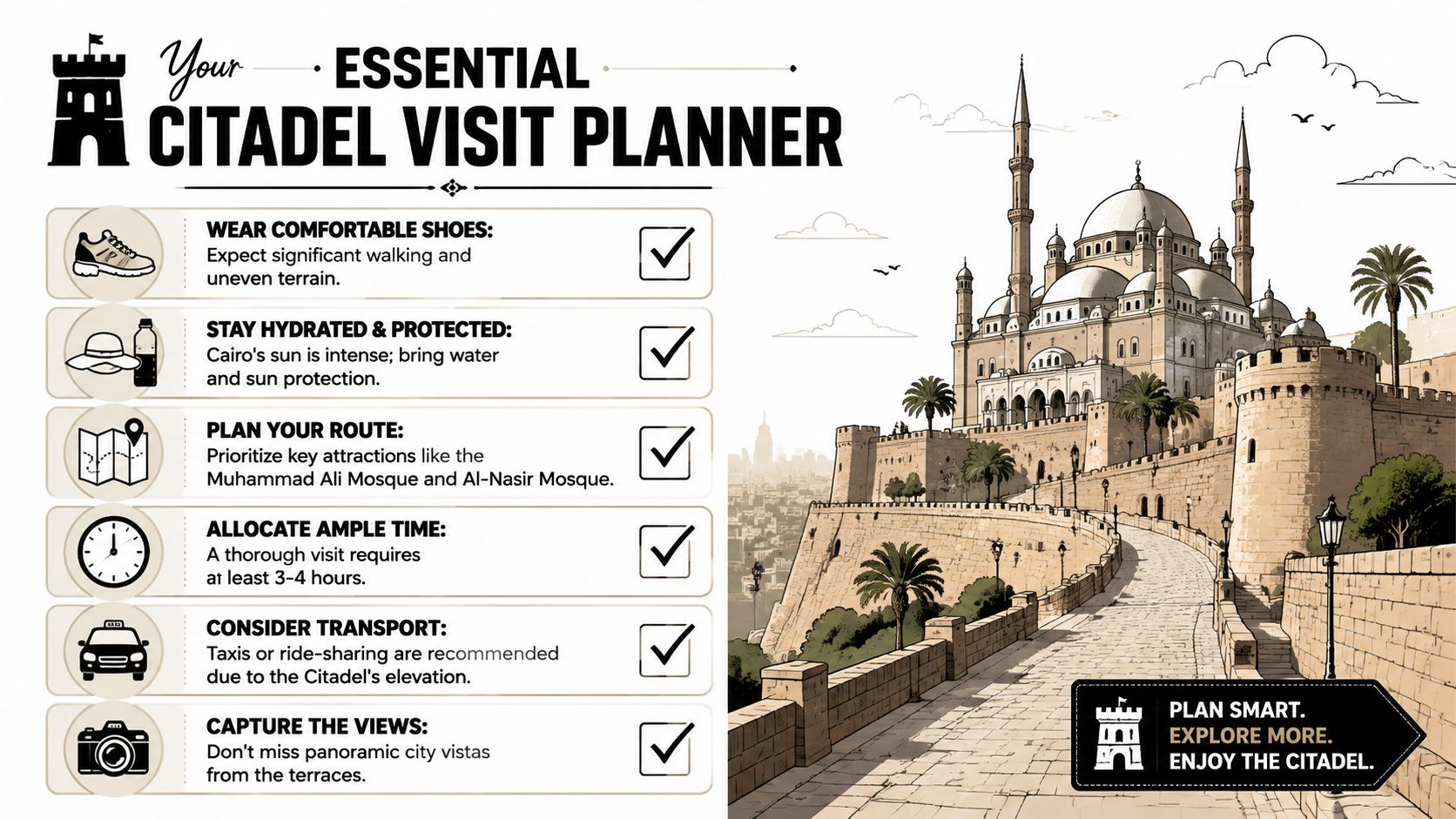
That means you should decide early which type of visitor you are:
- Short-visit traveler: Focus on the main mosque, city views, and one secondary stop.
- History-first traveler: Allow time to move more slowly and read the site as a complex, not a checklist.
- Family or senior group: Build in pauses, shade, and a realistic expectation that not every area is worth the extra effort.
A taxi or ride-share drop-off is usually the sensible choice because of the elevation. If you're getting your bearings for the day, this Cairo map page helps place the Citadel within the broader city layout.
What to wear and how to pace it
Dress for both respect and movement. You're visiting a major Islamic site, so modest clothing is the safe choice, especially if you plan to enter mosque interiors. Shoes matter just as much as clothing. Smooth fashion soles and hard city shoes are a bad match for long walking on uneven ground.
What tends to work best:
- For women: Lightweight clothing with shoulders and knees covered, plus a scarf ready for mosque entry if needed.
- For men: Avoid very casual beachwear. Light trousers or longer shorts are more practical than resort clothing.
- For everyone: Closed, comfortable walking shoes. Not sandals you already know become slippery or tiring.
On-the-ground advice: The Citadel suits travelers who can handle a warm, outdoor, walking-heavy visit. It's less suitable for anyone who needs a fully accessible, low-effort sightseeing stop.
If someone in your group tires easily, visit early in the day, keep the route selective, and don't insist on covering every museum or courtyard. Parents with strollers should expect trade-offs. Some sections will be manageable, others awkward. For retirees, the site is often rewarding if paced properly, but not if combined with an overloaded Cairo schedule on the same day.
One body-level rule applies to almost everyone. Carry water, assume more sun exposure than you expect, and budget extra time for moving between major points.
Crafting the Perfect Citadel Itinerary
You arrive at the Citadel after a long Cairo morning, the sun is already high, one person in your group wants to sit down, and another wants to see every mosque and museum. That is where a bad itinerary starts. The Citadel rewards good timing more than long sightseeing lists.
The smartest plan is to decide early what kind of visit you want from the site. For some travelers, the Citadel is the main event. For others, it works better as one strong stop inside a broader Cairo day. The difference matters because the grounds are spread out, the walking adds up, and the heat can flatten a group faster than expected.
How to choose the right format
A half-day visit is usually the better choice for families, retirees, and anyone who wants to enjoy the Citadel without turning the day into an endurance test. You can focus on the main views, the key mosque, and one or two supporting monuments, then leave with enough energy for lunch or a slower walk in historic Cairo.
A full-day plan makes sense for travelers coming from outside the city, or for visitors who have only one serious sightseeing day in Cairo. The trade-off is simple. You gain efficiency, but you lose breathing room. If you combine the Citadel with distant stops across town, the day starts to feel like traffic and transitions instead of a visit with shape and focus.
Oh Yes Tours offers Cairo programs that include the Citadel as part of a private city route. If you are comparing operators from the Red Sea side, it also helps to review Hurghada day trip options that include Cairo-style planning so you can judge whether a full-day transfer-and-sightseeing schedule is realistic for your group.
Private planning earns its keep here. A good driver and guide can cut wasted time, adjust the order of stops, and shorten the route once the main mosque and panoramic terrace have done the job.
Sample Citadel Tour Itineraries
| Itinerary | Duration | Includes | Best For | Price (from) |
|---|---|---|---|---|
| Citadel and Islamic Cairo half day | Half day | Private transport, guide, Citadel stop, old-city add-on | Families, retirees, first-time visitors | from €79 |
| Citadel and Khan el-Khalili focus day | Extended half day | Private transport, guide, Citadel, market time | Couples, photographers, cultural travelers | from €95 |
| Full Cairo highlights with Citadel | Full day | Private transport, guide, multi-stop Cairo sightseeing | Short-stay travelers, cruise or resort visitors | from €149 |
Here is how these options work in real life:
- Half day with Islamic Cairo: The best balance for comfort and substance. It keeps the walking manageable and gives the Citadel enough time to feel like a visit, not a photo stop.
- Citadel plus Khan el-Khalili: A good pairing if your group enjoys contrast. You start with open views and major architecture, then shift to tighter streets, shops, and café breaks.
- Full highlights day: Useful for short stays, but only if everyone in the group can handle a long pace, repeated vehicle transfers, and less downtime.
One mistake I see often is saving the Citadel for late afternoon after a packed museum or pyramid schedule. By then, legs are tired, attention is gone, and people rush through the very section that needed the clearest head and the freshest energy. Put the Citadel early if it is one of your priorities. If it is a secondary stop, keep the visit selective and skip the urge to cover every corner.
Logistics From Hurghada and Cruise Ports
For travelers based outside Cairo, the Citadel is rarely the only objective. It's usually one stop within a larger day trip, and that changes the decision-making. You're not only asking whether the site is worth visiting. You're asking whether the travel time leaves enough energy to enjoy it properly.
From Hurghada
From Hurghada, the main question is flight versus road-based planning through a longer private route to Cairo. Flying saves time on the ground and gives you more useful sightseeing hours in the capital. It usually suits travelers who want to combine the Pyramids and the Citadel in one day without arriving exhausted.
The road option can suit travelers who strongly prefer avoiding airports or want a different budget structure, but it creates a much longer day. In practical terms, that makes the Citadel feel more demanding, not less, because it's an outdoor walking site rather than a passive bus-window stop.
If you're comparing options from the Red Sea side, these Hurghada tour choices that include Cairo-style day planning are the kind of format to look for.
From cruise ports
Cruise passengers need to be stricter. Return timing is everything. The Citadel itself is manageable, but Cairo traffic and distance from port can reshape the day quickly. That's why private shore planning usually makes more sense than a loosely structured independent attempt.
For port arrivals, the key trade-offs are straightforward:
- Private vehicle day trip: More control over timing, easier pacing, simpler return planning.
- Shared excursion: Lower flexibility. If the group pace slips, your Citadel visit becomes shorter.
- Over-ambitious itinerary: The biggest risk. Trying to fit too many Cairo stops into one shore day usually hurts the quality of every stop.
For cruise passengers, the right Citadel visit is the one that leaves margin for the return. Not the one that squeezes in one extra attraction.
If you're coming from a port such as Safaga or Ain Sokhna, think in reverse. Start with your fixed return window, then see how much Cairo you can responsibly fit around it. The Citadel is worth including when it supports the day, not when it turns the day into a race.
Frequently Asked Questions About the Citadel
Is the citadel of saladin safe to visit independently
Yes, many travelers visit independently without problems. The primary issue usually isn't safety. It's efficiency, pacing, and understanding the layout well enough to avoid a tiring, unfocused visit.
Are there restrooms and places to sit
Basic facilities are usually available, but don't expect the comfort level of a modern museum complex. It's wise to use facilities when you find them rather than assuming the next area will be better.
What's the best time for photos
Earlier in the day usually works better for comfort and clearer movement through the site. If you care about city views, light and haze conditions matter a lot, so flexibility helps more than chasing one fixed hour.
Is the Citadel good for strollers or wheelchairs
Only partially. Some areas are manageable, but the overall site includes slopes, uneven surfaces, and walking-heavy sections. For travelers needing low-effort access, this is not Cairo's easiest monument.
If you want the Citadel as part of a realistic Cairo day, Oh Yes Tours can arrange it in a private format with a local guide, direct booking, and pacing that fits your group rather than a generic bus schedule. That matters most for families, retirees, Red Sea visitors, and cruise passengers who need the day to run smoothly. Egypt? Oh Yes!