Egypt travel
Can You Tour Inside the Pyramids: Touring Inside The
Yes, can you tour inside the pyramids? Find out in this 2026 guide! Covers open pyramids, ticket costs, what to expect, plus tips for Giza & Saqqara.

By Mohamed Hassan · Senior Local Guide · 12 years

Yes, you can go inside several pyramids in Egypt, but it's not one simple experience. At Giza, the main site entrance is about EGP 700 per adult and the Great Pyramid of Khufu requires a separate EGP 1500 ticket, while Menkaure has been listed at EGP 280 and Khafre is often closed for regular visits.
That's the part most travel articles miss. The better question isn't just can you tour inside the pyramids. It's which pyramid, what does it feel like inside, and is it worth it for your body, your budget, and your travel style.
I've helped enough travelers around Egypt to know that the outside and inside are two very different experiences. From the desert, the pyramids feel open, huge, cinematic. Inside, they feel narrow, hot, steep, and surprisingly bare. Some people come out thrilled because they've just stood inside a tomb complex that has fascinated the world for thousands of years. Others come out saying, “That was interesting, but once was enough.”
If you're deciding whether to go inside Khufu, try Menkaure, head to Saqqara instead, or skip pyramid interiors entirely and focus on more visually rewarding tombs, this guide will help you choose like a smart traveler, not like someone buying the most expensive ticket just because it sounds iconic.
Table of Contents
- The Real Answer to Going Inside the Pyramids
- Which Pyramids Can You Actually Enter A Comparison
- What It Is Really Like Inside a Giza Pyramid
- Tickets Hours and Rules for Your 2026 Visit
- Excellent Alternatives to Going Inside a Pyramid
- How to Arrange a Seamless Pyramid Tour
The Real Answer to Going Inside the Pyramids
The honest answer is yes, but access is controlled and the value depends on the pyramid you choose.
The Great Pyramid of Khufu is the primary pyramid visitors inquire about entering. It's the only surviving Wonder of the Ancient World, and its scale still stops people in their tracks. Britannica notes that the structure is made of roughly 2.3 million stone blocks, and if the traditional 20-year building period is right, that works out to about one block every 4.6 minutes across the project, according to Britannica's overview of the Pyramids of Giza.
That scale matters because it changes how you see the decision. You're not entering a decorated palace. You're stepping into one of history's most audacious engineering works.
Outside glory, inside reality
From outside, people expect grandeur. Inside, the feeling is more stripped back. The interior route is functional, confined, and built around burial space rather than visual display.
Practical rule: Go inside for the historical weight, not for ornate rooms or museum-style exhibits.
There's another point travelers should know before they arrive. Access today is tightly managed. The same Britannica entry notes that climbing the exterior is illegal and can bring penalties of up to three years in prison, which tells you everything about how seriously the site protects the monuments.
Why a simple yes is misleading
When people type “can you tour inside the pyramids,” they're usually imagining one answer for one place. That's not how Egypt works on the ground.
At Giza, one pyramid may be open, another may need a separate ticket, and another may be closed. Saqqara is a different atmosphere altogether. Some interiors suit adventurous travelers. Others are a bad fit for anyone with claustrophobia, mobility issues, or a low tolerance for heat.
That's why I never give a one-word answer. I ask three things first:
- How much do you care about the bragging-rights moment versus seeing carved decoration
- How comfortable are you with tight spaces and a physical climb
- Who is traveling with you, especially children, older parents, or anyone nervous underground
Those answers decide much more than the headline question.
Which Pyramids Can You Actually Enter A Comparison
Not all pyramid interiors are equal, and not all are reliably open. That's the first thing to understand before you build your day around one specific entrance.
Inside Egypt notes that many travelers assume “going inside” is one standard experience, but at Giza Khufu is listed at EGP 1,500, Menkaure at EGP 280, and Khafre is often closed for restoration, as explained in Inside Egypt's guide to entering the Giza pyramids.
A quick side by side view
| Pyramid Interior Access Comparison 2026 | Location | Interior Access | Approx. Ticket Cost (Adult) | Best For |
|---|---|---|---|---|
| Khufu | Giza | Open with separate ticket | EGP 1,500 | Travelers who want the iconic experience |
| Menkaure | Giza | Limited public access | EGP 280 | Budget-conscious visitors who still want an interior |
| Khafre | Giza | Generally closed for regular visits | Not typically available for regular visits | Travelers who are flexible and checking same-day status |
| Step Pyramid of Djoser | Saqqara | Access can vary | Check on the day | Travelers interested in early pyramid history |
| Bent Pyramid | Dahshur | Access can vary | Check on the day | Travelers who prefer quieter sites |
| Red Pyramid | Dahshur | Access can vary | Check on the day | Travelers who want a less crowded interior climb |
If you want a broader look at the Giza complex before choosing, this Giza pyramids overview helps visualize how the site is laid out.
How the choices differ in real life
Khufu is the headline option. It gets the most attention because it's the Great Pyramid and because the interior visit carries that “I went inside” feeling people remember for years. It also has the highest price gap between the general site ticket and the interior ticket.
Menkaure is the practical alternative. It's smaller, usually less intimidating to travelers who don't need the biggest-name chamber, and often makes more sense if you want the experience of entering a pyramid without paying for Khufu.
Khafre is where many visitors get confused. They see the pyramid, assume they can buy an interior ticket, and then learn access is restricted or unavailable. That's why I always tell people to stay flexible and confirm on the day rather than building the whole itinerary around it.
Some travelers are happiest after Khufu. Others are happier when they choose Menkaure and use the saved money and energy on tombs or museums.
Outside Giza, Saqqara gives a different mood entirely. The Step Pyramid of Djoser matters historically, and the whole area often appeals more to travelers who like archaeology, quieter spaces, and a fuller day that isn't only about one famous photo stop.
Then there's Dahshur. For travelers who hate crowds, this is often where Egypt starts to feel calmer. The Bent Pyramid and Red Pyramid offer a very different atmosphere from Giza. Less chaos, more breathing room, and a stronger sense that you're discovering something rather than standing in a queue for a famous checkbox.
If you're choosing with kids, seniors, or anyone anxious in enclosed spaces, the “best” pyramid isn't always the most famous one. The best one is the one your group can enjoy.
What It Is Really Like Inside a Giza Pyramid
So what do you get once you duck through the entrance and start climbing inside?
The passage is the experience
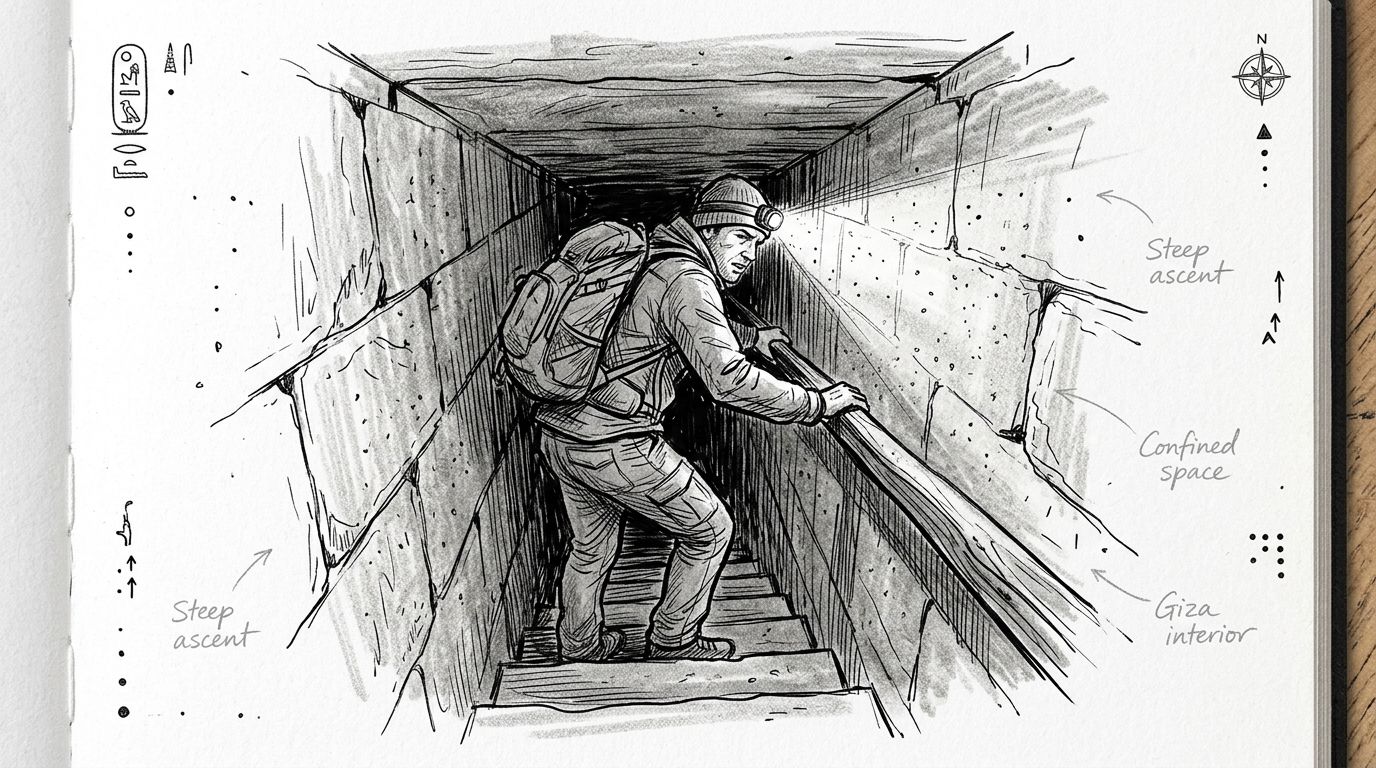
Inside Khufu, the experience is physical. You are not walking into decorated halls or treasure rooms. You are bending through tight passages, climbing on wooden ramps, waiting for people coming down, and feeling the heat build as you go.
That is why some travelers come out thrilled and others come out wondering what they paid for.
The Great Pyramid interior begins through the Robber's Tunnel, then continues through a steep, enclosed route toward the upper chambers, as shown in this on-site Great Pyramid interior video explanation. The memorable part for many visitors is not the chamber at the end. It is the effort of getting there, and the strange feeling of moving through the core of one of the most famous buildings on earth.
I always tell guests to judge the experience by tolerance, not by bucket-list status. If you enjoy unusual historic spaces and do not mind heat, stooping, and close quarters, going inside can be one of the strongest memories of the day. If you want grand interiors with carvings, color, and objects to study, the outside of the pyramid may impress you more than the inside.
For travelers planning a fuller day around the plateau, these Cairo attractions and day planning ideas help you pair the pyramid visit with places that give you more visual payoff.
Who should think twice
Claustrophobic travelers should be honest with themselves. The passages are narrow enough that even confident visitors sometimes stop after the first stretch and turn back.
Kids are a mixed case. Adventurous children often love the feeling of entering a secret passage. Tired, overheated, or impatient children usually do not. Parents know the difference before the ticket is bought.
Seniors can do very well inside if they have decent balance, strong knees, and no problem stooping for stretches. Age is not the issue. Mobility is. I have guided older guests who handled Khufu better than travelers half their age, and I have also seen fit-looking visitors come out drained because they underestimated the climb.
One rule saves a lot of regret. If someone in your group dislikes confined spaces, steep ramps, or warm air with limited room to pause, believe them before you line up.
The chamber itself is plain. Visitors usually find a bare stone room and a damaged sarcophagus, not the kind of visual reward they imagined from films and schoolbooks. That is why I describe the interior as a feeling-first experience. You go in to say you stood inside the pyramid, moved through its passageways, and sensed its scale from within.
For some travelers, that is absolutely worth it. For others, Menkaure or Saqqara gives a better balance of effort and reward.
A short visual can help set expectations before you commit to the climb:
Tickets Hours and Rules for Your 2026 Visit
The ticket desk catches people every day. They buy entry to Giza, walk toward Khufu, then learn the inside ticket is separate.
How the ticket system works
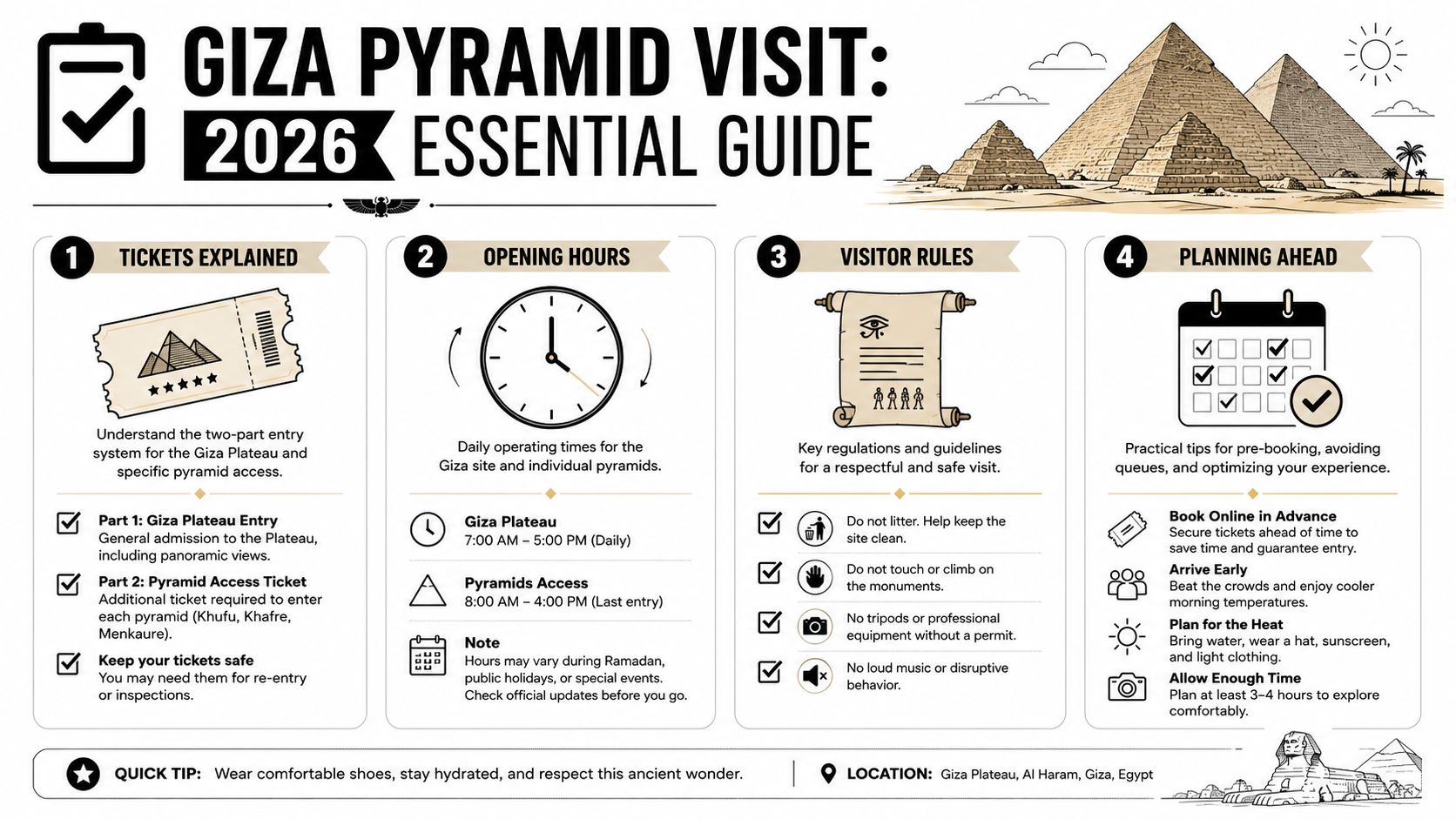
For planning, Odynovo states that the general Giza site entrance is around EGP 700 per adult, and the separate ticket for Khufu is an additional EGP 1500, bringing that same-day adult total to about EGP 2200, according to Odynovo's inside the Pyramid of Giza planning guide.
Budget for two decisions, not one. First, the plateau entry. Second, whether a specific interior is worth the extra cost for your group.
That matters because the right choice is not the same for everyone. Travelers who want the bragging rights usually choose Khufu. Travelers who want a lighter physical effort often do better with Menkaure or by saving their energy for Saqqara. Families and older visitors usually have the best day when this decision is made before arrival, not in front of the ticket window.
A simple way to frame it:
- Site ticket: Access to the Giza Plateau
- Interior ticket: Separate access to a pyramid chamber
- Real question: Which interior fits your budget, stamina, and expectations
When to go and what to expect
Odynovo notes that 8:00 to 10:00 AM is usually the best window because conditions are cooler and there are often fewer people inside. The interior visit itself typically takes 30 to 45 minutes.
I agree with that timing from the ground. Early entry gives you the best chance of handling the passages before the heat builds and before the plateau has already taken a lot out of your legs.
Site hours can shift by season and by operational decisions, so check the current schedule before your visit and again the day before if the timing matters for a tight itinerary. In practice, early morning remains the safest plan, especially if you want to go inside Khufu and still have time for viewpoints, the Sphinx, or a second site later in the day.
Rules that matter on the ground
A few rules make the visit much easier:
- Wear shoes with grip: Smooth soles and loose sandals are a bad match for stone ramps and uneven ground.
- Carry as little as possible: A small bag is manageable. A bulky backpack becomes irritating fast in narrow passages.
- Expect controlled entry: Interior access is managed and can pause or slow down depending on conditions and crowd flow.
- Decide early: Buy the interior ticket before you wear yourself out on the plateau.
- Check the camera rules on the day: Enforcement can change, and it is better to know before you enter than argue at the entrance.
One practical tip from guiding. Treat the interior visit like a short physical task, not a casual stop between photos. Water, shade, and pacing matter more than people expect.
If photography is your priority, keep expectations realistic. The stronger images usually come from outside viewpoints, not from inside the chambers.
Excellent Alternatives to Going Inside a Pyramid
Skipping the interior doesn't mean skipping the good part of Giza. In many cases, it means choosing the parts that are more rewarding visually and less stressful physically.
What gives you more visual reward
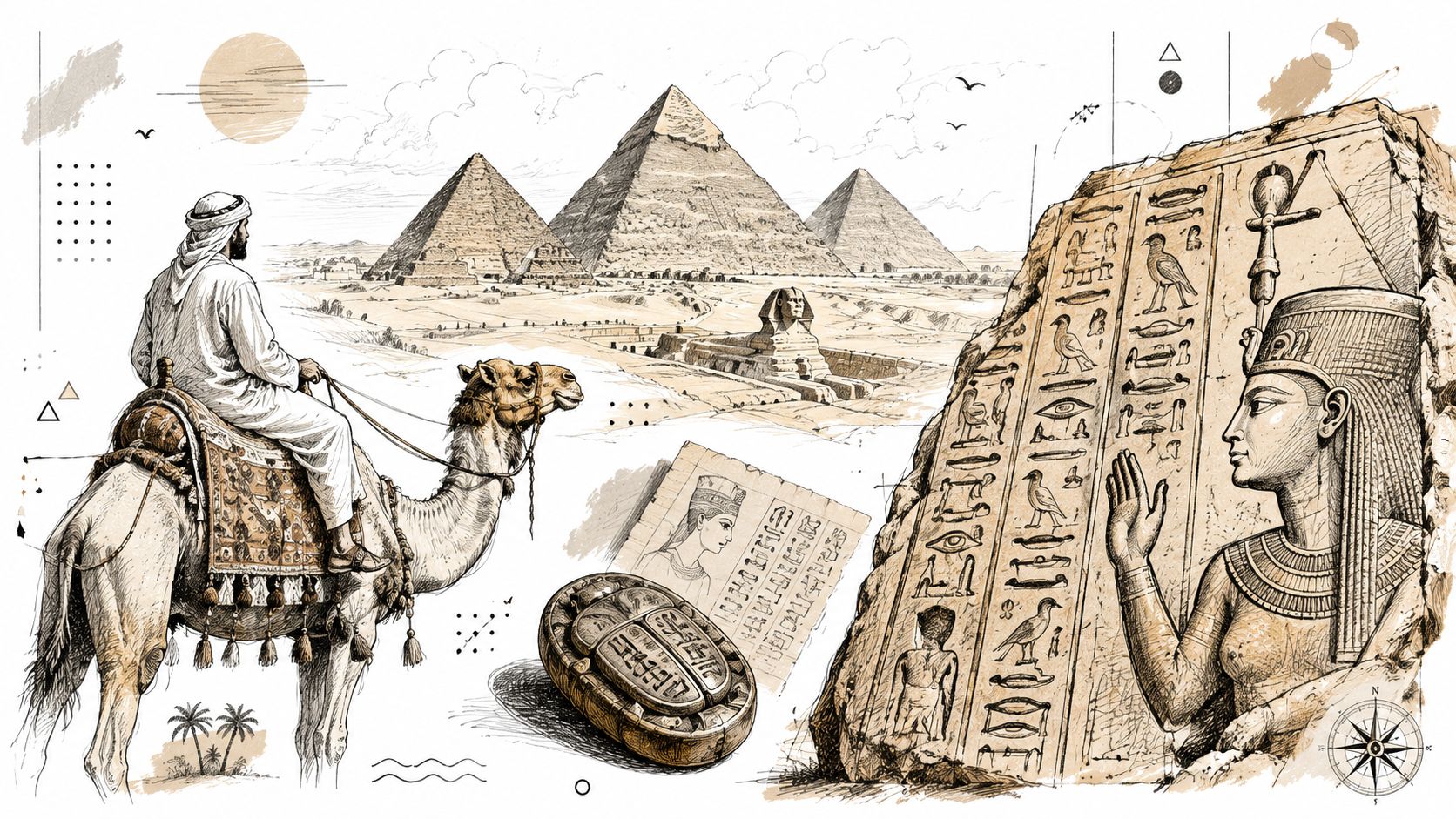
If your priority is art, carving, color, and atmosphere, nearby tombs and broader archaeological sites usually beat the inside of a pyramid. Pyramid interiors are powerful because of age, engineering, and symbolism. They are not the best places for decoration.
That's why many experienced travelers prefer a mixed day. They admire the pyramids from the outside, take in the full skyline, then spend their time in spaces where walls tell stories.
Good alternatives include:
- Decorated mastaba tombs: These often give you scenes of daily life, carved figures, and a much stronger visual connection to ancient Egypt.
- Saqqara: If you want context, archaeology, and a richer sense of development in pyramid building, Saqqara often delivers more than a single expensive interior.
- Museum time: The objects people imagine inside the pyramids are usually seen in museums, not in the chambers themselves.
- Viewpoints around Giza: For many travelers, the emotional high point is the exterior panorama, not the underground room.
The most common surprise at Giza is this. The outside is the spectacle. The inside is the milestone.
When skipping the interior is the smarter move
I usually tell people to skip going inside if any of these sound like them:
- They want decoration: They'll almost always feel underwhelmed by the bare chamber.
- They dislike heat and crowd pressure: The passages magnify both.
- They're traveling with someone hesitant: One anxious traveler can change the mood for the whole group.
- They're trying to fit too much into one Cairo day: The interior can eat time and energy better spent elsewhere.
For families, this matters a lot. If parents are determined to go in but the children are already fading, it's often smarter for one adult to do the interior while the others stay outside with water, shade, and better photo opportunities.
For retirees and history-focused travelers, I often say this: if the emotional meaning of standing inside a pyramid matters to you, do it once. If your real joy comes from understanding ancient life through carved scenes and better-preserved spaces, put your time into tombs, Saqqara, and the museum circuit.
A good Egypt day isn't about collecting the maximum number of entry tickets. It's about choosing the experiences that match your travel style.
How to Arrange a Seamless Pyramid Tour
A good pyramid day is built on timing, pacing, and honest decisions before you reach the gate. The usual problems are practical ones. Which pyramid should your group enter, how early should you start, who needs a slower pace, and how do you fit Giza with Saqqara or the Sphinx without turning the day into a long, tired shuffle?

What usually goes wrong without planning
I see the same mistakes all the time. People arrive at Giza in the late morning, when the site already feels hotter and busier. They buy interior tickets before talking through whether the children, older travelers, or the one claustrophobic person in the group will want to do the climb. Then they spend too long solving basic logistics and have to rush the parts of the day they would have enjoyed more.
This is even more common on Cairo day trips from the Red Sea, where every delay costs you something later.
What makes the day easier
A private tour helps because the order of the day is set properly from the start. We can get you there early, handle transport directly, and talk through the trade-offs involved before anyone commits to an interior ticket. That matters more than many travelers expect.
Khufu, Menkaure, and Saqqara do not offer the same experience. One traveler may care a great deal about saying, "I stood inside the Great Pyramid." Another would be happier saving the time and energy for Saqqara, where the atmosphere and surrounding sites often give more back. Families, seniors, and anxious travelers usually do better when the plan leaves room for choice instead of forcing everyone into the same ticket and the same pace.
If you're comparing operators, this guide to the best tour companies in Egypt is a useful starting point. Look for clear pickup planning, flexible pacing, and a guide who will tell you when skipping an interior visit is the smarter call.
The best pyramid day feels calm and well-organized. You start early, choose the right interior experience for your group, keep enough energy for the rest of Cairo, and finish the day feeling satisfied instead of wrung out.
If you want that kind of easy, well-paced day, Oh Yes Tours is a strong option. You book directly with local guides in Egypt, not through a middleman, so the planning stays personal and practical. Whether you want a private Giza day, a Cairo trip from Hurghada, or a full Egypt itinerary with room to adjust for kids, seniors, or claustrophobic travelers, they'll help you choose the version that fits. Egypt? Oh Yes!