Egypt travel
Cairo City Tour 2026: An Insider's Planning Guide
Planning a Cairo city tour? Our 2026 guide covers private vs. group tours, itineraries, costs from €499, and tips from local guides for a perfect trip.

By Mohamed Hassan · Senior Local Guide · 12 years

You land in Cairo, or roll in after a long transfer from the Red Sea, and within minutes the day starts filling up faster than expected. The Pyramids are obvious. The hard part is choosing what else fits without turning the tour into hours of traffic, rushed photos, and a late return that leaves everyone tired.
These are the questions travelers ask us every week. Should you pay more for a private guide or join a group and keep costs down? Is Khan el-Khalili a highlight or a stop that only works if you enjoy markets? If you only have one day, how much can you see before the schedule stops being enjoyable?
Cairo rewards good planning and punishes bad pacing. It is a huge city with ancient sites, Islamic Cairo, Coptic landmarks, major museums, and dense traffic between them. My experience running Cairo tours shows this clearly.
The difference between a memorable day and a draining one usually comes down to route order, start time, transport, and whether the tour fits your energy level. We have seen travelers enjoy four stops far more than eight rushed ones. That is the essence of planning a Cairo city tour well. It is not about squeezing in everything. It is about choosing the right version of Cairo for your day.
Table of Contents
- Your Cairo Dream vs The Planning Reality
- Choosing Your Tour Type Private Group or DIY
- Building Your Perfect Itinerary What to See in One Day
- From Red Sea to Pyramids Bus vs Flight Logistics
- What a Cairo City Tour Really Costs Decoding the Price
- Booking Your Tour and Essential Pre-Trip Tips
- Conclusion Beyond the Checklist to an Unforgettable Day
Your Cairo Dream vs The Planning Reality
You book a Cairo day trip for the Pyramids. Then the important questions start. Can you fit Giza, the museum, and Old Cairo into one day without spending half of it in traffic? Will a cheaper tour save money, or just waste time? Should you chase the full checklist, or build a day you can enjoy?
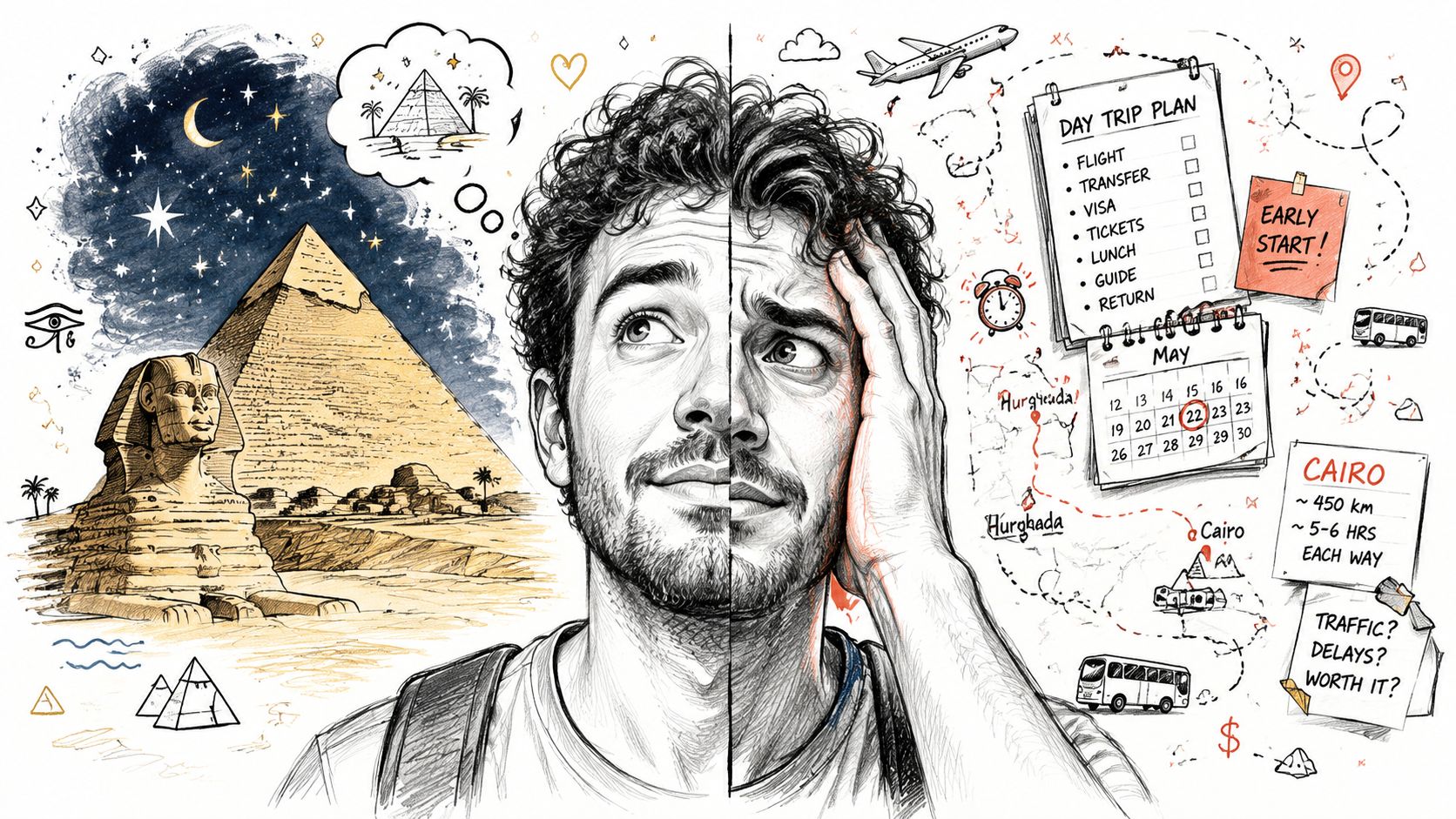
That is where many Cairo trips slip off course. The problem is not a lack of worthwhile places to see. The problem is concentration, distance, and pace. Cairo layers Pharaonic sites, medieval Islamic monuments, major museums, dense traffic, and a modern working city into the same day. Facts often quoted about the city's founding in 969 CE, its historic core, and its long urban history all point to the same practical truth. Cairo is not a one-zone destination. It is a vast capital with different sightseeing areas that do not move at the same speed.
I have seen this hundreds of times. Travelers arrive with a simple picture in mind: Pyramids in the morning, a quick museum stop, Khan El Khalili before dinner. On paper, that sounds efficient. On the ground, it can turn into rushing through Giza, standing in line tired and hungry, then reaching the bazaar at the worst hour for crowding.
A good Cairo city tour is built on trade-offs.
If the Pyramids are your main reason for coming, protect that time first. If you care more about street life, mosques, and old architecture, spending less time at Giza can make the day feel far richer. Families with children usually need fewer stops and more breaks. Serious history lovers often prefer one museum plus one major site, not four rushed stops with no context.
The city rewards travelers who choose a rhythm they can sustain.
That usually means asking practical questions early. How much walking is comfortable in the heat? Do you want time inside sites, or mostly exterior views and photos? Are you happy following a fixed schedule, or will that frustrate you by midday? These decisions matter more than adding one more stop to the plan.
Get them right, and Cairo feels alive, layered, and memorable. Get them wrong, and the day becomes queues, traffic, heat, and tired silence in the car.
Choosing Your Tour Type Private Group or DIY
At 8:00 a.m., all three options can look fine. By 1:00 p.m. in Cairo traffic, with heat, tickets, and tired feet in the mix, the differences become obvious.
I tell travelers to choose the tour type before they choose the sites. The format decides your pace, how much waiting you do, and whether the day feels organized or improvised. In Cairo, that matters more than people expect.
Cairo Tour Options at a Glance
| Feature | Private Tour | Group Tour | DIY (Do-It-Yourself) |
|---|---|---|---|
| Cost | Higher upfront, but easier to control what is included | Lower starting price | Often looks cheapest, but transport mistakes and wasted time can raise the real cost |
| Flexibility | High. Stops and timing can be adjusted | Low. You follow the fixed route | High, but you handle every decision yourself |
| Pace | Built around your energy and interests | Shared pace for the whole group | Fully your own, if you are comfortable managing it |
| Guide interaction | Direct and personal | Limited, especially on larger buses | None unless you hire guides at individual sites |
| Stress level | Usually the easiest option | Moderate | Highest for first-time visitors |
Private tours suit travelers who care about time
Private touring is usually the best fit for couples, families, older travelers, photographers, and anyone coming in for one long day and trying to get it right. The primary benefit is not luxury. It is control.
If you want to stay longer at Giza and skip a stop that does not interest you, private works well. If your child needs a break, or one traveler wants museum context while another wants more time in historic streets, private gives room to adjust without asking ten other people to agree.
That flexibility matters in a city where the sightseeing zones are spread out. A good private guide can shorten one stop, change the order, or protect your strongest hours for the places you care about most. If you want a quick sense of how Cairo's main sightseeing areas differ, this overview of Cairo attractions and tour styles is a useful starting point.
Group tours are good for a clear, lower-cost day
Group tours can be a smart choice if your main goal is simple. See the highlights, keep the budget under control, and let somebody else handle transport and entry flow.
They work best for travelers who do not mind a fixed timetable and do not need much personal attention. If missing twenty minutes here or there will not bother you, a group can be good value.
The trade-off is simple. Group tours protect price by limiting flexibility. You may spend less, but you also wait more, move at the group's pace, and spend less time asking questions. That is normal. It is not poor quality. It is just how shared touring works.
Practical rule: If one site matters a lot to you, do not put that day in a format where the whole schedule depends on strangers moving together.
DIY can be rewarding, but it costs attention
I respect independent travelers. Some know exactly what they are doing and enjoy building the day themselves. Cairo can reward that approach.
Still, DIY is harder here than it looks on a map. Distances between major areas are not the only issue. Timing is. Site entrances, traffic swings, driver coordination, ticket lines, walking tolerance, and meal timing all shape the day. If you misjudge one part, the rest gets rushed.
For a first visit, DIY often saves money on paper and spends energy in practice. You handle every handoff yourself, and that mental load is real. I usually recommend DIY only for travelers who already have experience handling large, busy cities and who are comfortable sacrificing efficiency for independence.
My honest local view is straightforward. Private is usually the best value for travelers who want to see Cairo well in limited time. Group is fine for a lighter, cheaper overview. DIY works best for confident repeat visitors or very patient planners.
Building Your Perfect Itinerary What to See in One Day
At 8:00 a.m., Cairo can still feel manageable. By noon, one wrong routing decision can turn a good day into a long one. That is why a one-day Cairo plan should be built around pace, distance, and your real interests, not around how many names you can fit on a list.
After guiding this city for years, I can say the best one-day itineraries are usually simple. Pick one anchor. Then add one second layer that matches your energy. Travelers who try to collect Giza, a museum, Old Cairo, Khan el-Khalili, Saqqara, and Dahshur in the same day usually remember traffic, heat, and rushing between ticket gates.
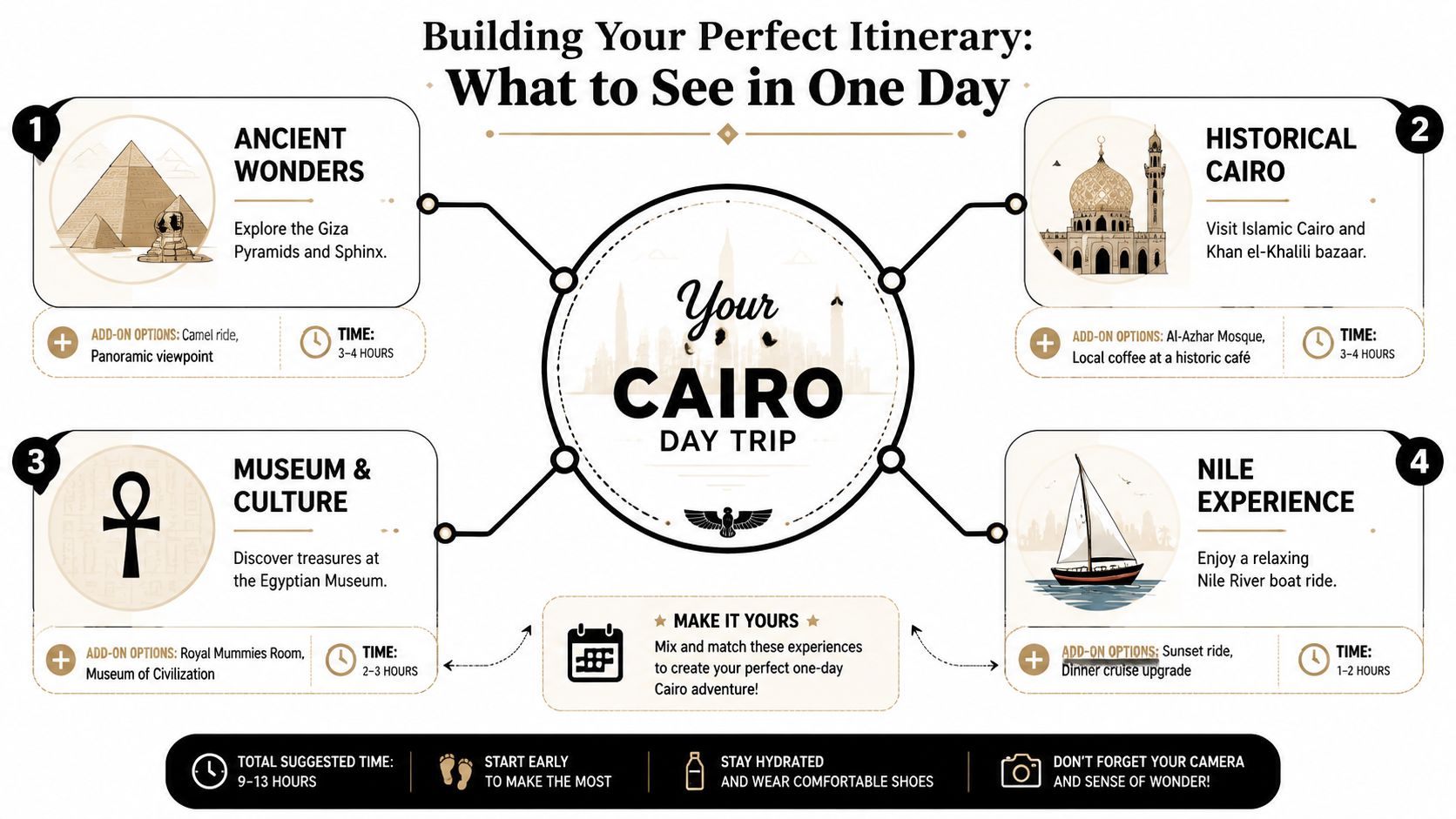
If you want a quick overview of the main sightseeing zones before choosing, this guide to Cairo attractions and districts helps show how the city's highlights naturally group together.
The Unmissable Core
For a first visit, the strongest structure is Giza plus one museum.
That combination works because it gives you contrast. Giza delivers scale, open space, and the emotional first hit people come to Cairo for. A museum adds context, shade, and a slower pace once the morning sun gets stronger. Done in that order, the day feels balanced.
The mistake is adding too much after Giza. I see this often. Guests finish the plateau tired, a little dusty, and already full of impressions. If we then force two museums or stack several indoor historical stops, attention drops fast and everything starts to blur.
A practical first-day rhythm looks like this:
- Early start at Giza and the Sphinx, before the site feels crowded and the heat builds
- A proper lunch break with time to sit down and reset
- One museum, chosen for your interests, not because it is available on the route
If you care most about the famous monuments, keep the morning for Giza. If you care more about artifacts and historical context, shorten the plateau visit and leave more energy for the museum. Both plans work. What matters is choosing one on purpose.
The City Layer That Changes the Mood
Old Cairo rewards travelers who stop treating it as an add-on.
Coptic Cairo, Islamic Cairo, and Khan el-Khalili are close in theme, but they do not feel the same on the ground. Coptic Cairo is quieter and more reflective. Islamic Cairo feels denser and more layered. Khan el-Khalili is about movement, sound, bargaining, coffee, and street life.
Timing matters here more than many visitors expect. I rarely like pushing guests through these areas in the hottest middle hours unless the schedule leaves no choice. Late afternoon or early evening usually feels better, especially for the market. The same lane can feel tiring at the wrong hour and memorable at the right one.
This is also where I ask a direct question: do you want monuments, or do you want atmosphere? If the answer is atmosphere, give this part of the day enough time to breathe. Walk a little. Sit for tea. Let the city feel like a city, not a checklist.
The Smarter Add-On for History-Focused Travelers
Saqqara and Dahshur make more sense than downtown Cairo for some travelers.
I suggest them mainly for repeat visitors, archaeology-focused guests, or anyone who has already decided that pyramid development interests them more than urban neighborhoods. These sites are usually more rewarding for travelers who like context, space, and quieter ground. They are less rewarding for someone on a first Cairo visit who mainly wants the iconic skyline, a museum, and a taste of city life.
The trade-off is simple. Once you add Saqqara or Dahshur, you usually need to reduce the city portion of the day. Trying to force both creates a rushed schedule and too much time in the vehicle.
A realistic rule set works better than an ambitious one:
- First trip: Giza, one museum, and one city area
- History-heavy return trip: Giza or a museum, then Saqqara and Dahshur
- Slower pace: Giza in the morning, rest in the afternoon, Khan el-Khalili later
That is the difference between seeing Cairo and chasing it.
From Red Sea to Pyramids Bus vs Flight Logistics
You leave your Red Sea hotel before sunrise, spend hours in transit, reach Giza tired, then realize Cairo still asks a lot from you. That is the part many travelers underestimate. The transfer is not separate from the tour. It shapes the whole day.
For Red Sea guests, the question is not only bus or flight. It is how much energy you want left once Cairo begins. A long transfer can still produce a good day, but only if the itinerary is built around that reality instead of pretending you have a full fresh city day waiting on the other side.
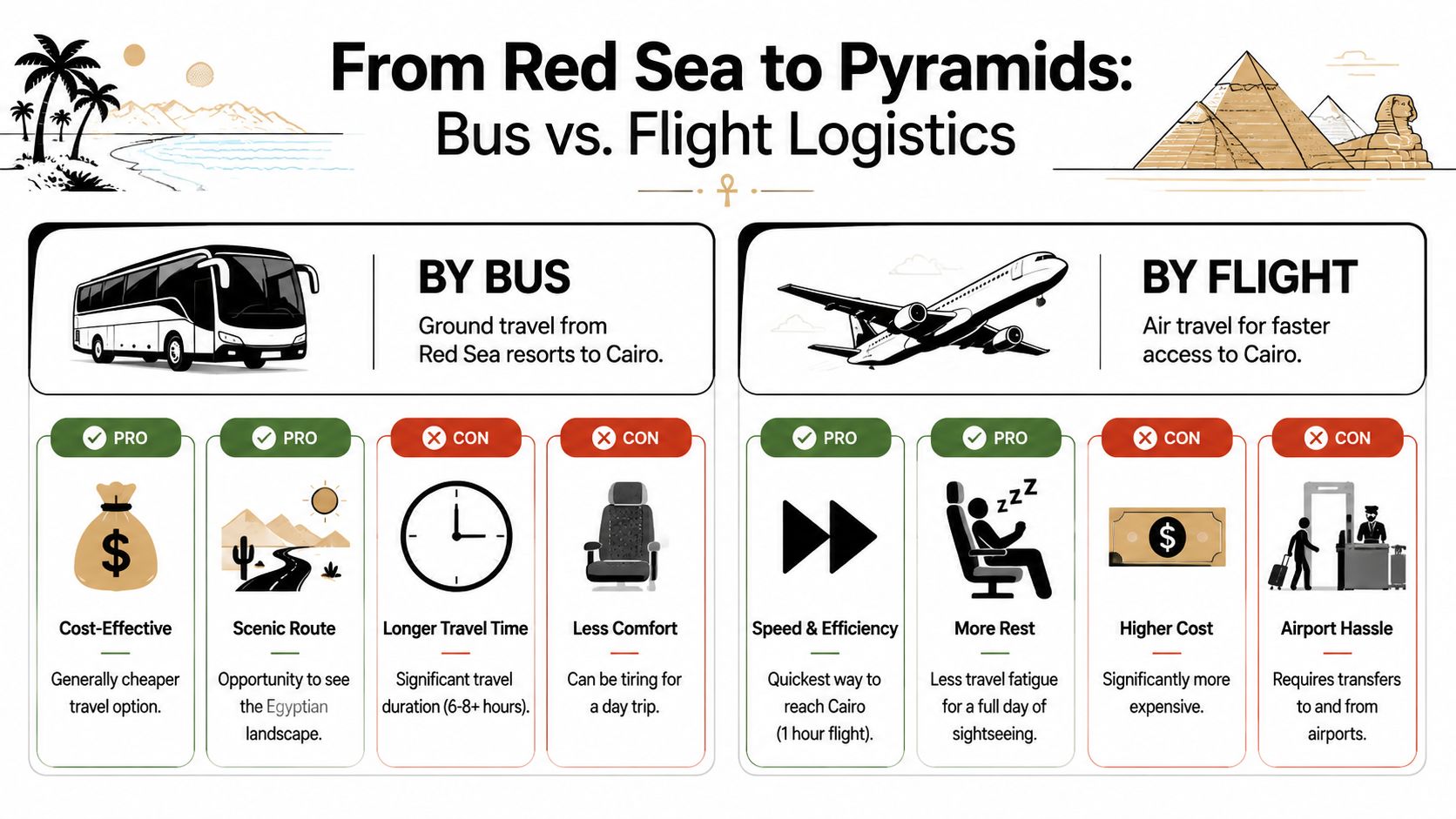
If you want a quick sense of distances and city spread, this map of Cairo and its main tour areas helps explain why timing matters once you arrive.
When a long drive works
I usually suggest the road option for travelers with a tighter budget, strong stamina, and simple goals for the day. Giza first. One additional stop if traffic and energy allow. Then back to the coast. That can work well enough when everyone agrees that the day is about seeing the Pyramids, not squeezing Cairo into every remaining hour.
It also suits guests who sleep easily in transit and do not mind trading comfort for savings.
Where the bus option struggles is pace. Families with young children often hit a wall by midday. Older travelers may enjoy the sites less because the transfer takes too much out of them. Couples who want the day to feel special often find that a very long road day turns the Pyramids into a box ticked under pressure.
Later in the day, this comparison video helps frame the trade-offs visually:
When a flight is worth paying for
Flights make sense when the Cairo day matters more than getting the lowest upfront price. I recommend them most often for short holidays, anniversary trips, first-time Egypt visits, and travelers staying at the Red Sea who want Cairo to feel memorable rather than punishing.
The advantage is not only speed. It is attention span. Cairo is rewarding, but it is not passive sightseeing. Museums ask for concentration. Street crossings ask for patience. Even a strong guide cannot fully fix a day that starts with everyone already worn down.
This is the trade-off I explain on the phone all the time. A bus saves money. A flight usually saves the day.
One useful market reference is a flight-included Cairo and Pyramids day trip from Oh Yes Tours listed from €499. I mention it because it shows the structure of a flight-based package when airfare is built in from the start, not added later as a patch.
What a Cairo City Tour Really Costs Decoding the Price
Travelers often ask the wrong pricing question. They ask, “Why is this one cheaper?” The better question is, “What am I giving up for that lower number?”
Public marketplaces show extreme price dispersion for Cairo tours, and that spread matters because some tours function mainly as transport between famous places while others are built around guide quality, reliability, and a route designed around the traveler rather than operator commission, as noted in Viator's Cairo tour marketplace listings.
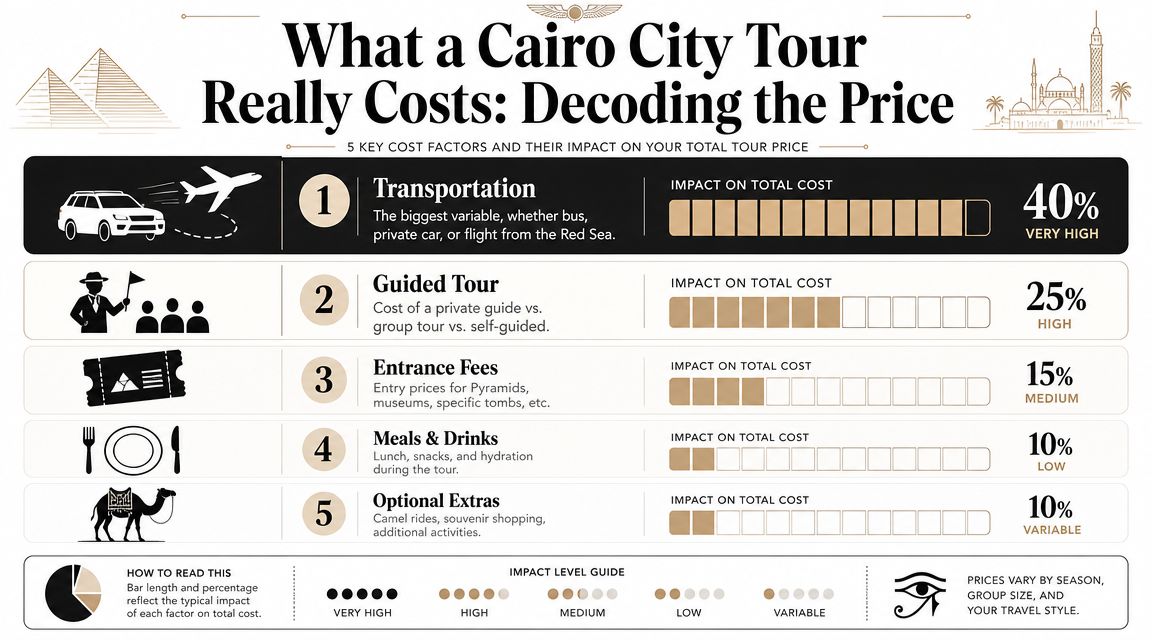
Why prices vary so much
The main cost drivers are usually easy to recognize once you know what to look for:
- Transport model: A shared bus day, a private car, and a flight-based package are completely different products.
- Guide type: Some tours give you a basic escort. Others include a certified guide who can interpret the sites.
- Route design: A simple Giza transfer costs less to operate than a carefully sequenced day combining multiple parts of Cairo.
- Inclusions: Meals, entry handling, transfers, waiting time, and hotel coordination all affect the final price.
- Commission structure: Cheap-looking tours sometimes make money by pushing stops that benefit the operator more than the guest.
That last point matters. I've seen travelers book the lowest online option and then realize the day is structured around moving bodies efficiently, not around building a good experience.
What higher pricing should actually buy you
Higher pricing only makes sense when it buys something concrete.
It should buy time discipline. Your driver shows up when promised. Your guide doesn't disappear at ticket lines. You're not losing chunks of the day to confusion.
It should buy better pacing. More time where the experience is strongest. Less time where travelers typically lose interest.
It should buy fewer nonsense stops. If a day includes shopping pressure you didn't ask for, that's not value.
A fair premium isn't about luxury language. It's about fewer bad surprises.
When I look at an offer, I tell people to ignore the headline price for a moment and read the structure. Is this a guided historical day, or just a transfer product with monuments attached? That one distinction explains most of the market.
Booking Your Tour and Essential Pre-Trip Tips
You feel the difference before the tour starts. A good operator answers clearly, names the guide type, confirms pickup without chasing, and tells you how the day will run in plain language. A weak one stays vague until payment, then leaves details fuzzy. In Cairo, that usually means stress later.
Historic Cairo rewards good guiding because the area is dense, layered, and easy to rush through without context. The value is not in hearing more facts. It is in having someone who can pace the stops, adjust to crowd flow, and explain why one lane, gate, or mosque matters while you are standing in front of it. If you are comparing options, start with a practical shortlist such as these Cairo tours run by local operators, then compare them against bigger booking platforms line by line.
What to verify before you book
Ask direct questions. Good companies answer them quickly.
- Who is guiding the day: A certified Egyptologist guide gives a different experience from a tour coordinator who mainly manages timing and transfers.
- What type of tour it is: Private, small group, and large coach tours run very differently on the ground.
- What is included: Confirm transport, pickup, drop-off, entry handling, and whether the route can be adjusted if the day runs long.
- How the timing works: Ask for a realistic start time and whether any evening stop is genuinely part of the plan or just listed to make the itinerary look fuller.
- How they communicate: If simple questions get vague answers before booking, expect the same once you arrive.
I tell travelers to ask one more thing. "If traffic is heavy or we start late, what gets cut first?" The answer tells you whether the company has real operating experience or is just selling a nice-looking schedule.
What makes the day easier on the ground
Dress for movement, not for photos alone. Cairo touring means steps, curbs, uneven stone, security checks, sun, and long stretches in and out of the vehicle. Lightweight clothes, proper walking shoes, and something modest for mosque areas will make the day easier.
A few habits save trouble:
- Carry small cash: Useful for tips, drinks, and quick purchases.
- Bring water and tissues: Both get used more than people expect.
- Keep your bag simple: Fewer loose items means less time checking seats, bins, and café tables.
- Be realistic with children: Some historic areas are awkward with strollers, and long transfers wear children down fast.
- Protect your energy: If you already know you dislike being rushed, book a tour format that leaves breathing room.
One practical tip I give often. Do not stack a late-night plan on top of a full Cairo day unless you know your stamina well. Even well-run tours are dense, and travelers enjoy the city more when they leave space for a slow dinner and rest.
Book the day you can enjoy at 3 p.m., not just the one that looks good on a sales page at home.
That choice prevents a lot of regret.
Conclusion Beyond the Checklist to an Unforgettable Day
By the end of a well-built Cairo city tour, people rarely talk first about how many places they covered. They talk about the moment the day finally felt easy. The pyramids were worth it. The museum did not feel rushed. The drive across the city stayed manageable. They still had enough energy left for dinner instead of collapsing back at the hotel.
That is the true measure of a good Cairo day. Balance.
After guiding hundreds of these tours, I can say the best itineraries are not the most crowded ones. They are the ones that respect Cairo for what it is. A huge, busy city where timing matters, traffic matters, and your energy matters just as much as the headline sights. If you get those pieces right, the city opens up in a much more enjoyable way.
A strong day usually combines one or two major historical stops with a pace you can sustain. Families do better when there is less backtracking. Couples usually enjoy the day more when they are not being pushed from one checkpoint to the next. Private tours cost more, but they give you control when the day shifts. Group tours can save money, but they work best if you are comfortable giving up some flexibility.
That trade-off is where many Cairo tours are won or lost.
Cairo stays with people because it is more than a checklist. You are not just seeing famous sites. You are handling a city with its own rhythm, pressure, beauty, and noise. Plan it thoughtfully, choose a tour format that fits how you travel, and the day feels far richer than a simple photo run.
If you want a Cairo day that feels well-paced, local, and easy to manage, take a look at Oh Yes Tours. They connect travelers directly with local guides in Egypt, offer private tour options, and keep the booking process simple with pay-on-the-day booking and free cancellation up to 48 hours before. Egypt? Oh Yes!