Egypt travel
Best Time to Visit Pyramids: Avoid Crowds & Heat in 2026
Discover the best time to visit pyramids in Giza! A local guide shares insider tips on the best months, days, and hours to avoid crowds and heat for your 2026

By Mohamed Hassan · Senior Local Guide · 12 years

For most travelers, the best time to visit the Pyramids of Giza is October through April, and the smartest hour to go is right at opening around 7:00 AM, when you can get a quieter 2 to 3 hour window before most tour groups arrive around 10:00 AM. That matters more than many travelers realize, because a well-timed morning visit in a less-than-perfect month often feels better than a badly timed visit in peak season.
Most articles stop at the easy answer: go in winter, problem solved. That's only half true. Yes, cooler months are more comfortable, but the difference between a magical Giza visit and a frustrating one usually comes down to what hour you enter, how much heat you can tolerate, and whether you care more about lower prices or lower crowds.
I've seen travelers arrive in a good month at the worst possible time and leave exhausted. I've also seen travelers visit in a hotter period, start early, keep the visit focused, and have a far better experience. If you want the local answer, don't just ask which month is best. Ask what kind of day you want.
Table of Contents
- When to Visit the Pyramids The Real Answer
- The Best Months to Visit A Season-by-Season Breakdown
- Your Hour-by-Hour Giza Strategy The Secret to Beating the Crowds
- Planning Your Pyramids Day Trip From Cairo Hurghada or a Cruise
- Tickets What to See and How to Plan Your Time
- Pro Tips for Your Visit Photography What to Wear and What to Avoid
- Your Perfect Pyramids Trip Starts Here
When to Visit the Pyramids The Real Answer
If you want the shortest, most useful answer, here it is: the hour you enter Giza usually matters more than the month on your booking.
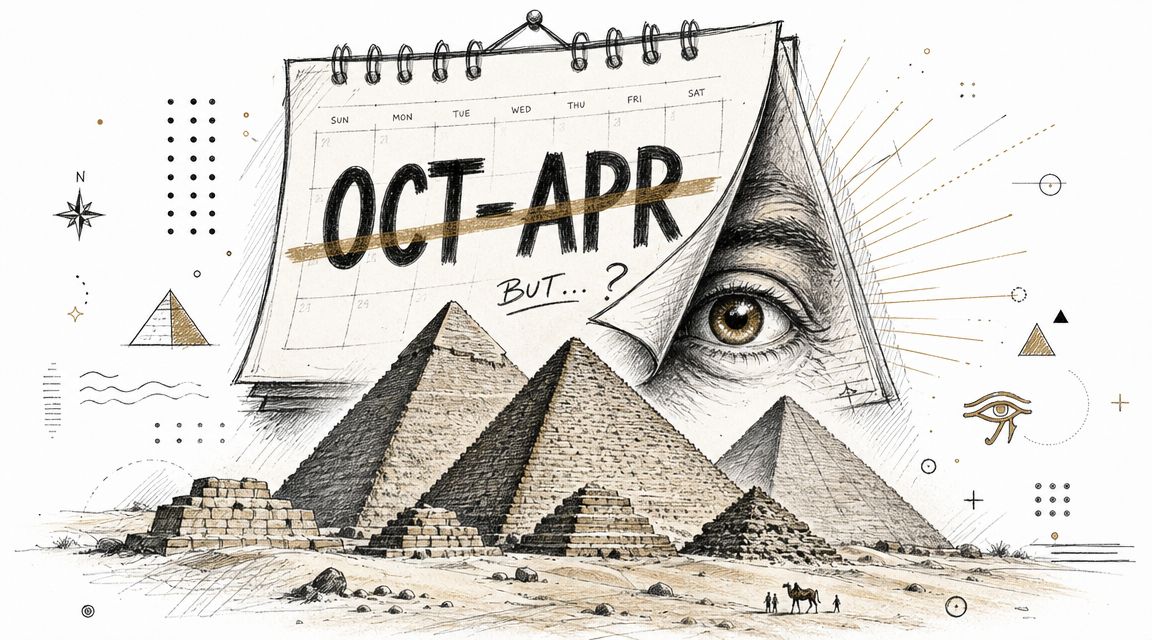
Yes, season still matters. Cooler months are easier on your body, especially on a wide, exposed site with very little shade. But I have seen travelers enjoy Giza in a warm month because they arrived early, and I have seen others come in winter and struggle because they showed up after the tour buses.
That is the trade-off that shapes your day.
Travelers who care most about comfort should aim for cool-season mornings. Travelers trying to balance decent weather, manageable crowds, and fair prices often do better in the shoulder periods, again with an early start. Budget-focused visitors can still have a good visit in hotter months, but only if they keep expectations realistic, move early, and avoid turning the stop into a long midday march across the plateau.
Rain is rarely the issue at Giza. Sun exposure, reflected heat, traffic getting to the site, and crowd waves do far more to change the experience.
Practical rule: If you can choose only one thing well, choose your arrival hour.
An 8:00 a.m. entry in a warmer month can feel calmer, cooler, and far more photogenic than an 11:30 a.m. entry in peak season. The calendar helps. Your timing on the ground decides whether the Pyramids feel awe-inspiring or exhausting.
A few patterns hold up well in real trips:
- Best for comfort: Cooler months, early morning.
- Best for balance: Shoulder season, early morning.
- Best for lower costs: Hotter months, with a short visit soon after opening.
- Worst mistake: Arriving late enough to meet the heat and the big group tours at the same time.
Choose the month for weather and price. Choose the hour for the experience itself.
The Best Months to Visit A Season-by-Season Breakdown
Month matters less than many guides suggest. What the month really changes is how forgiving Giza will be if your timing is not perfect.
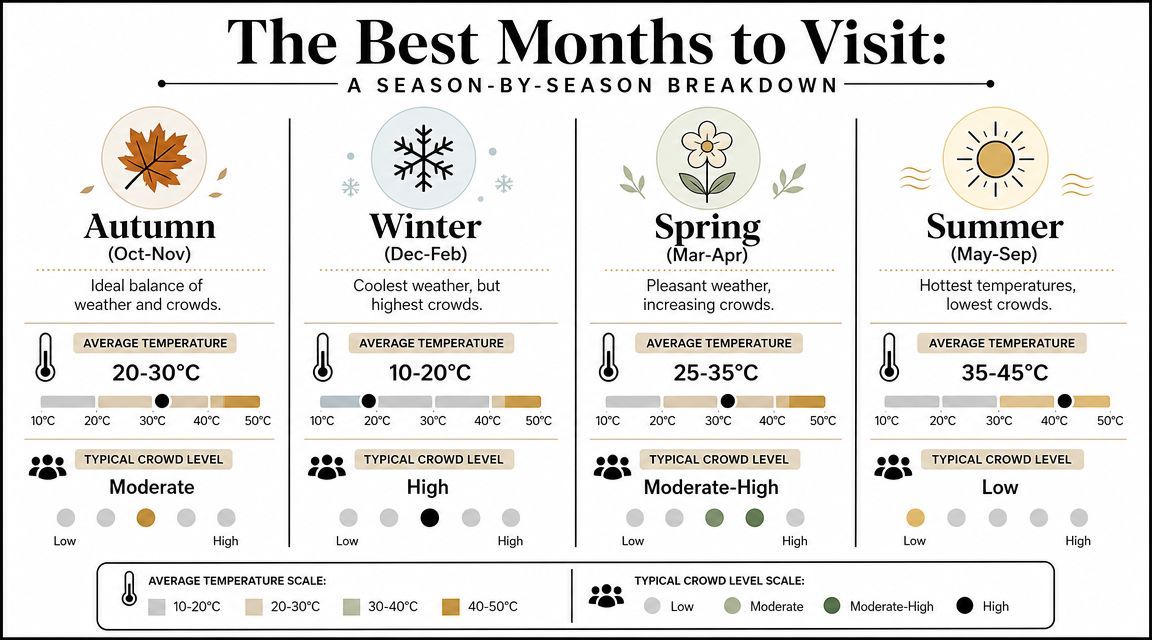
I tell travelers to choose the season for comfort, price, and tolerance for heat. Then choose the day plan carefully. A cool month gives you more room for mistakes. A hot month demands a shorter, sharper visit.
Here is the practical breakdown.
| Season window | What it feels like | Crowd pattern | Best for |
|---|---|---|---|
| Winter peak | Cool mornings, pleasant walking conditions | Highest demand and busier viewpoints | Travelers who care most about comfort |
| Shoulder months | Warm to pleasant, usually easier to manage | Busy, but often less packed than winter peak | First-time visitors who want balance |
| Summer low season | Harsh sun and fast-rising heat | Lower demand, but tougher conditions on site | Budget-focused travelers with an early start |
Cool season comfort
From late autumn into winter, Giza is at its easiest physically. Walking between viewpoints is more comfortable, and many travelers can stay out longer without feeling drained by the sun.
The trade-off is simple. Better weather attracts more people, and prices often follow. Hotels can cost more, popular day tours fill faster, and the plateau feels less relaxed once the main tour flow arrives.
For travelers who dislike heat, this period is still the safest choice. It is the easiest season for families, older visitors, and anyone who wants to combine Giza with a long outdoor day in Cairo.
Shoulder months for the best balance
If a traveler asks me for the most sensible season overall, I usually point to spring or early autumn. These months often give you workable weather without the same pressure you see in the busiest winter stretch.
This is the range I like for first-time visitors who want a fair compromise. You can walk comfortably if you start properly, prices are often less aggressive than peak season, and the site usually feels easier to handle.
Shoulder season also gives you more flexibility if your Cairo schedule is tight. A delayed pickup or a slightly slower start hurts less here than it does in high summer.
Summer for lower costs
Summer works for travelers who care more about savings than comfort. Flights and hotels can be easier on the budget, but the heat at Giza is serious, especially once the sun is fully up and the stone starts reflecting it back at you.
I do not advise treating summer like a long, leisurely sightseeing day. It is better for a focused visit with a short list of priorities, plenty of water, and an exit before the plateau becomes exhausting.
A realistic summer plan looks like this:
- Arrive early and keep the outdoor part short.
- Focus on your top viewpoints instead of trying to see everything.
- Skip the idea of a slow midday wander.
- Leave room for rest later in the day.
So which season should you pick?
Choose winter if comfort matters more than crowds or price.
Choose shoulder season if you want the best overall balance.
Choose summer only if the lower cost is worth the heat and you are willing to be disciplined with timing.
That is the definitive season-by-season answer. The month sets the conditions. The hour you show up decides whether Giza feels inspiring or punishing.
Your Hour-by-Hour Giza Strategy The Secret to Beating the Crowds
Travelers spend too much time asking which month is best. At Giza, the hour you enter matters more.
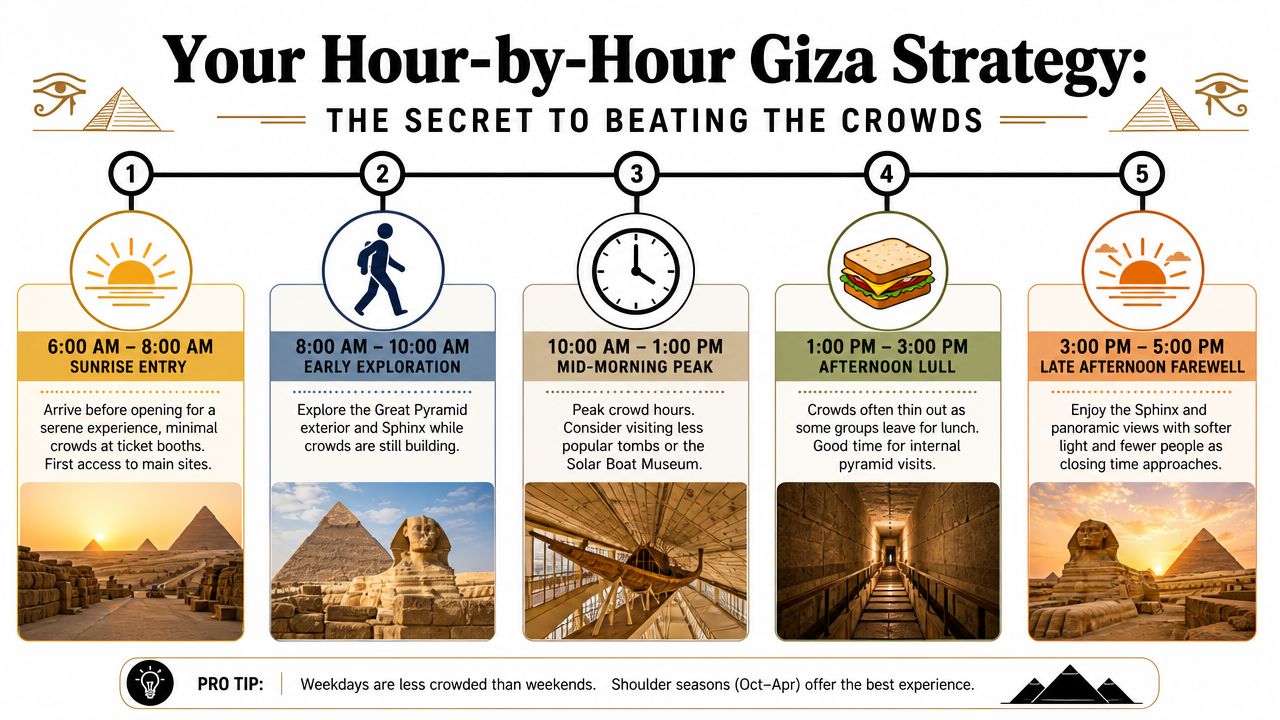
The plateau opens at 07:00 year-round, and the strongest visiting window is usually 7:00 to 10:00 AM, when the air is cooler and the light is kinder for both walking and photos, according to Egypt Tours Plus on timing a Pyramids visit.
The golden window
If you want Giza at its easiest, be at the gate around opening. Many organized groups arrive later in the morning, so the first couple of hours usually give you more space, shorter waits at the popular photo points, and a calmer start, as explained in Viator's guide to visiting the Pyramids of Giza.
That early window changes the whole experience. You walk in cooler air, you move faster between stops, and you spend less energy dealing with congestion. I tell visitors the same thing every week. A decent month with a sharp early start beats a perfect month with a lazy late arrival.
Use that time well:
- 7:00 to 7:45 AM: Start with the main pyramid area while the site still feels open and the light is soft.
- 7:45 to 8:30 AM: Head toward your priority viewpoints and take your widest photos early.
- 8:30 to 9:15 AM: Visit the Sphinx area before the heaviest flow builds.
- 9:15 to 10:00 AM: Do any interior visit you already decided on, or finish with one last viewpoint and leave.
Travelers comparing organized options can also look at these Cairo pyramid and city tours to see how experienced operators structure an efficient morning.
The late-morning slowdown
By late morning, Giza feels different. Paths get busier. Popular angles take longer. The heat starts to sit on the stone and reflect back at you.
If you arrive with the buses, you follow their rhythm.
That is the point many first-time visitors underestimate. Late morning does not sound extreme on paper, but the combination of direct sun, slower movement, and crowd pressure wears people down fast. Families get impatient. Good photo stops become stop-and-wait photo stops. A visit that should feel exciting starts feeling like work.
Here is the practical version:
| Time of day | Experience | Good idea or not |
|---|---|---|
| Opening to early morning | Best balance of comfort, space, and clean photos | Yes |
| Mid to late morning | More crowded, hotter, slower | Usually no |
| Later afternoon | Better than midday, but still less efficient than opening | Sometimes |
To get a visual feel for the route and timing, this short video helps:
The later-day option
A later visit is still workable if an early start is impossible. I would choose late afternoon over late morning almost every time.
The trade-off is simple. The light and temperature usually improve compared with the middle of the day, but you do not get the same clean, quiet site that early visitors get. That means you should shorten your ambitions. Focus on the classic exterior views, the Sphinx, and one or two strong photo stops. Keep the route tight and do not treat it like a full plateau wander.
That is the trick at Giza. Pick your hour first, then your month.
Planning Your Pyramids Day Trip From Cairo Hurghada or a Cruise
The best visit time on paper means nothing if your transport plan ruins it. Giza rewards clean logistics. If you start the day stressed, delayed, or stuck waiting on a group schedule, you feel it the whole morning.
From a Cairo hotel
If you're already staying in Cairo or Giza, this is the easiest setup. You can aim directly for opening and keep the morning under control.
The best approach is simple:
- Stay close if possible: A shorter transfer makes early entry much easier.
- Leave earlier than feels necessary: Cairo traffic can change fast.
- Use direct transport: Ride-share can work, but a pre-arranged car removes uncertainty.
- Decide your route in advance: Main gate first, then panoramic areas, then Sphinx usually works better than improvising.
If you want to compare organized options for Cairo outings, browse these Cairo tours in Egypt. Even if you travel independently, it helps to see what a realistic day flow looks like.
From Hurghada or Sharm El Sheikh
The timing becomes more delicate. Red Sea travelers often try to fit Cairo and Giza into a packed holiday, and the day can be excellent if the transport is reliable and the plan stays tight.
A few honest trade-offs matter here:
- Flights save energy: If your route includes a domestic flight, the pyramids stay realistic as a day trip.
- Road-heavy plans are tougher: Long transfers make early-site timing harder and can leave people tired before they even arrive.
- Private schedules beat big groups: Group timing often means too much waiting and not enough flexibility at Giza.
For Red Sea visitors, I always suggest treating the pyramids as the main event of the day. Don't overload the schedule. Giza is enough when done properly.
A Cairo day trip from the coast works best when every connection is built around one goal: reach the plateau early enough that the site still feels open.
From a cruise ship
Cruise guests have the smallest margin for error. You don't have the luxury of “we'll see how the day goes.” Every transfer has to be dependable, and the return matters just as much as the visit itself.
The strongest cruise-day strategy looks like this:
- Use a direct pickup plan from port.
- Build around your ship's all-aboard time, not just dock time.
- Keep Giza focused rather than over-ambitious.
- Leave buffer time for the return journey.
Cruise travelers often ask whether they should add extra Cairo stops. Sometimes yes, but only if the transfer conditions are smooth and the timing still protects the pyramids portion of the day. If Giza is your priority, don't steal time from it.
Tickets What to See and How to Plan Your Time
Many travelers overthink tickets and underthink pacing. At Giza, pacing matters more. You don't need to do every add-on to have a strong day. You need to choose the pieces that fit your energy, interests, and arrival time.
What matters most inside the complex
For most visitors, the main highlights are simple. The pyramid exteriors, the broad plateau views, and the Sphinx deliver the emotional part of the experience. Everything else is optional and should be chosen based on interest, not pressure.
If you're still deciding what belongs on your list, this overview of Cairo attractions in Egypt is useful for comparing Giza with other nearby historical stops.
A practical way to think about tickets is this:
- General entry: Essential, obviously.
- Interior pyramid entry: Worth it if you care about the experience of going inside more than photo variety.
- Extra site elements: Best for travelers who want detail, not just the headline sights.
Not every add-on improves the visit. Sometimes it just stretches the day.
Three simple ways to use your time
The history-focused visit
Go early, move steadily, and allow enough time to absorb the scale of the site. This traveler usually enjoys one interior visit and slower observation from the main viewpoints. The day feels best when it isn't rushed.
The family-friendly version
Keep it shorter. Children usually respond well to the visual drama of the pyramids and Sphinx, but they don't need a long, exposed visit. Shade, snacks, water, and a clear finish point matter more than squeezing in every stop.
The photo-first plan
This one depends almost entirely on timing. Arrive early, decide your top angles before you enter, and move to them before busy periods build up. The best photos usually come from calm moments, not from trying to fight for space at the most obvious stop.
A good Giza day doesn't come from doing more. It comes from doing the right amount.
Pro Tips for Your Visit Photography What to Wear and What to Avoid
Small decisions make a huge difference at Giza. The site is open, dry, bright, and tiring if you don't prepare for it properly.
Photography and comfort
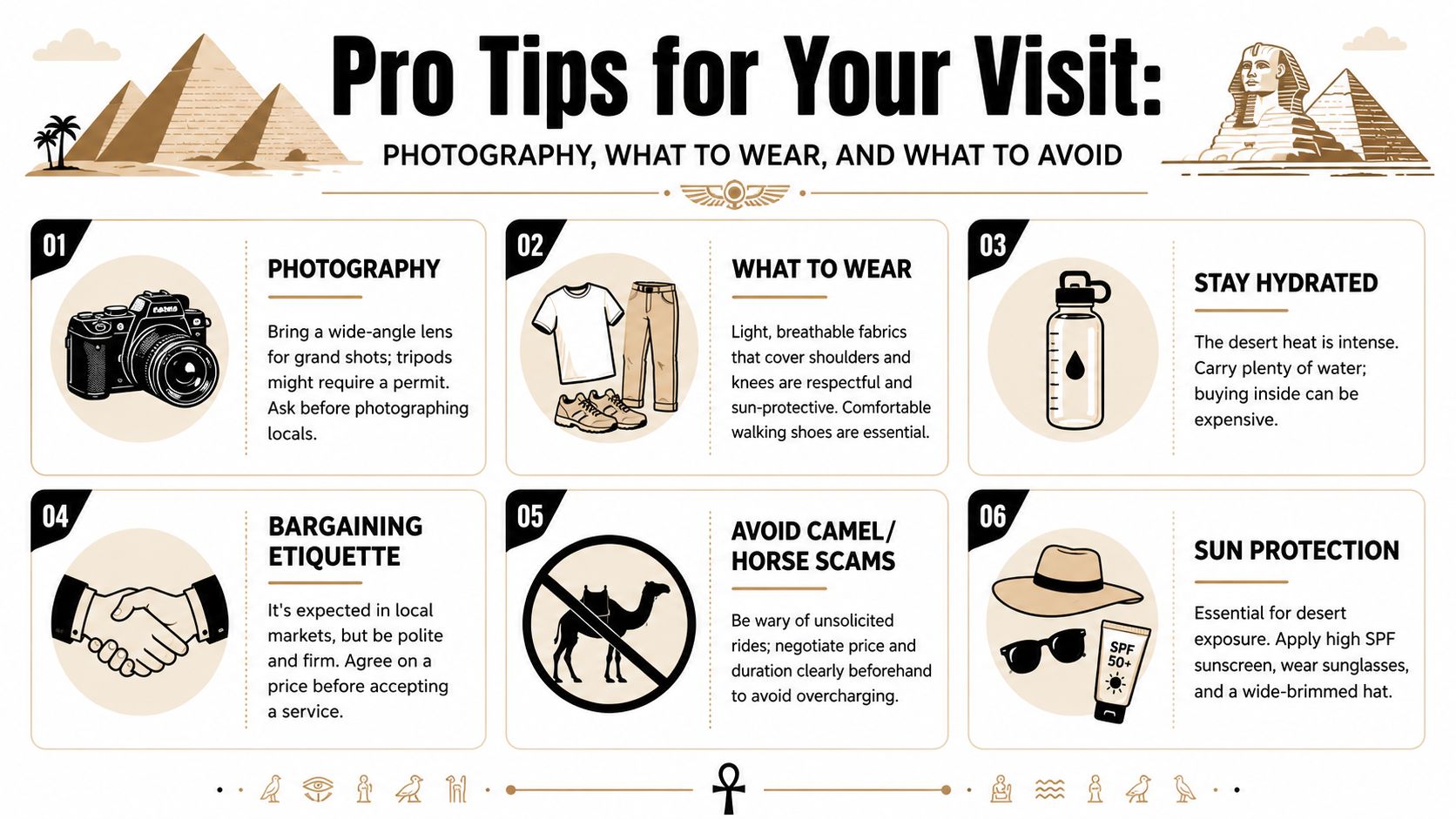
Wear light, breathable clothes and comfortable shoes with real grip. Sand, dust, stone, and sun are part of the day. You'll enjoy the visit much more if you dress for walking instead of dressing only for photos.
If you're still packing for Egypt, this practical list of what to pack for Egypt trips helps keep things simple.
A few basics always help:
- For photos: Go wide when you can. The scale is the whole point.
- For sun: Bring a hat, sunglasses, and water.
- For comfort: Closed shoes are usually better than sandals on dusty ground.
- For respect: Modest, easy layers work well and feel appropriate.
Ask before photographing local people closely. Good manners go a long way here.
What to avoid on site
Some annoyances are easy to prevent if you're firm early.
- Unclear ride agreements: If you choose a camel or horse ride, agree on the route and total price before anything starts.
- Last-minute wandering: Don't drift without a plan during the hottest and busiest part of the day.
- Underestimating the sun: Even on cooler days, desert exposure adds up fast.
- Buying under pressure: If you don't want something, a polite “no, thank you” is enough. Keep walking.
The best Giza visits feel calm. Most problems start when travelers get rushed, overheated, or too polite to set boundaries.
Your Perfect Pyramids Trip Starts Here
The best time to visit pyramids isn't one single month for everyone. Generally, the comfortable season is the easy answer. But the better answer is more personal. Do you want cooler weather, fewer people, or lower costs? Your ideal visit depends on which trade-off matters most to you.
Still, one rule beats all the others. Get there early. That's the simplest change that improves almost every kind of trip, whether you come in winter, shoulder season, or even the hotter months with a short plan.
Giza is one of those places that can feel overwhelming or unforgettable, sometimes on the same day. The difference usually comes down to timing, pace, and having a plan that fits the way you travel.
If you want help putting that plan together, Oh Yes Tours can handle the timing, transport, and on-the-ground details with local guides who live here. No middleman, no rushed cookie-cutter day, just a well-timed Egypt experience that feels right. Egypt? Oh Yes!